|
Rajasthan,
the erstwhile abode of princes, is India at its colourful
best. The earliest inhabitants of this part of western India
were tribes who settled in a few fertile tracts, and groups
of nomads, who travelled with their herds from one oasis to
another. These tribes were ruled by chieftains, who gradually
carved out their own fiefdoms. These early fiefdoms developed
into flourishing kingdoms, over a period of time. These kings
constantly fought each other, and each one developed a warlike
ethos and a defensive style of architecture. Trade sustained
these kingdoms, for the trade route into India passed through
the deserts of western India. Collectively, these princely
states came to be known as Rajputana or the Land of the Kings,
and today it is known as the modern Indian state of Rajasthan.
Rajput kings controlled this part of India for over 1000 years,
according to a code of chivalry and honour, which was marked
by pride and independence. The charismatic Rajput warriors
were known for their bravery.
With the arrival of the Muslims to India and with the rise
of the Mughalsmost Rajput kingdoms gradually lost their independence,
and became a part of the mighty Mughal empire. With the decline
of the Mughals, the Rajputs gradually clawed back their independence
through a series of spectacular victories, but, by then a
new force to reckon with, had emerged on the scene in the
form of the British. Most Rajput states entered into alliances
with the British, which allowed them to continue as independent
states, each with its own maharaja, subject to certain economic
and political constraints. These alliances proved to be the
beginning of the end of the Rajputs, and soon the extravagance
and indulgence of the rulers led to the disintegration of
the Rajput kingdoms.
After 1947, most Rajput rulers were allowed to keep their
titles and property holdings but in 1970, these titles were
abolished. While some of these rulers have survived, by converting
their forts and palaces into museums and hotels, many have
been unable to cope with the financial demands of the 20th
century.
Although the glorious fortunes of its former rulers may have
vanished, the culture of Rajasthan, with its numerous forts,
palaces, its riotous colours and its romantic sense of valour,
honour and courage is still very much alive. The inherent
buoyancy and charisma of the land is evident in every aspect
of the lifestyle of the people, and also, in the colourful
turbans and soup-strainer moustaches sported by the men, and
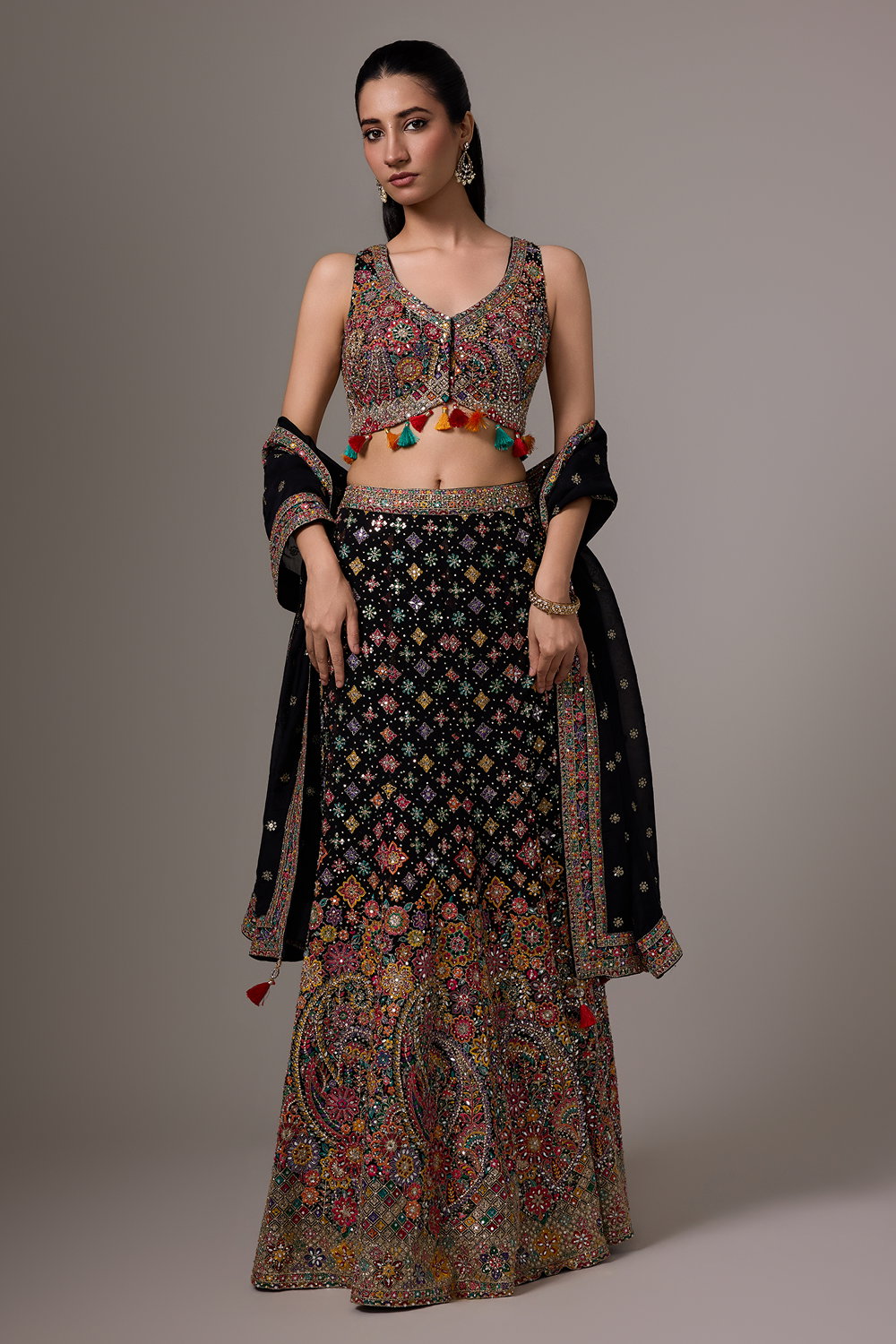
bright mirrored skirts and silver jewellery worn by the Rajasthani
women.
Though
parts of the state are extremely dry, and are covered by the
Thar desert, some areas are used for agricultural purposes.
The total cultivable area in the state is 27,465 thousand
hectares, and the sown area, 20,167 thousand hectares. Principal
crops cultivated in the state are rice, barley, gram, wheat,
oilseeds, pulses, cotton and tobacco. Other crops are red
chillies, mustard, cumin seeds, fenugreek seeds and asafoetida.
|
|