| Acrylic:
|
|
A
man-made fiber produced from a form of plastic. It does not retain
moisture well. It has very good resiliency so does not wrinkle easily.
Acrylic garments tend to PILL (small, tight, balling of material).
To help prevent pilling wash your garment inside out by itself.
Then brush the fabric with a soft brush as it dries.
|
| Aba: |
A
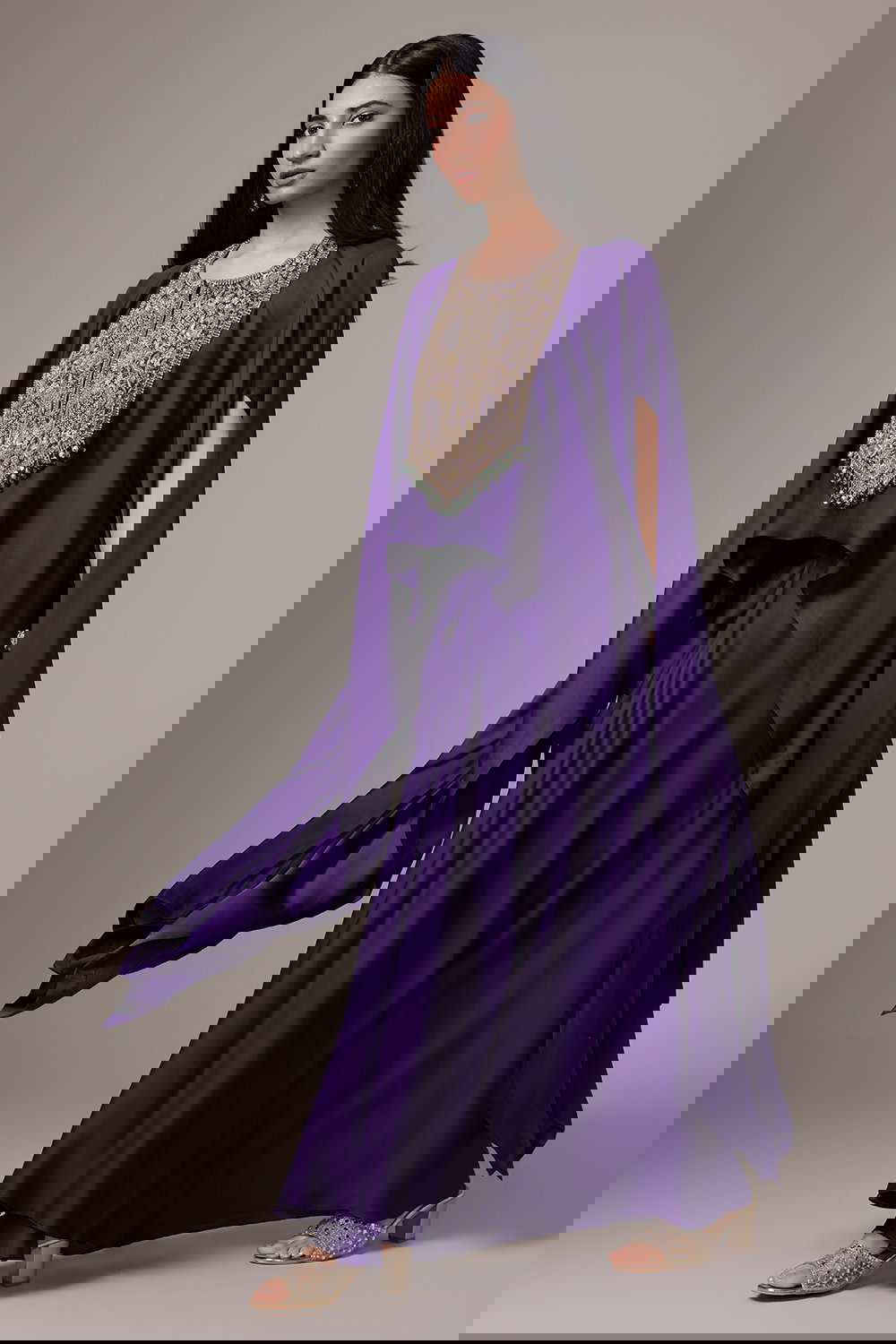
loose cloak, possibly of Arabian origin. Related to the jama in men's
wear, and to the abbo (q.v.) in women's.
|
| Abho: |
A
loose shirt-like garment, worn by women mostly in Gujarat and Rajasthan.
The garment was generally worn with short, wide sleeves, open at the
neck, loose-fitting on the upper part and really flared in its skirt.
Often decorated with embroidery and mirror-glass work.
|
| Accessories: |
Additional
ornamentation to accompany the garment in order to create a certain
Look/Image. (Shoes, Jewelries etc.)
|
| Achkan:
|
A
men's long-sleeved coat-like garment, worn close to the body, reaching
down to the knees or even lower, and buttoned in front-middle.
|
| Alter: |
To
change the pattern so that it corresponds to body measurements.
|
| Angarakfia: |
A
long, full-sleeved outerwear for men; literally 'that which protects
or covers the limbs'. Closely related to the jama (q.v.), but possibly
of native, Indian origin. Generally open at the chest and tied in
front, with an inner flap or parda covering the chest. Full-skirted
and of varying lengths.
|
| Angiaiangika:
|
Short,
tight-fitting bodice worn by women in India from very early times.
Literally, 'covering for the body'.
|
| Asharfi
Buti: |
A
popular textile design consisting of small floral discs or circles,
sometimes with small patterns within the circle.
|
| Atansaw: |
A
wide, commodious chogha (q.v.)like garment for wrapping around the
body.
|
| Bedford
Cord: |
A
ribbed weave. It is a closely woven, sturdy fabric with a raised cord
effect in wool, cotton, silk, acrylic, or polyester. A heavy, warpfaced,
corded fabric in which the cords run in warp direction.
|
| Badla: |
Flat
metallic wire, often silver-gilt, used in brocading and embroidery.
|
| Baghal
Bandi: |
A
kind of tunic or jacket, worn shorts and fastened under the armpits.
|
| Balabar: |
An
outer garment, worn by men, related in shape to the coat-like ashcan.
|
| Bandhani: |
A
process of patterning cloth by tie-dyeing in which the design is reserved
on the undyed cloth by tying small spots very tightly with thread
to protect them from the dye. Especially popular in Rajasthan and
Gujarat.
|
| Bare
Pychon ka Paijama: |
A
payjama (q. v) with wide, flared legs.
|
| Bias: |
Any
direction in the fabric which does not exactly flow in the direction
of the weft yarn (vertical yarns) or warp yarns (horizontal yarns)
of a fabric. A true bias makes an angle of 45 degree across the length
and width of a fabric, fabric cut on a bias has maximum stretch.
|
| Buta: |
Literally,
"a plant". A floral motif, derived generally from Persian sources,
much used in Indian textile design, and traditionally rendered as
a flowering plant with a curling bud at the top. The motif is also
sometimes reduced to a floral pattern designed within the form of
the plant.
|
| Buti: |
A
diminutive of buta (q.v.), very commonly used in Indian textile design.
|
| Centre
Front: |
It
is the portion of the pattern or the garment which is suppose to come
in the exact front.
|
| Chand-Tara: |
Literally,
"moon and star", a pattern often-used in Indian textile.
|
| Chaubandi
Chola: |
A
short tunic or shirt fastened with tie-cords worn by children.
|
| Chaugoshia
(topi): |
A
four-cornered cap.
|
| Chauri:
|
A
flywhisk made generally from a yak's tail. Important as a symbol of
royalty or divinity.
|
| Chikan
Kari: |
Embroidery
in white cotton thread upon fine white cotton fabric, like, muslin.
Several techniques in chikan-kar are known; Lucknow was a famous center
of fine workmanship.
|
| Chogaichoga: |
A
loose, sleeved coat-like garment worn over an inner garment like the
angarakha (q.v.), generally sumptuous and appropriate for ceremonial
occasions. Of Turkish origin, the chogha was also known as a chugha,
chuha orjuha; in Russia as shuba or sbubka.
|
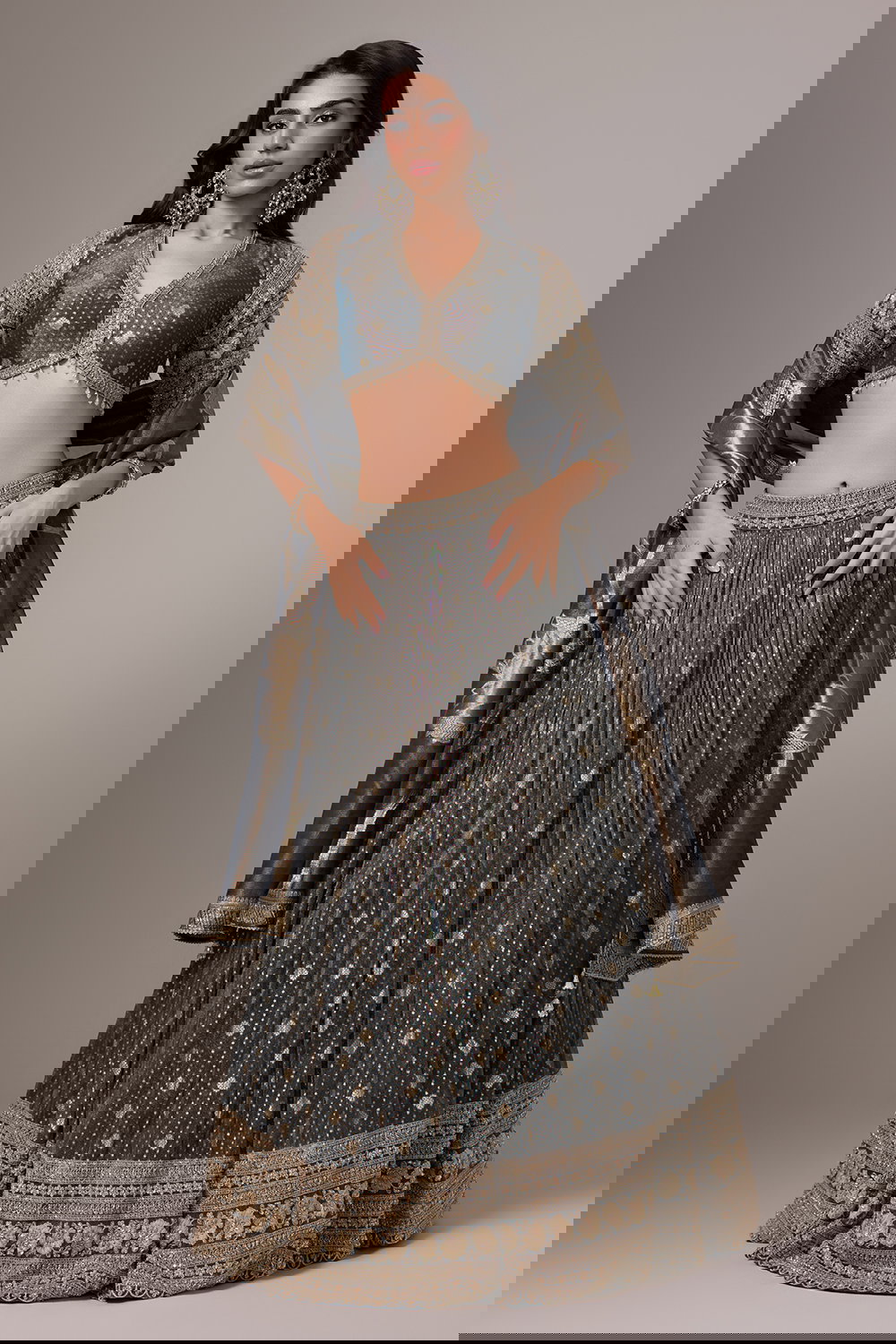
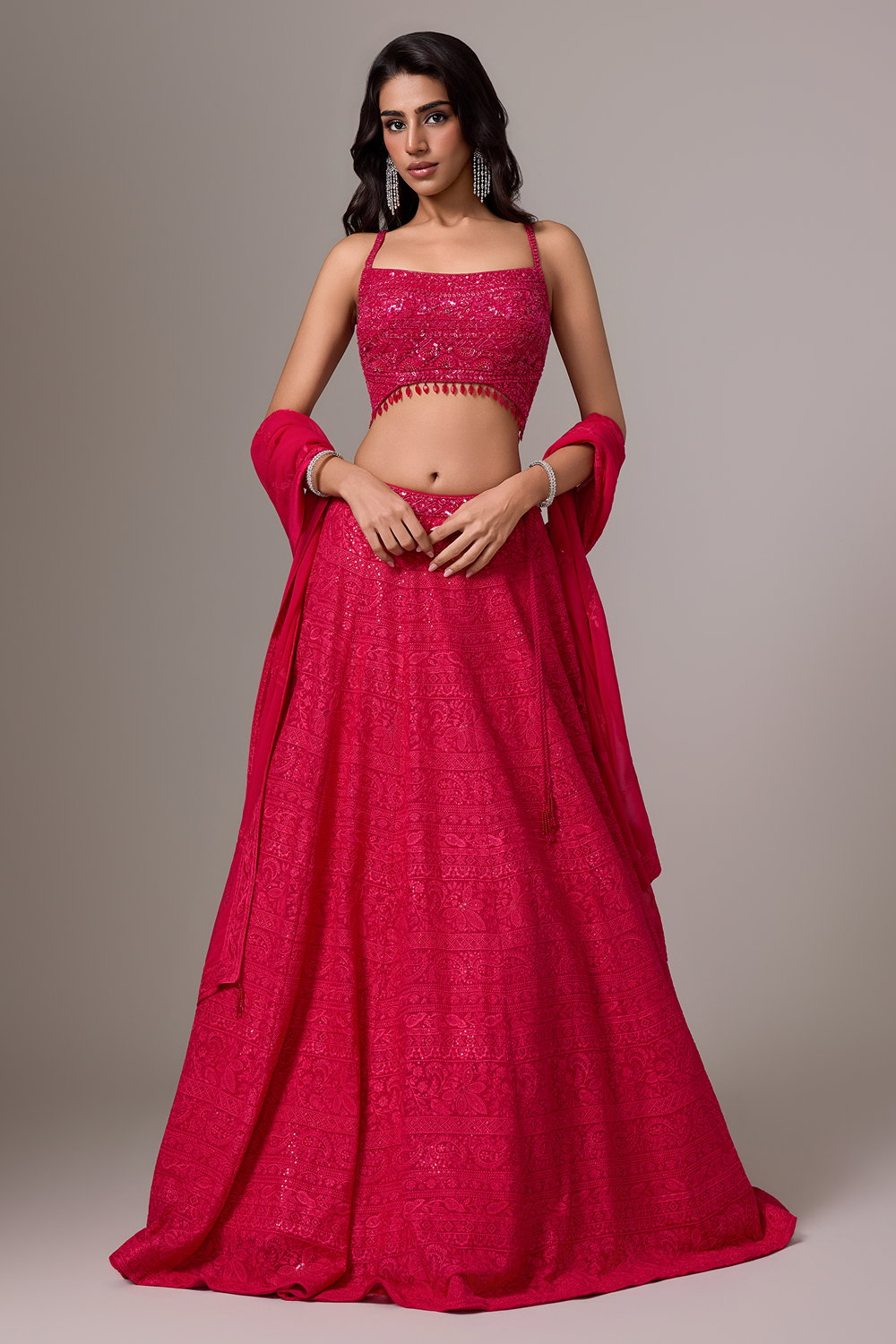
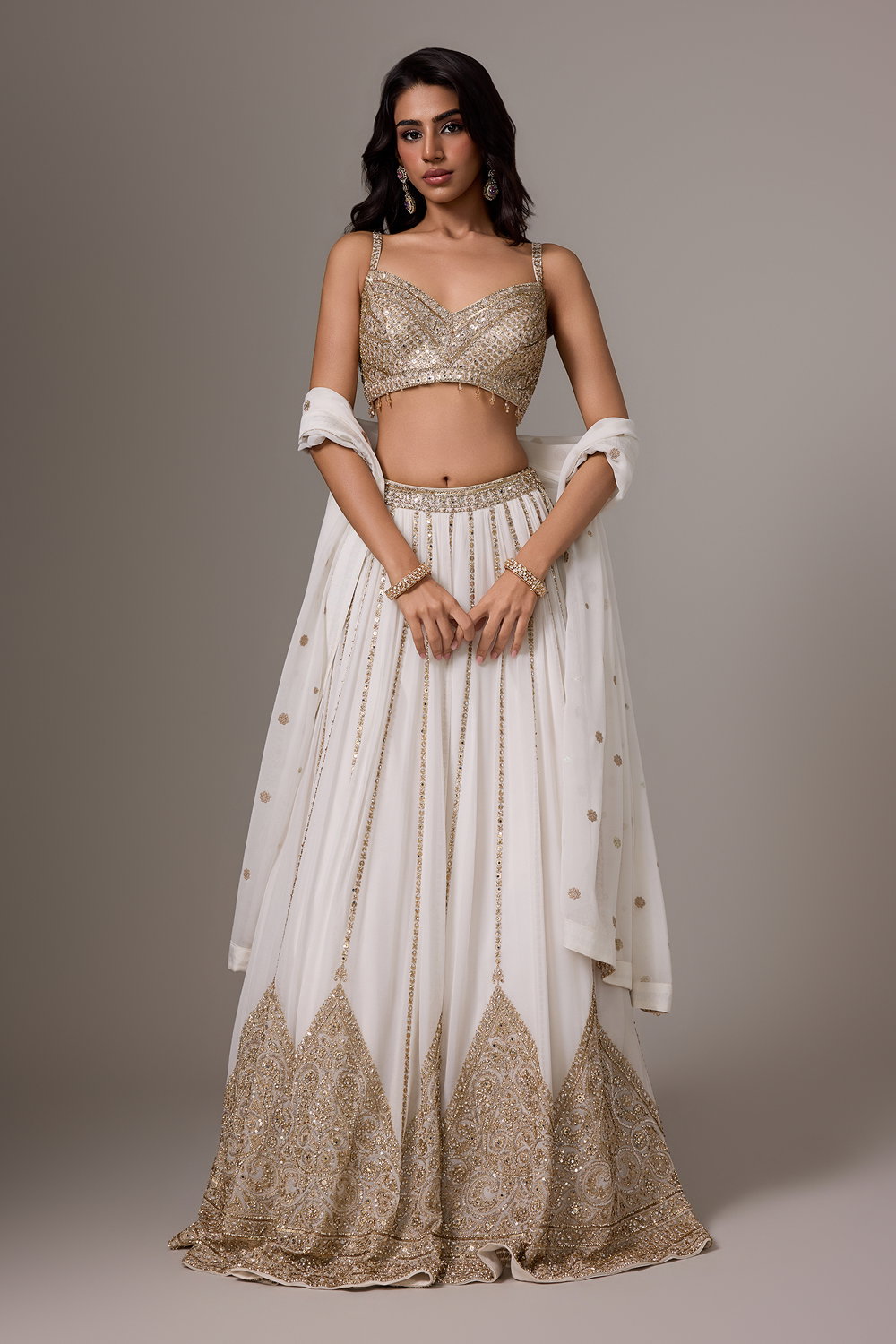
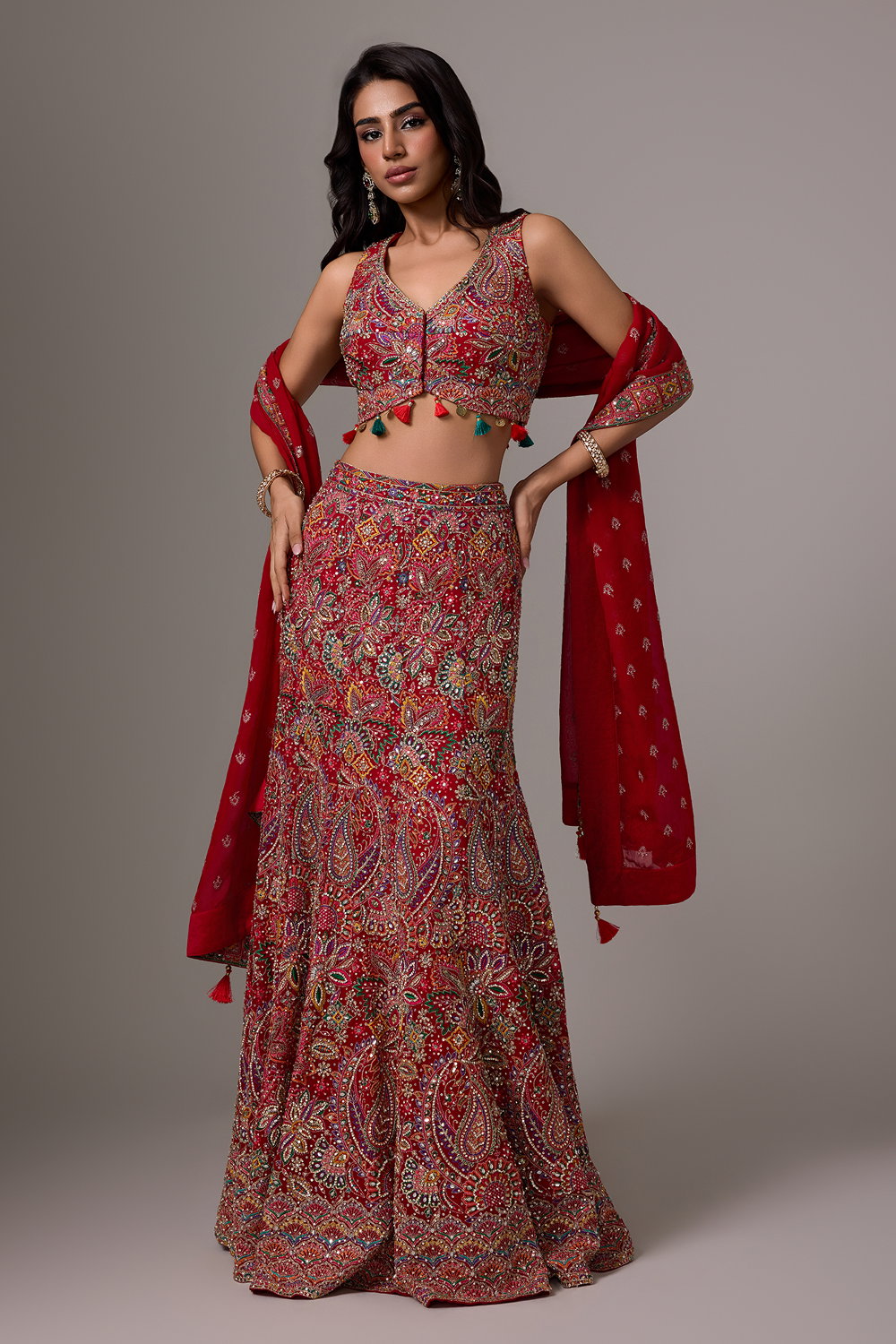
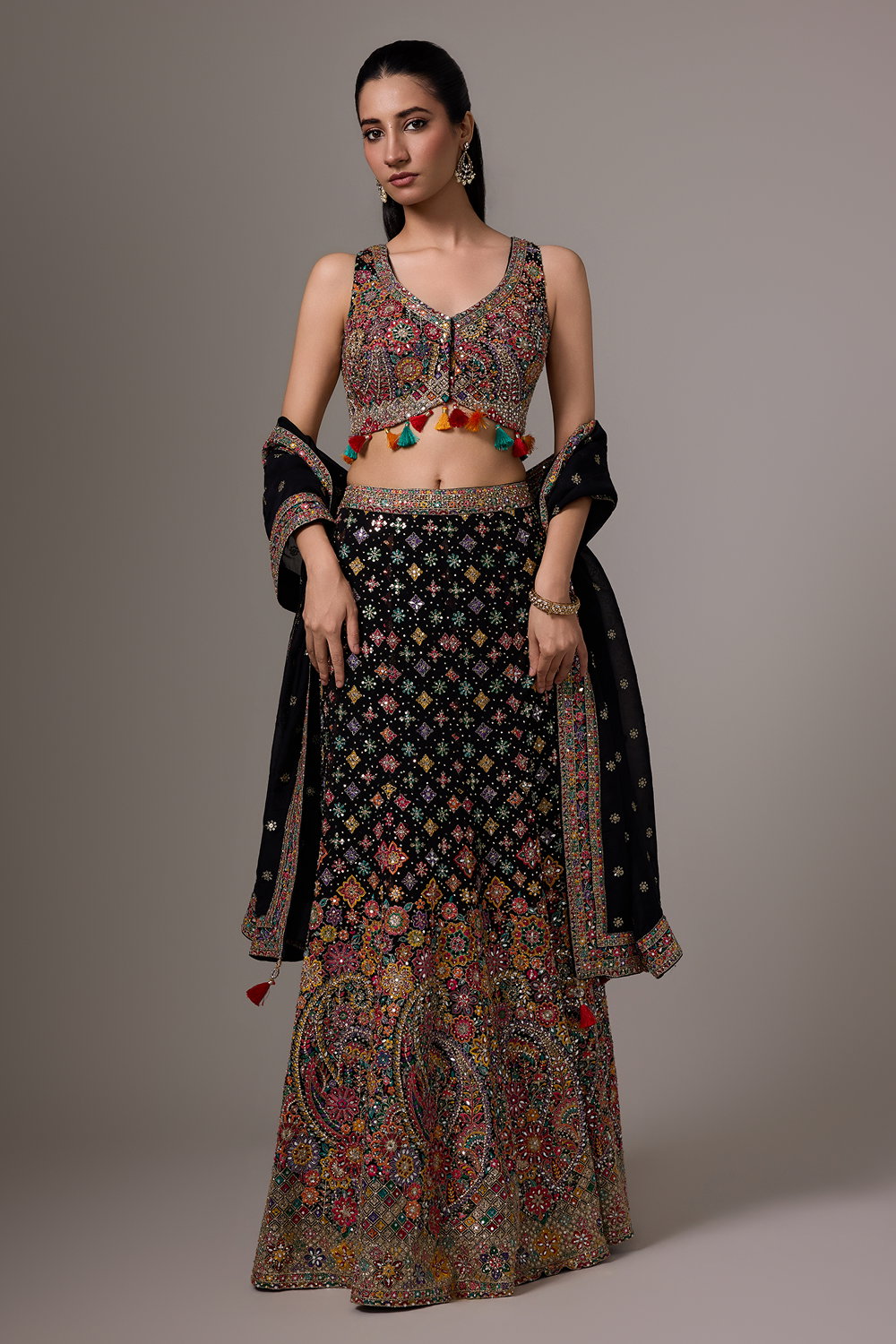
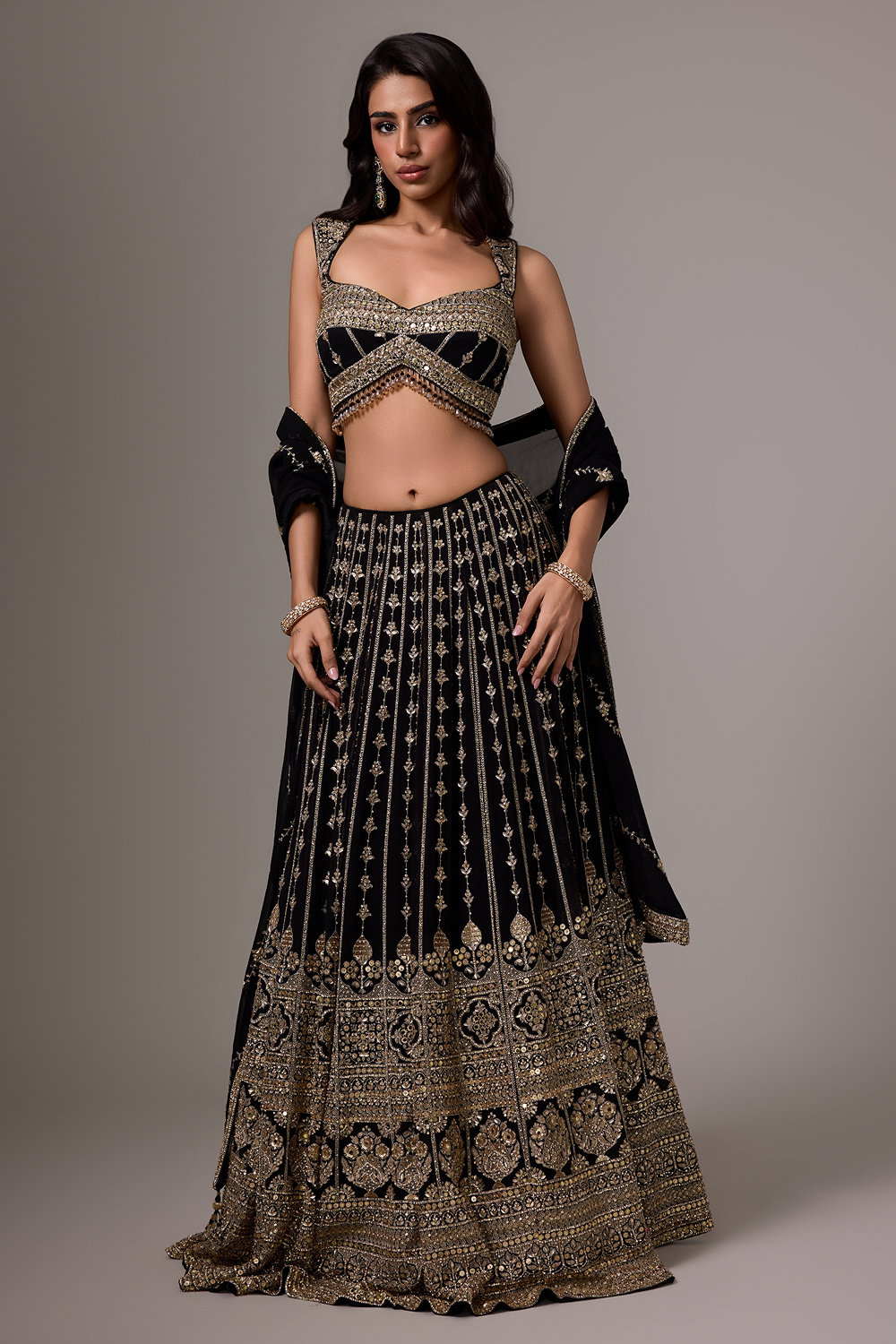
| Choli:
|
A
short, bodice-like breast garment of wide popularity among women in
India, from early times. Related to the classic cholaka mentioned
in Sanskrit literature. The garment is worn in many styles; thus,
with back covering or without, fastened with strings or extended cloth-pieces,
with shaped breast-pieces or flat, etc.
|
| Cholu: |
A
loose, shirt-like garment.
|
| Churidar: |
With
bangle-like gathers or wrinkles, as in a churidar payan.
|
| Contemporary:
|
|
Currently
in vogue.

|
| Cool
Colours: |
Blue,
Violet and Green are cool / light colors. They are reducing in nature,
as seen by the eye they move away from the object thereby increasing
it's size. Cool colors have a calm and restful effect.
|
| Dhila: |
Loose
or baggy. Thus, a dhila payjama, wide and roomy all over.
|
| Dhoti: |
The
traditional Indian dress for the lower part of the body, consisting
of a piece of unstitched cloth draped over the hips and legs. Worn
in various ways in different parts of the country, alike by men and
women.
|
| Doru: |
Long
rope with which the thick woolen coat worn by the Gaddis is secured
around the waist.
|
| Draping: |
Draping
means to hang or to adorn the body form with loose fabric, and to
obtain a body fitted garment by using adequate sewing techniques.
|
| Dupaluidupallari: |
Top
Small, close-fitting cap made generally of muslin, and consisting
of two identical pieces cut slightly rounded and curved towards the
top.
|
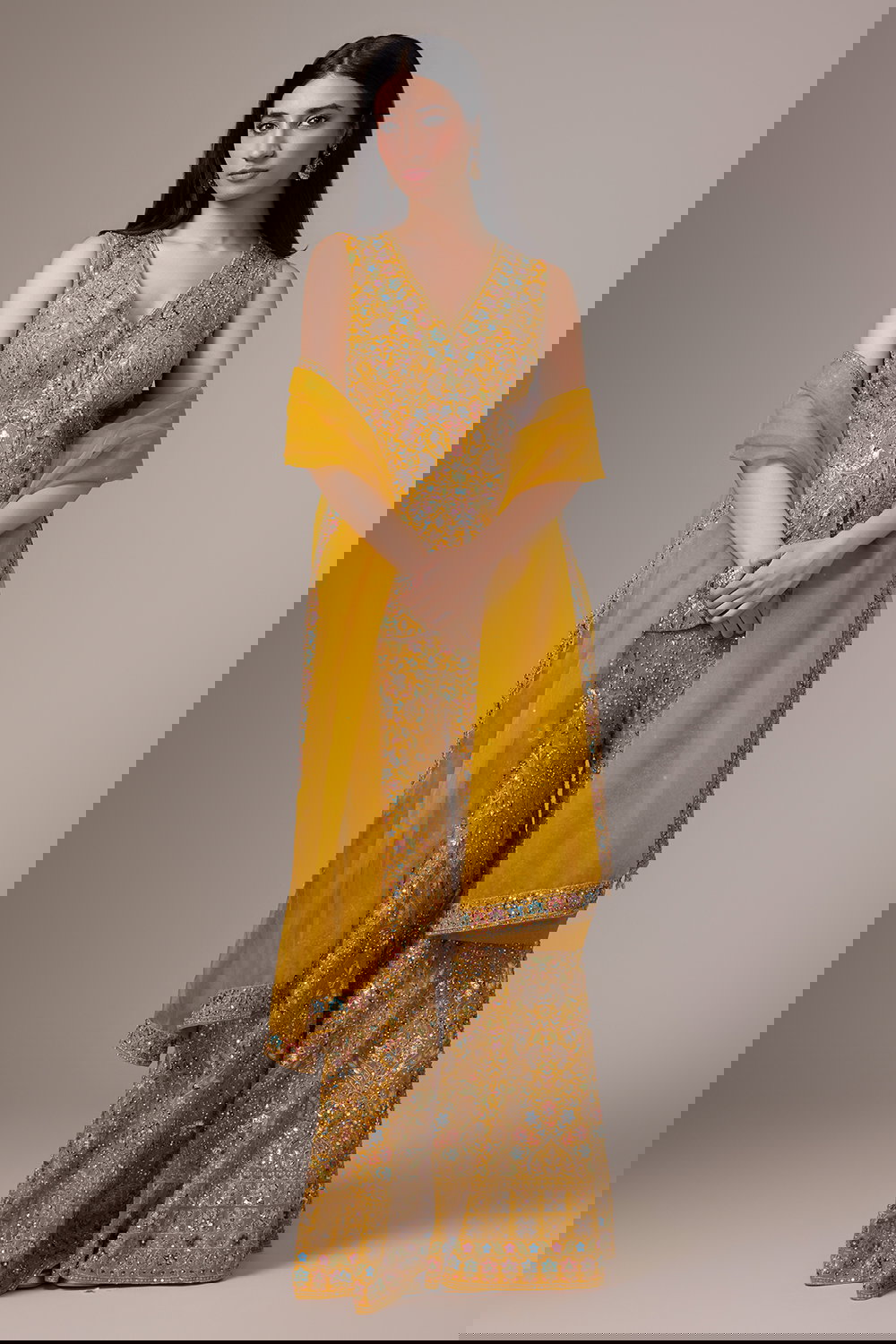
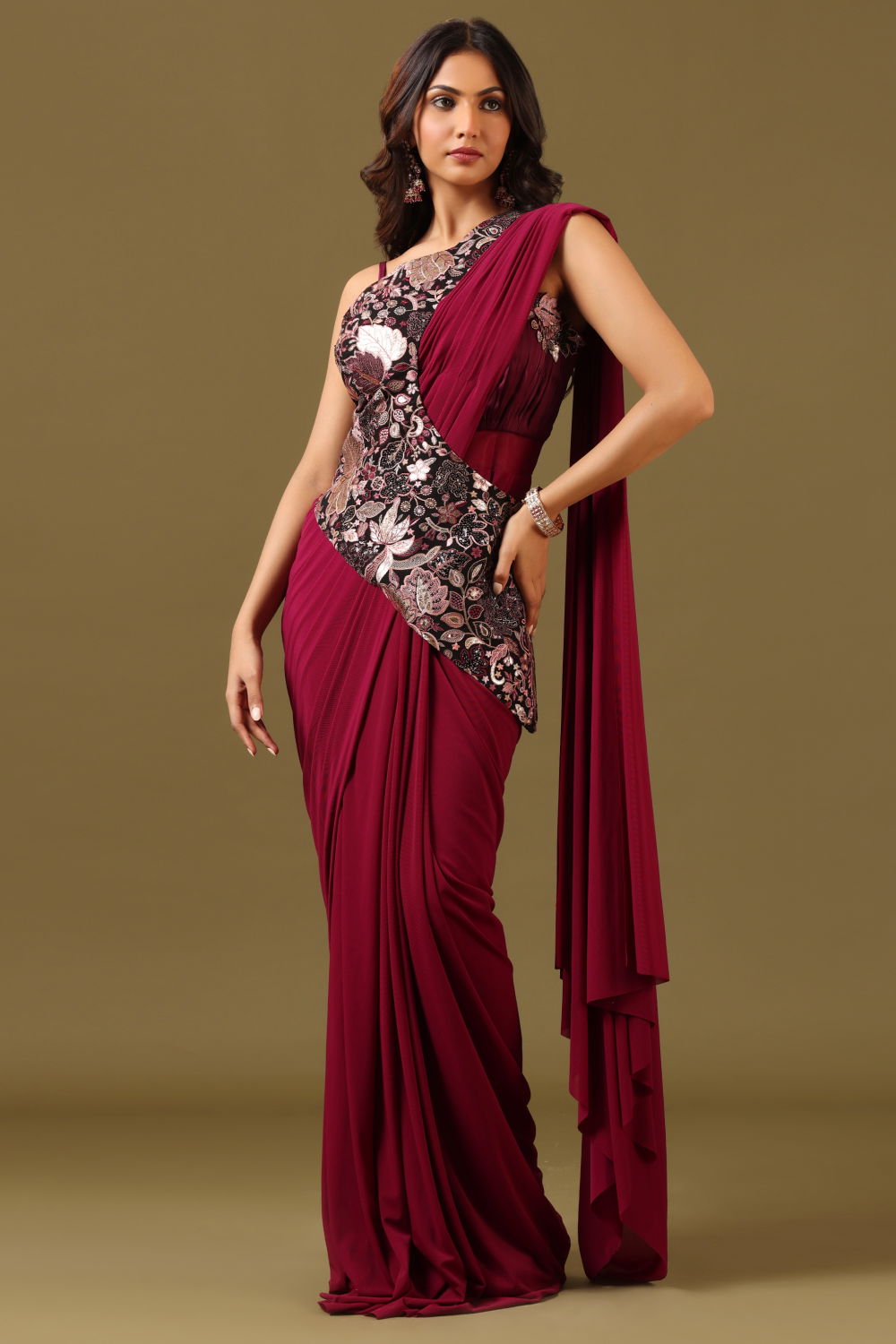
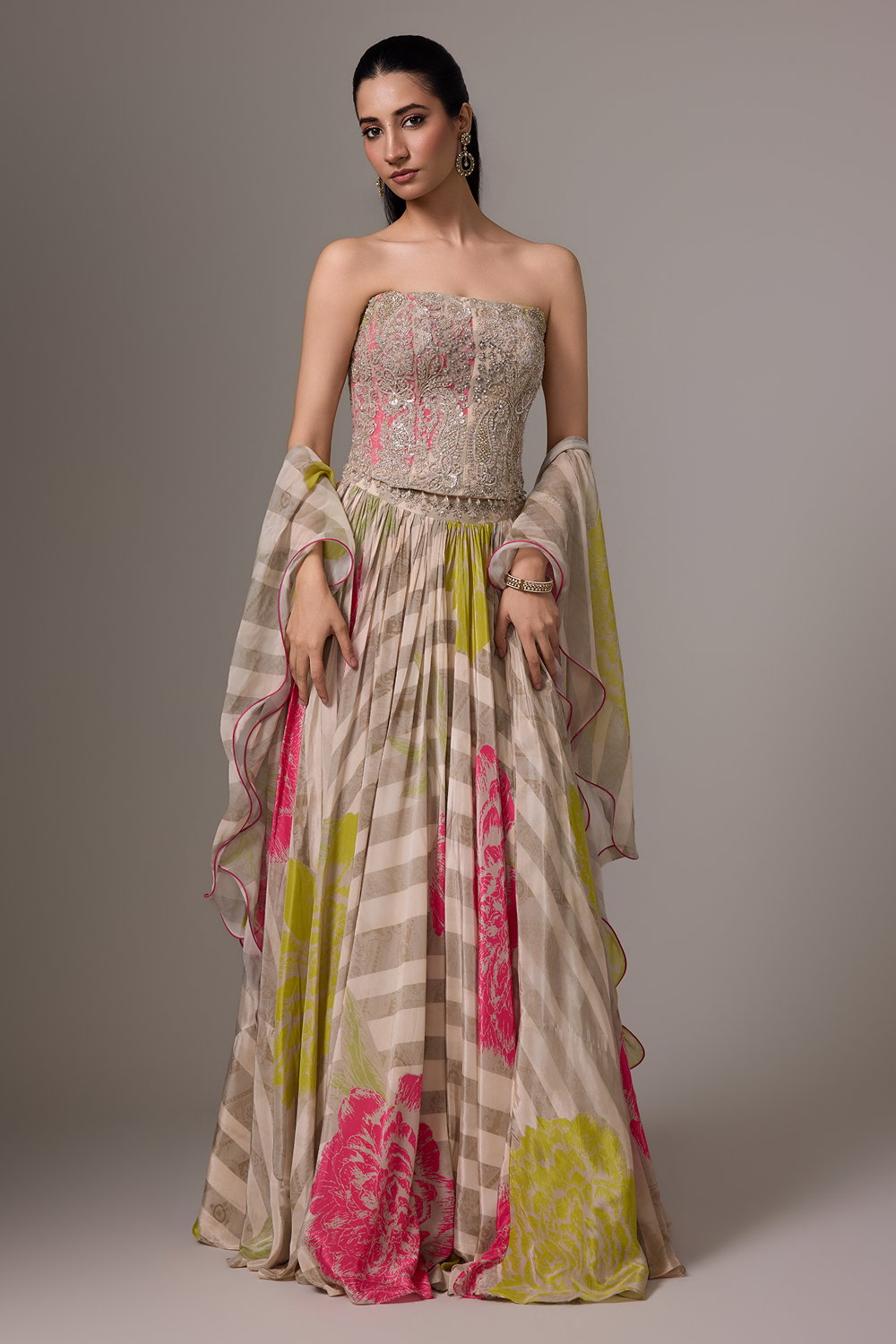
| Dupatta: |
Veil-cloth
worn by women, draped loosely around the upper part of the body.
|
| Flannel: |
Soft-filled
cotton twill brushed on one side.
|
| Fad: |
Short lived fashion are called fad's; They seldom have any lasting
Impact on future fashion. They are briefly and suddenly seen everywhere
and just as suddenly they vanish.
|
| Fargul: |
A kind of jacket.
|
| Farji: |
A
kind of jacket. Defined by the dictionaries as simply 'a kind of garment',
the faiji was possibly a long over-garment without sleeves, or with
very short sleeves, open in front and worn like a coat over pyjama
(q.v.) or angarakha (q.v.).
|
| Farshi
Paijama: |
Wide-legged payjama (q. v) that trails on the ground, sometimes completely
covering the feet; worn often with a kurta (q.v.) or angarakha (q.v.).
|
| Fashion
Forecast: |
To predict of foretell future fashion tread for a specific period
of time.
|
| Fatuhi: |
A 'jacket without sleeves'. Generally understood as a vest lightly
padded with cotton wool, and quilted.
|
| Faz-Vi: |
A 'jacket without sleeves'. Possibly the same kind of garment as fatuhi
(q.v.).
|
| Finish: |
Perfection with which the garment / fabric is completed.
|
| Forte
of a garment: |
Means the strong point of the garment.
|
| Frey: |
Threads which come out from the fabric during handling.
|
| Gabardine: |
A
type of fabric, which can be made from either wool or cotton. It is
a durable tight twill weave. Fine round ribs run diagonally across
the front but are not visible on the back. Often used in suits.
|
| Gamla
Buti: |
A popular motif in textile design in India, consisting of flowers
of different kinds growing in a flowerpot, neatly arranged.
|
| Ghagho: |
A woman's dress, closely related to the abbo (q.v.). The skirt part
of the abagho was often more flared than that of an abbo, the ample
gathers at either side of the waist lending it peculiar gracefulness
when the wearer moved.
|
| Ghaghra: |
Skirt, usually with a great deal of flare. The simple ghaghras have
only one vertical seam, which turns the cloth or ghaghra-pata into
a tube, fastened with a drawstring passing through a long, narrow
slot at the waist. Flared ghaghras are made up of, several triangular
gored pieces stitched together.
|
| Gherdar: |
Flared with an ample skirt, as in a gherdarjama.
|
| Ghundi: |
Loop; generally used to hold the little button-like boss called the
tukma.
|
| Ghutanna: |
A short paoan (q. v.), worn by men, tight and ending just below the
knees. Much favoured in 19th century Sikh Punjab.
|
| Gota: |
Narrow ribbon made of 'gold' or 'silver' thread.
|
| Grain: |
Another word used for the length wise (weft yarn) or cross-wise (warp
yarn) threads of the fabric.
|
| Hand: |
The
'feel' of a garment or cloth.
|
|
Haute
Couture: |
Hi-Fashion garments (of which only a single price is produced) It's
extravagant, it's irrational, it's Unique and it's totally unaffordable.
|
| Herringbone
Twill: |
A
broken twill weave composed of vertical sections, which are alternately
right hand and left hand in direction. Also known as a chevron weave.
 |
| Hi-Twist: |
A
term used to describe a cloth made from a worsted yarn that has been
twisted by 40 to 60%. This results in a cloth that is very fine, strong,
wrinkle resistant, and slightly stiffer.
|
| Hopsacking: |
A
fabric typically made of wool or cotton. It has a rough texture and
is very durable. Often used in trousers and suits.
 |
| Hounds
tooth: |
Popular
wool pattern made with a variation of the twill weaves to form jagged,
broken checks.
|
| Hue: |
Is the shades and degrees of color.
|
| Ikat: |
Term applied to the resist-dye process in which designs are reserved
in warp or weft yarns by tying off small bundles of yarn with palm-leaf
strips or similar material to prevent penetration of dye. From the
Indonesian mengikat, 'to tie' or 'to bind'.
|
| Iaedryun: |
A short jacket, often richly embroidered, worn mostly in Kutch and
Saurashtra, in combination with an embroidered payjama (q.v.).
|
| Izar: |
A
kind of payjama (q. v.).
|
| Izarband: |
Drawstring at the waist for a garment like the payjama (q.v.). Literally,
'fastening of the izar'
|
| Jama: |
Full-sleeved outerwear for men, greatly popular at the Mughal and
Rajput courts and worn well into the 19th century. Literally, "a garment,
robe, vest, gown, coat.
|
| Jamdani: |
Fine cotton muslin with a floral pattern brocaded in thick soft cotton.
Dacca was a famous center for the production of finejamdani work.
|
| Janghia: |
Short drawers, worn by men and boys. From Sanskrit.
|
| Jar
|
See
ZARI.
|
| Jhabba: |
Loose, tunic-like garment. Jhula.
|
| Jhula: |
A kind of blouse for children.
|
| Jhumb:
|
A
covering for the head and body made simply by tying a sheet or blanket
at one end and draped over the head.
|
| Kairi:
|
A
green mango.
|
| Kairi
Buti: |
A floral motif in Indian textile design, based on the form of a green
mango with a light curve at the tip.
|
| Kalabatton: |
Silver-gilt thread, used in embroidery.
|
| Kalgha:
|
A
popular motif in Indian textile design, broadly cypress-shaped and
curving to one sides at the top; crest.
|
| Kali: |
Gore wedge-shaped, triangular piece of cloth.
|
| Kalidar
Ghagra: |
Ghaghra (q.v.) made up of many gored pieces and thus flared in early
Sanskrit literature.
|
| Kanjari: |
Blouse like garment, worn a little long in front and generally backless,
held together with tie-cords, with no shaped parts like cups. From
Sanskrit Kanchuki.
|
| Kantop: |
Literally, 'topi, worn around the ears'. This kind of cap covers the
ears and the back of the neck to protect these parts from excessive
heat and cold.
|
| Kapadu: |
Cloth used to cover the breasts. In Rajasthan and Gujarat a simple
choli-blouse is sometimes referred to by this name.
|
| Karchobi: |
Work Work similar to zardozi (q.v.) in which gold or silver metal
threads are sewn on to satin or velvet with metallic threads to yield
the effect of true embroidery.
|
| Kasnis: |
Tie-cords or strings used for tightening.
|
| Katoris: |
Cups; the word is used to describe breast-cups as in a choli (q.v.)
or angia (q.v.).
|
| Kimkhab: |
Silk fabric brocaded with silver and gold. The metal thread used for
brocading is made from a fine strand of flattened metal wound over
a core of silk, using yellow silk under gold, and white silk under
silver.
|
|
Kurdi:
|
A jacket or coat meant for outerwear. The garment popular under this
name in Persia was known in India as a nadiji (q.v.).
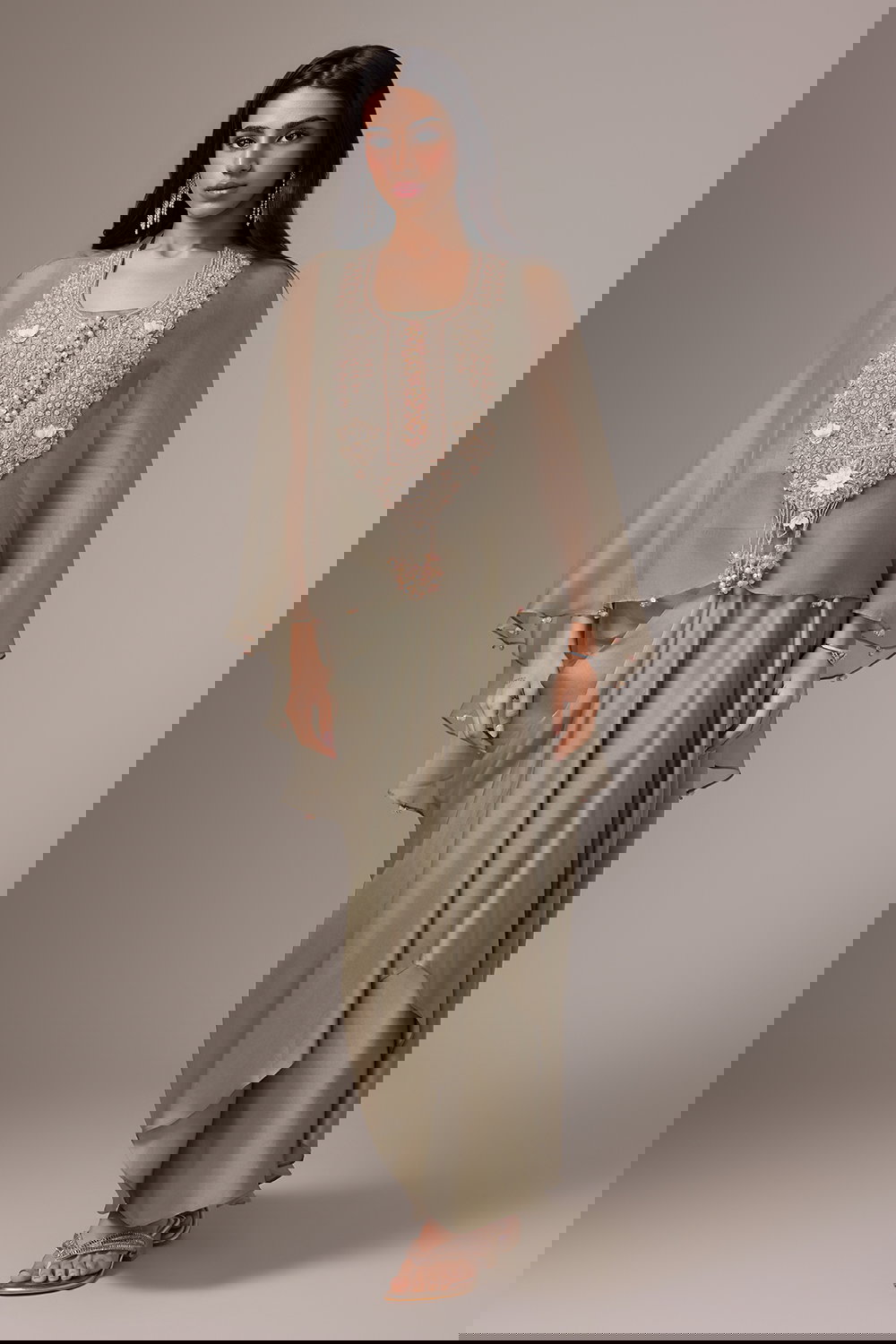
|
| Kurta: |
Variously described in the dictionaries as "a tunic, waist coat, jacket,
shirt", the kurta became popular in the 18th and 19th centuries essentially
as a slightly loose-fitting garment for outer wear, often with a round
neck, of knee-length or even longer, with side-slits at the hem and
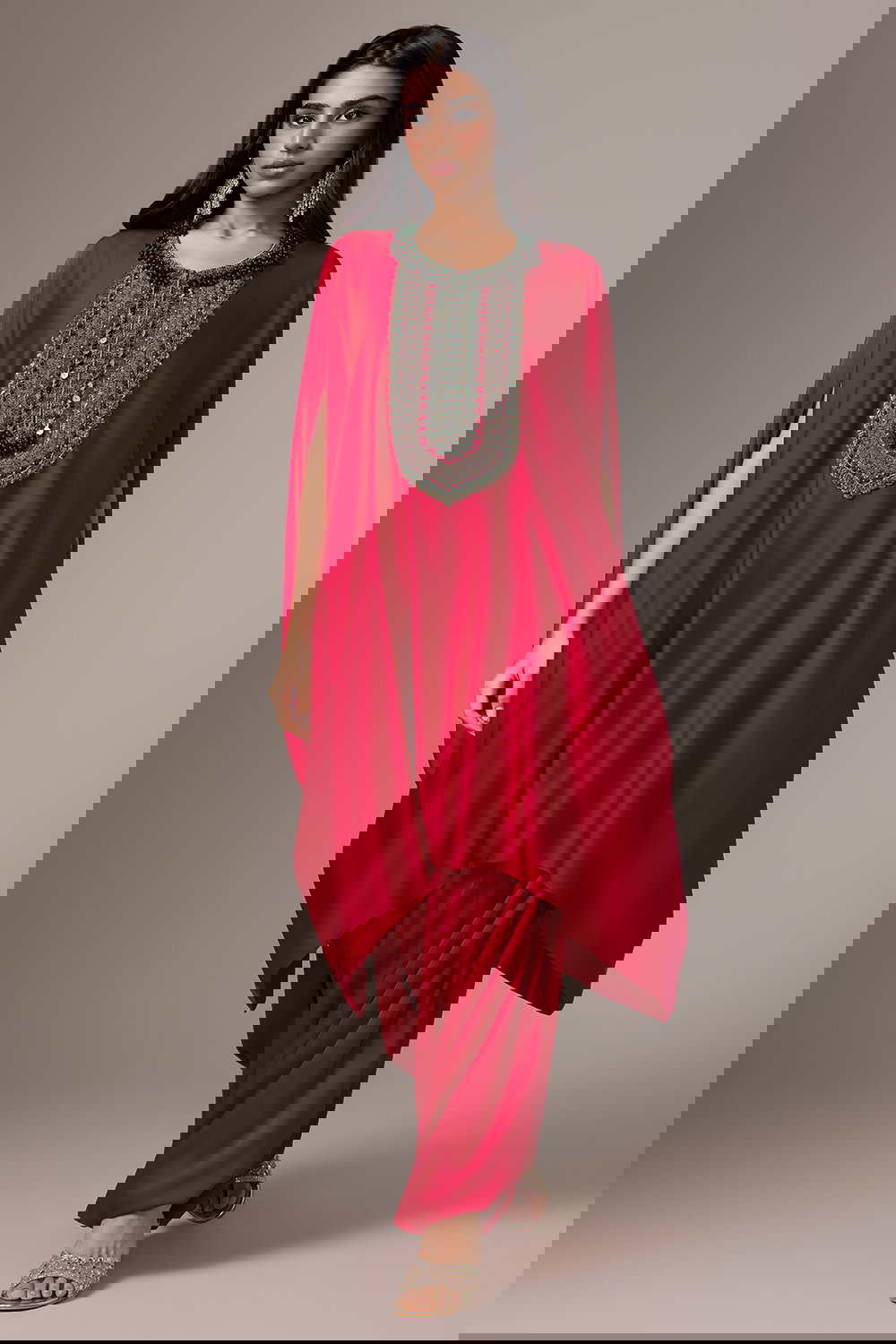
generally flared skirt. It acquired great elegance as a garment in
centers like Lucknow and Hyderabad.
|
| Kurti: |
A shirt-like garment, with most of the features of a kurta (q.v.),
but often worn a little shorter. When worn by women, it is defined
as 'a short bodice reaching to the hips, with very short, if any,
sleeves, open under the throat.'
|
| Labeda: |
A loose, tunic-like garment worn by men, mostly in Nepal. Possibly
from Persian libada.
|
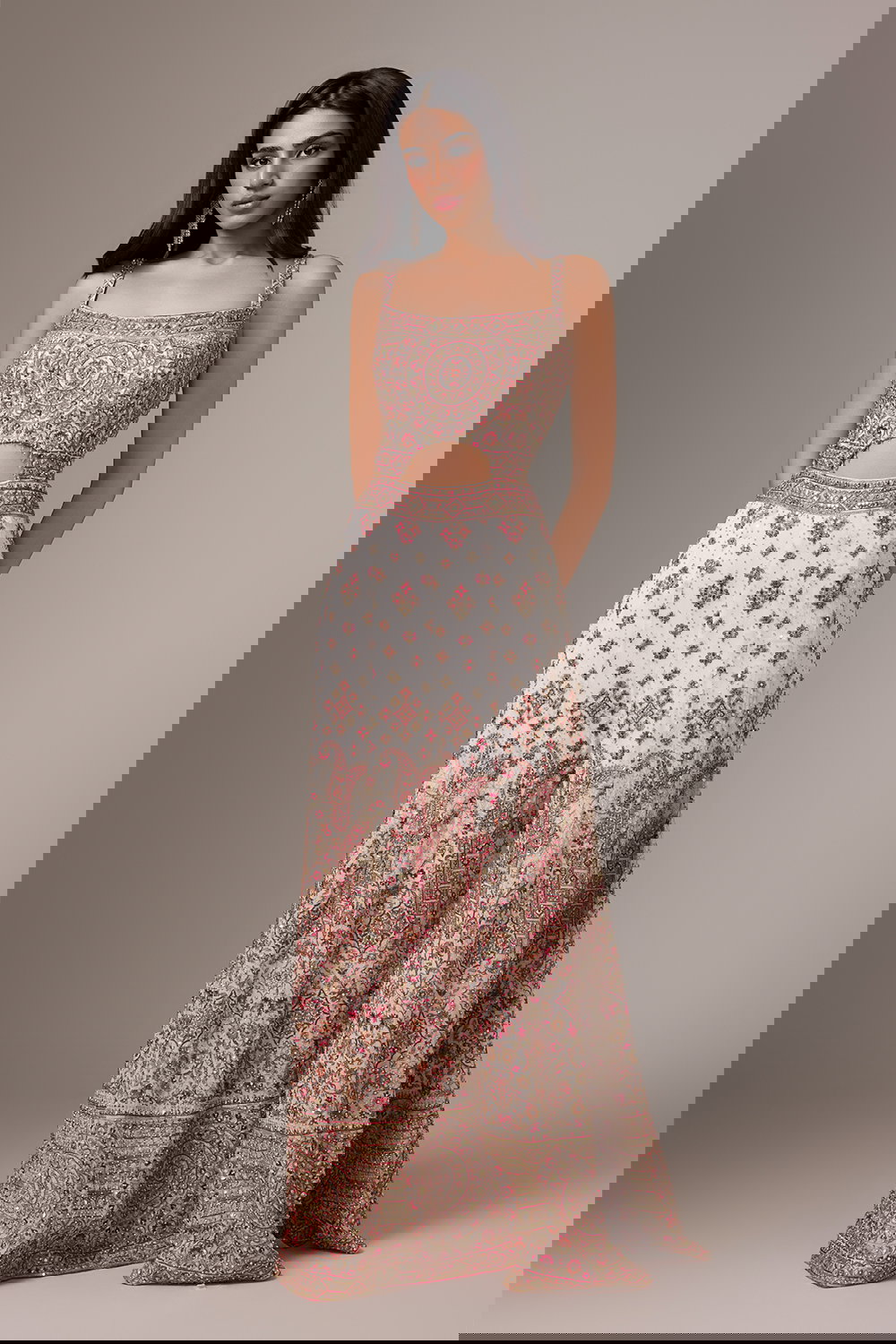
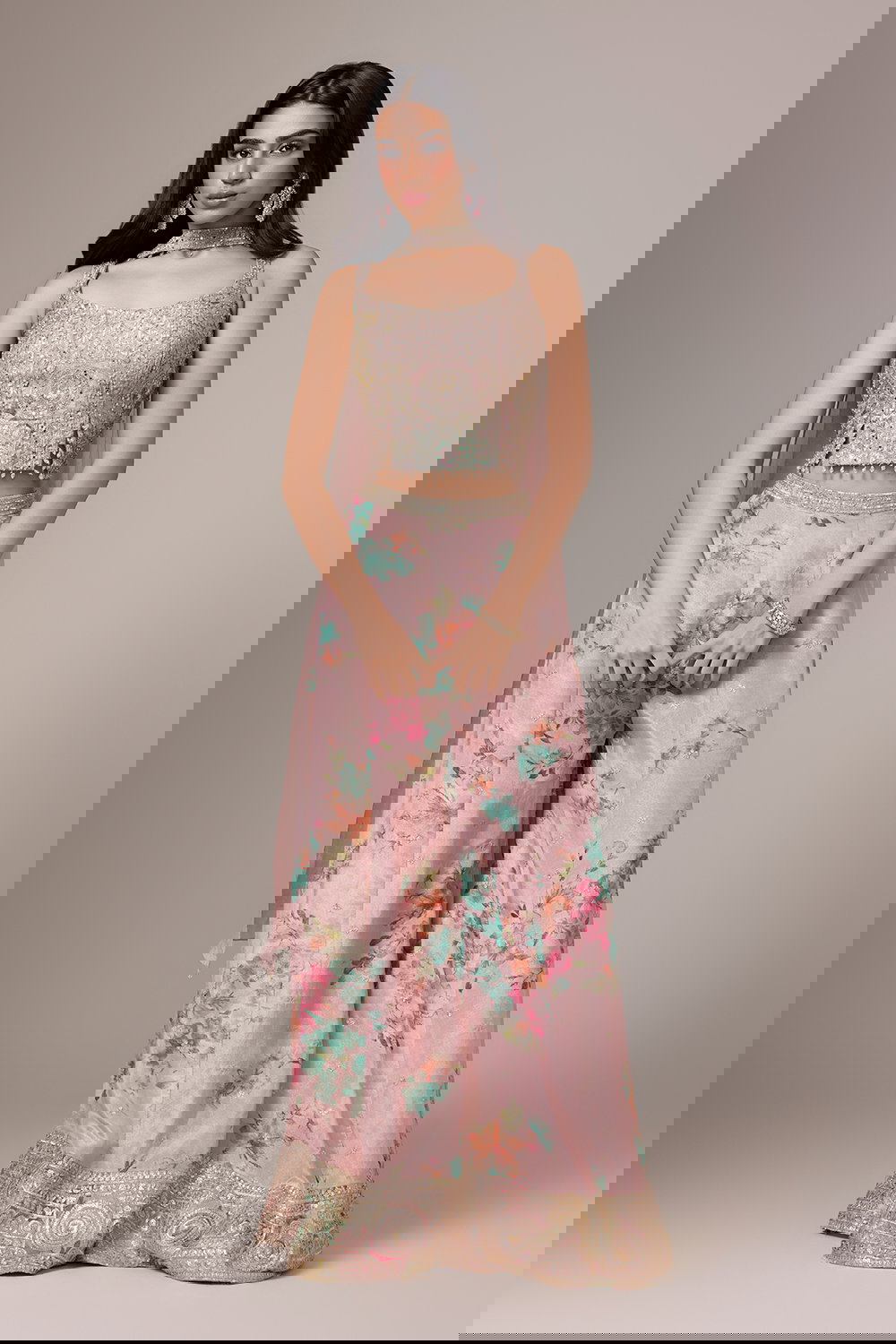
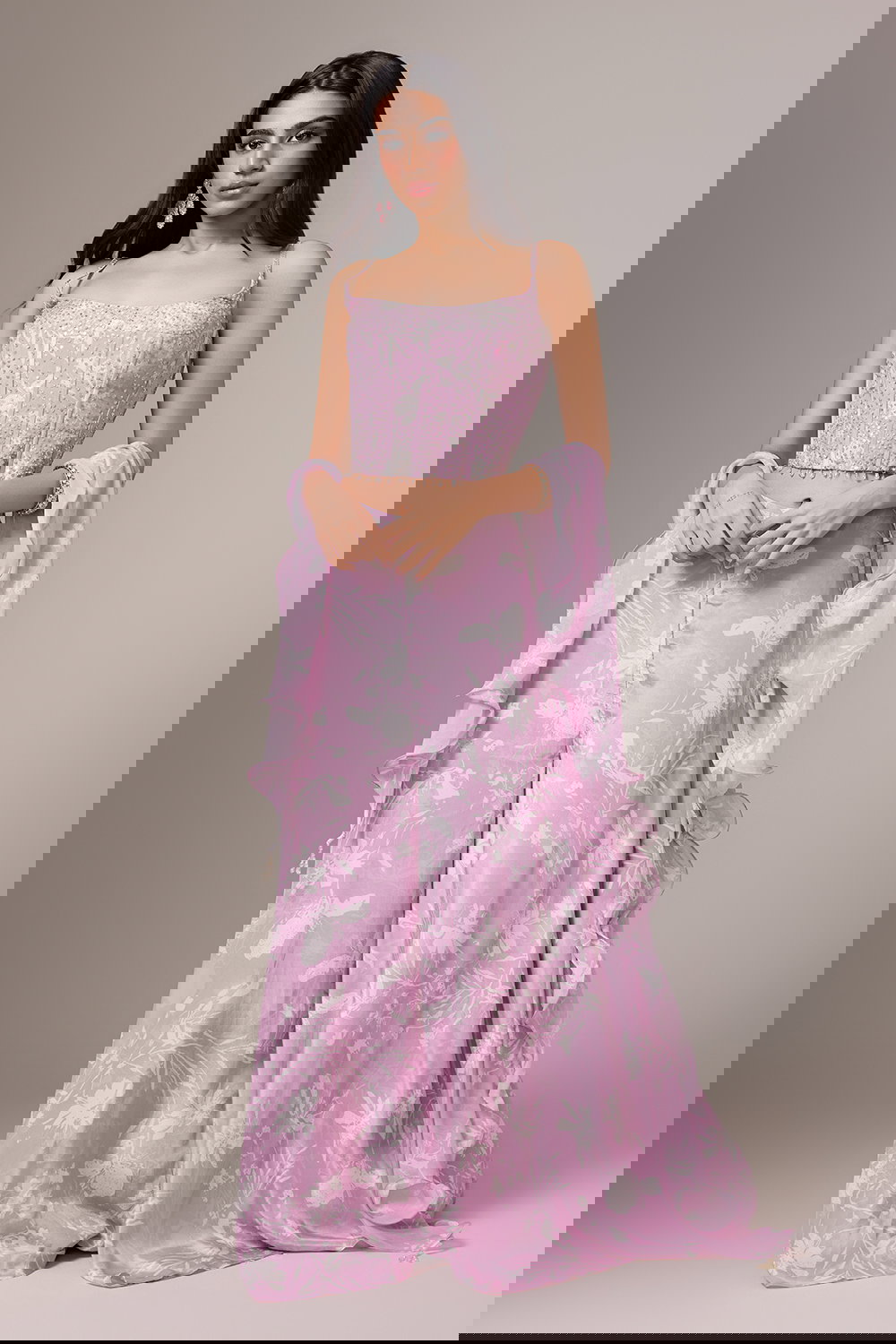
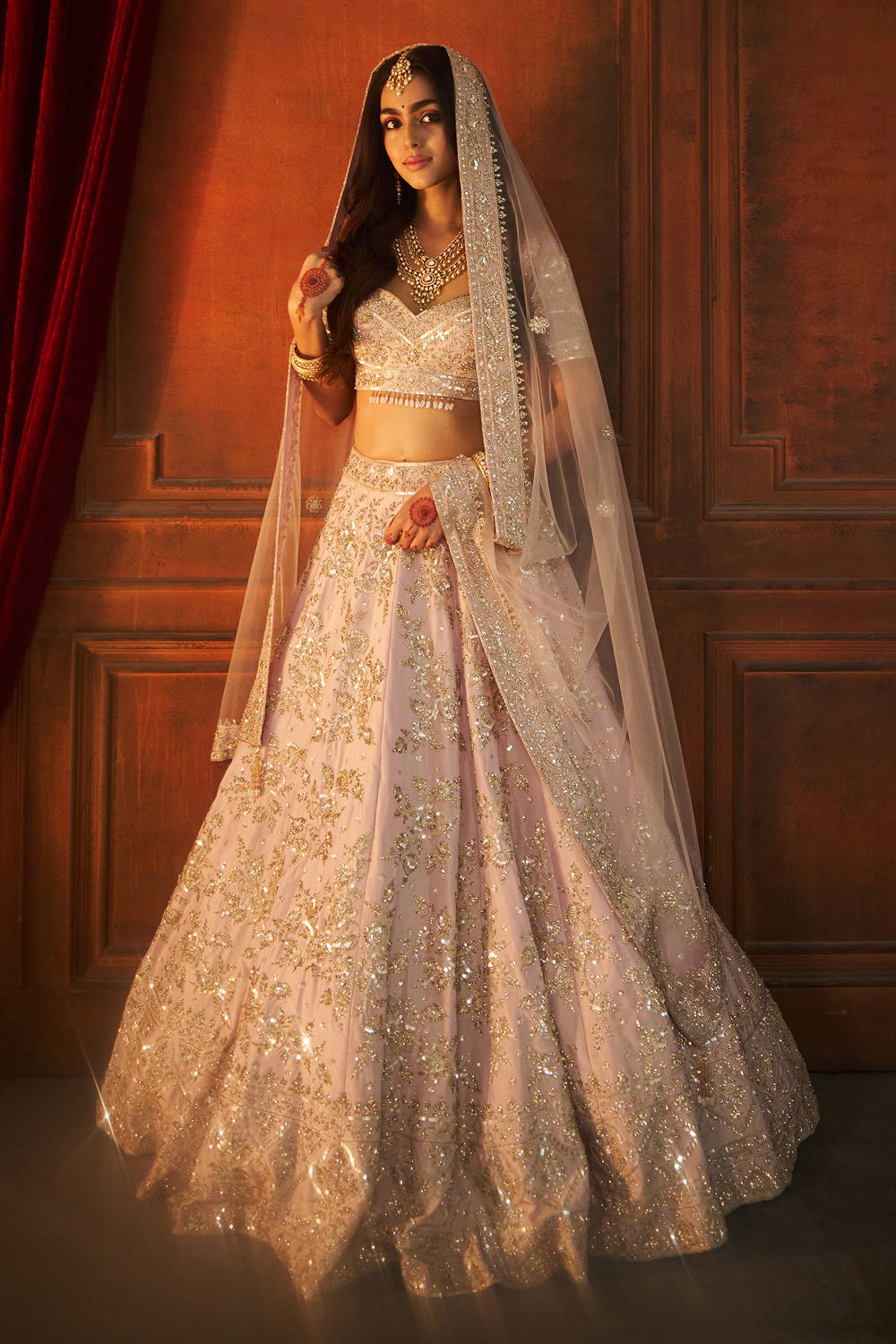
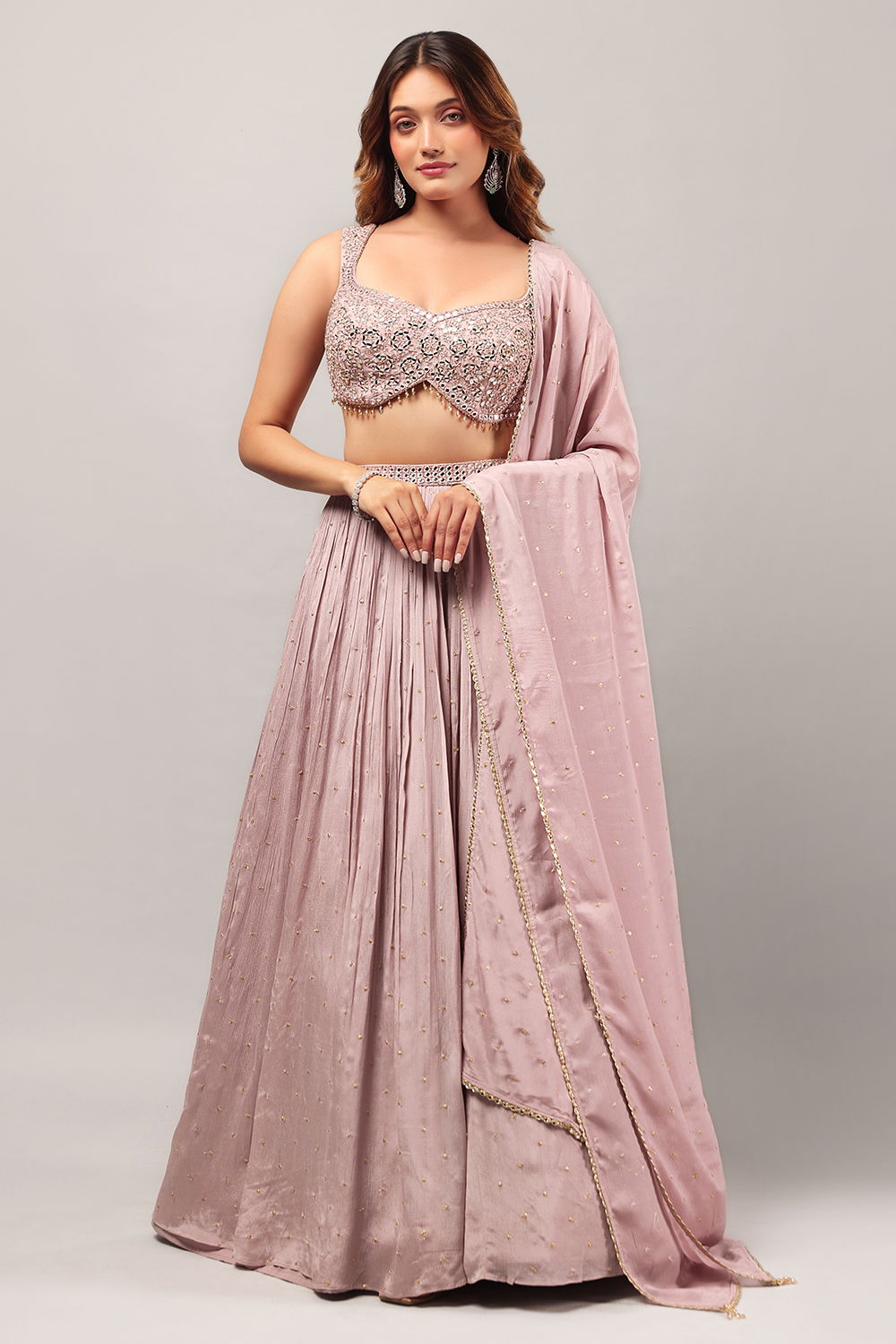
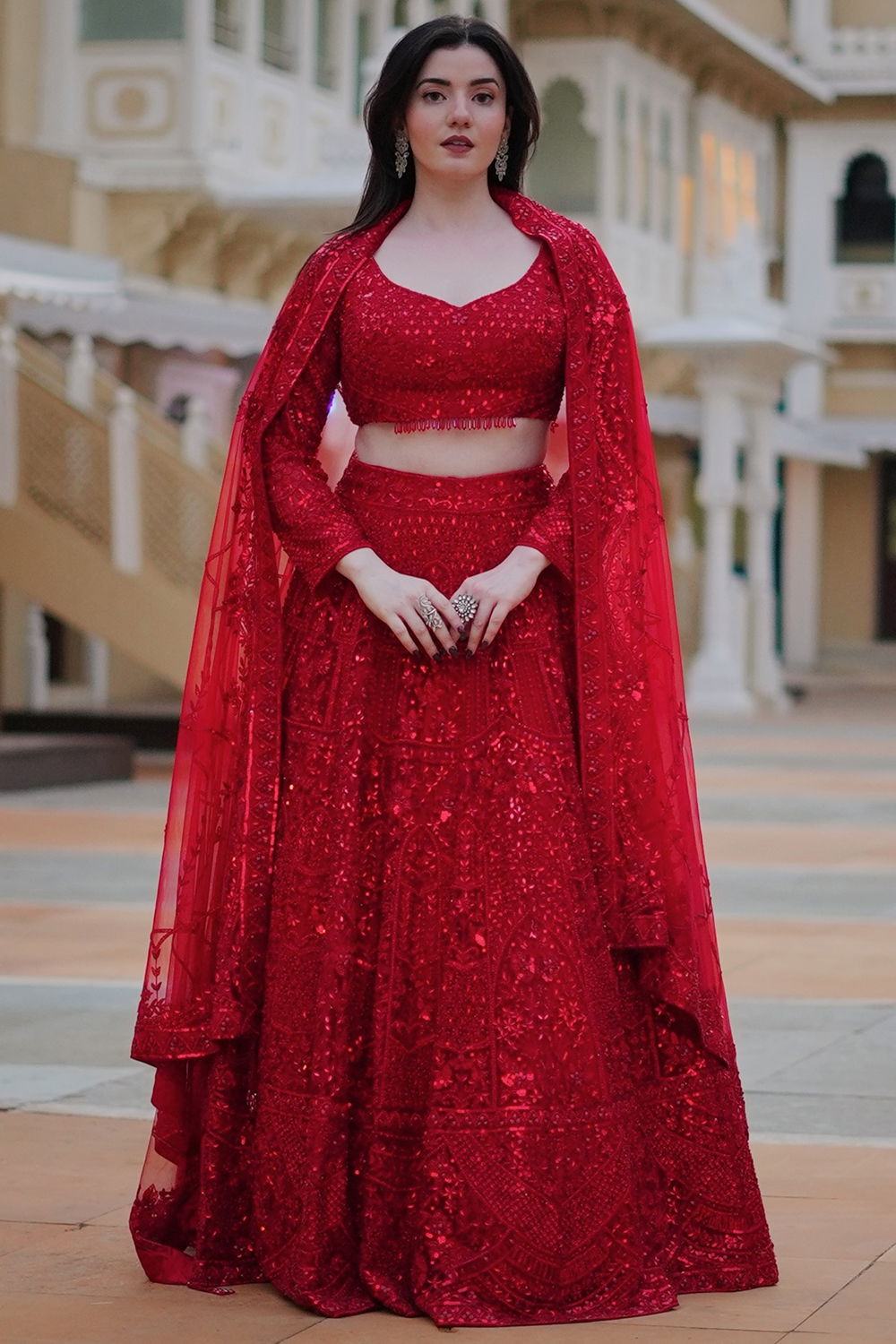
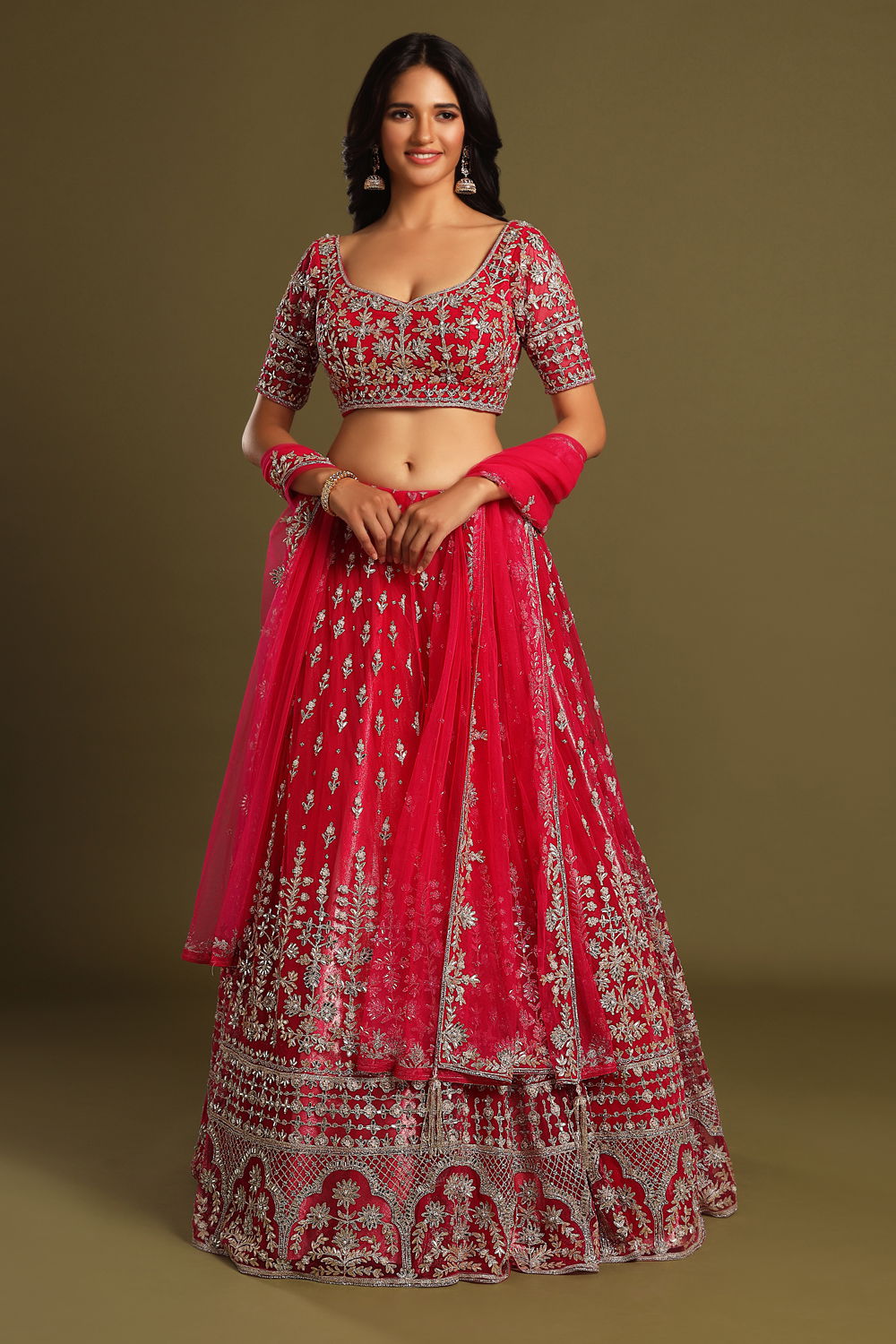
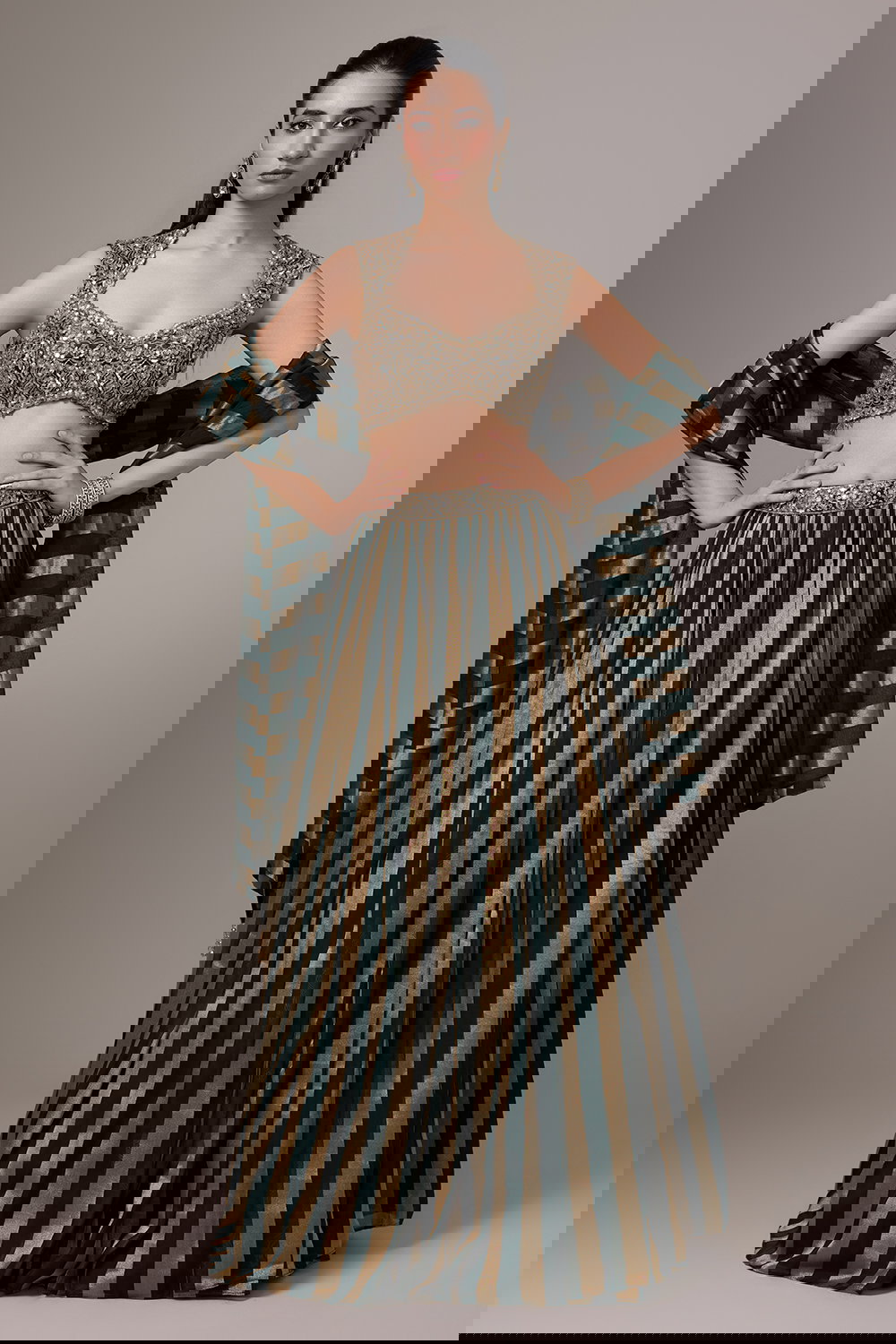
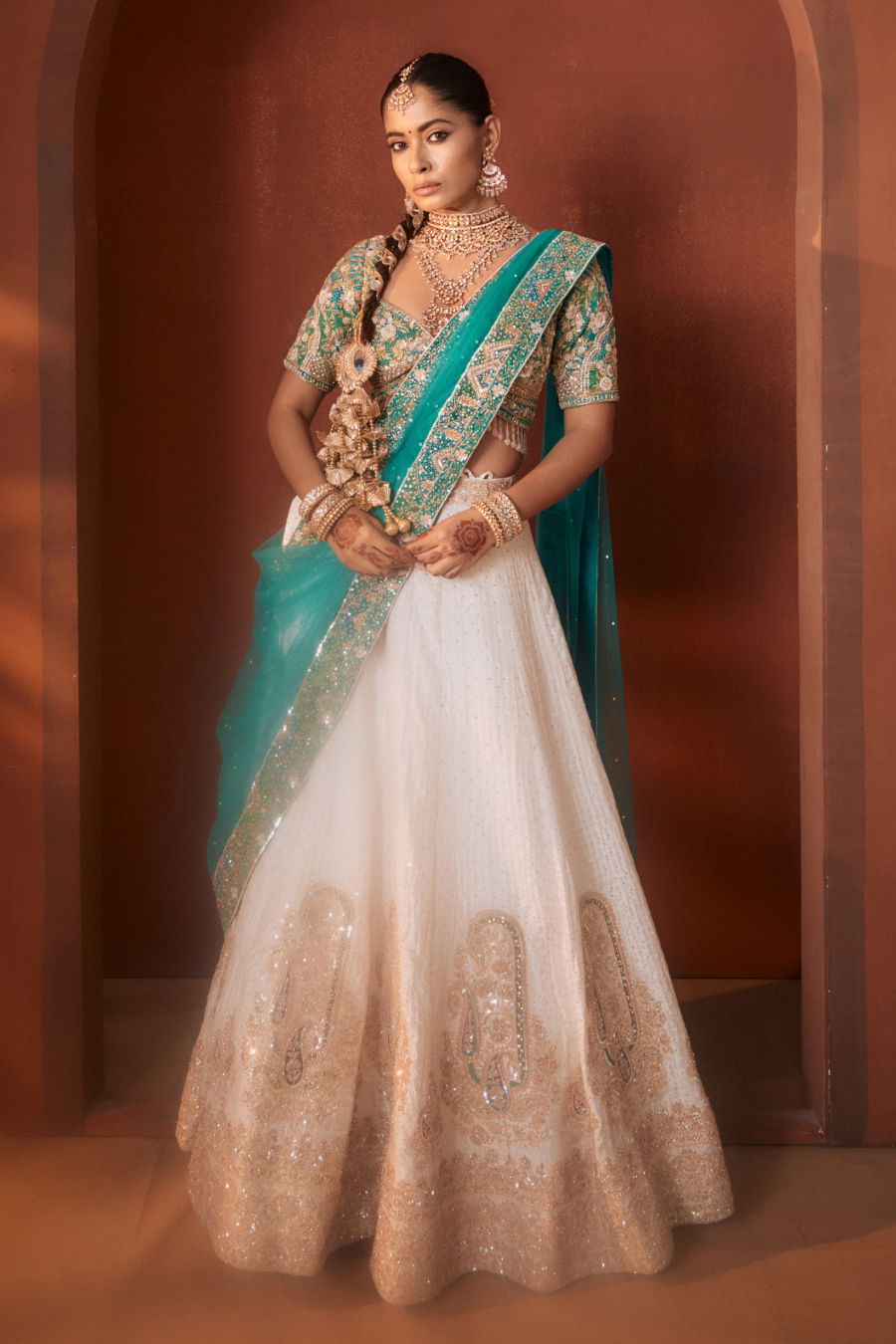
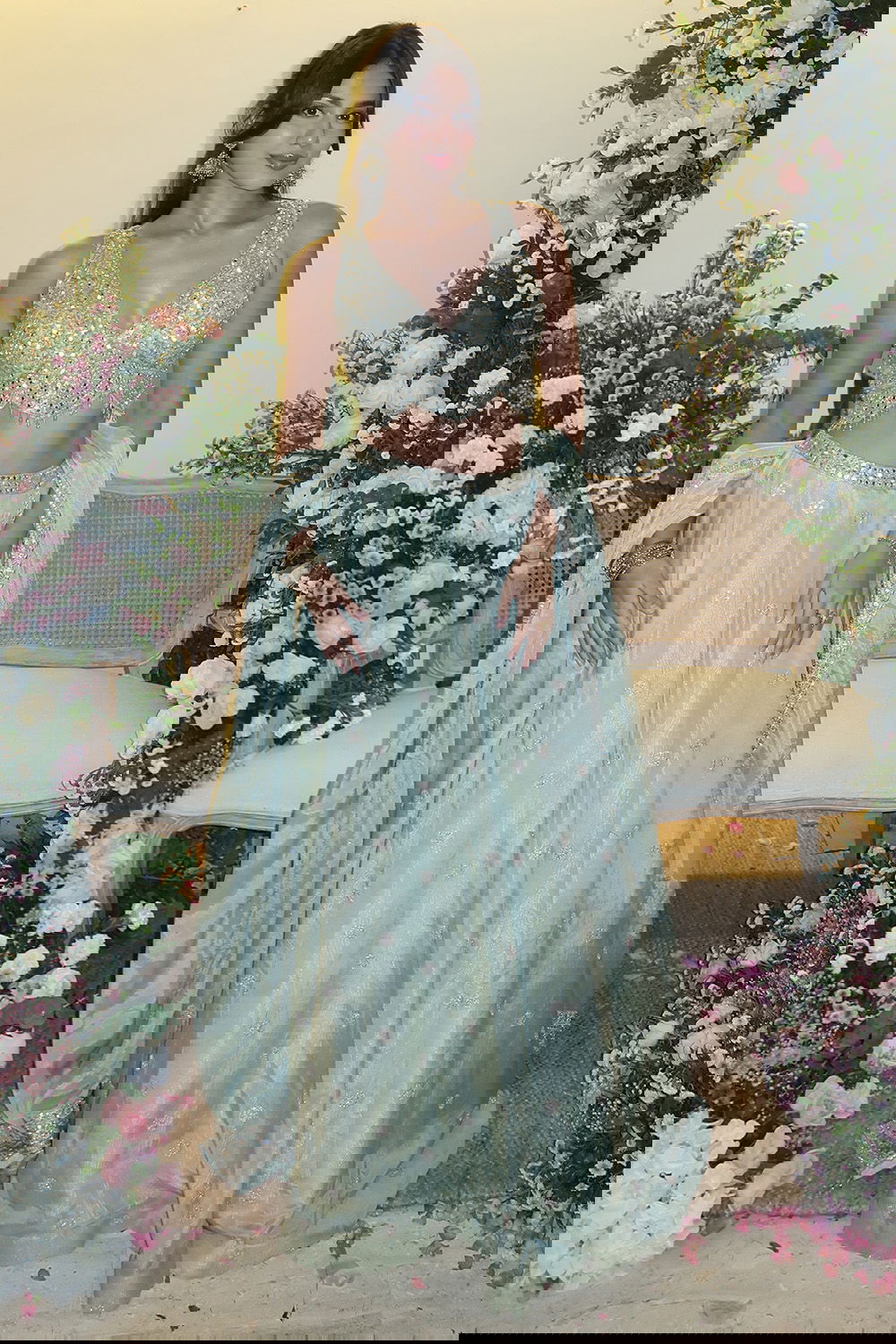
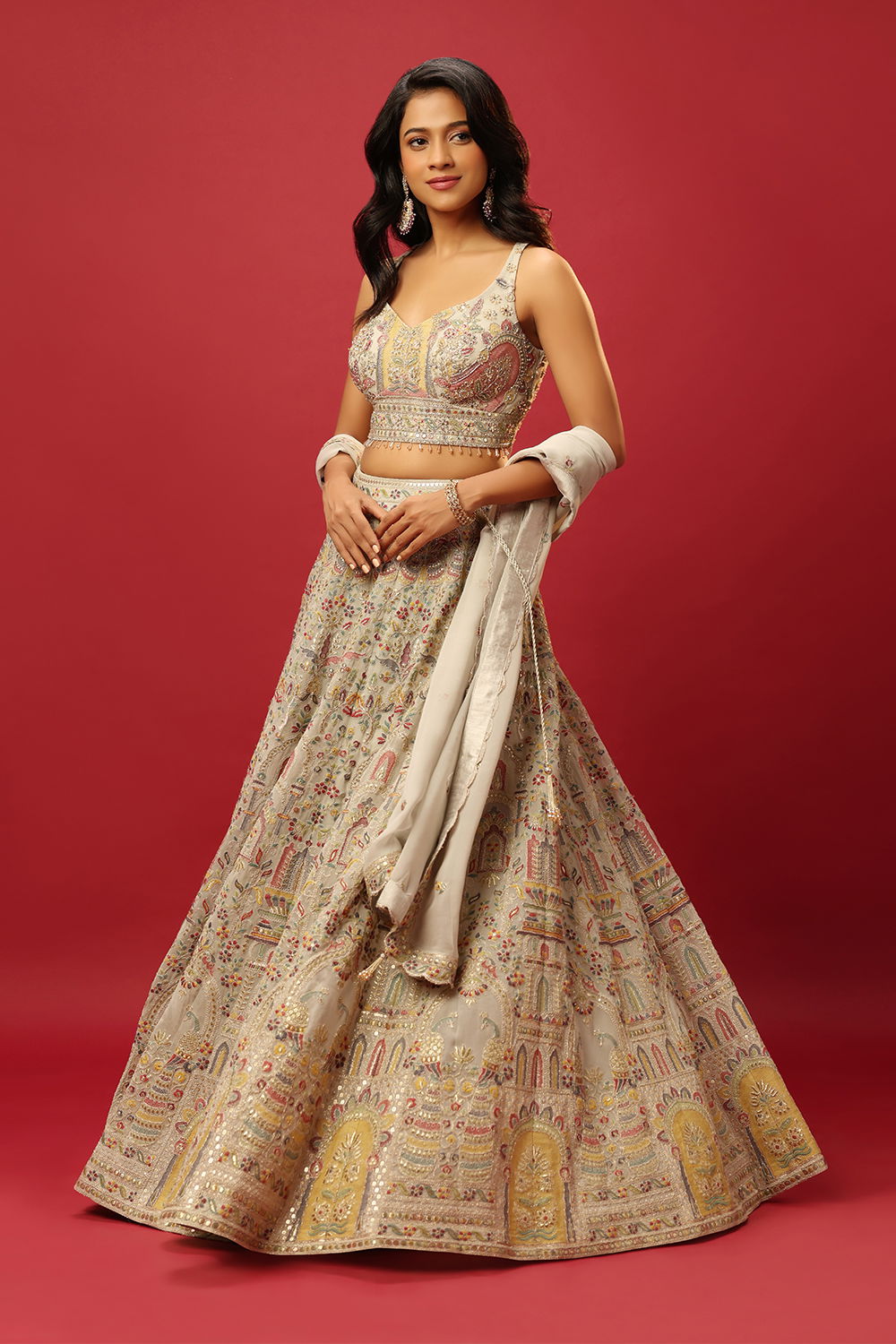
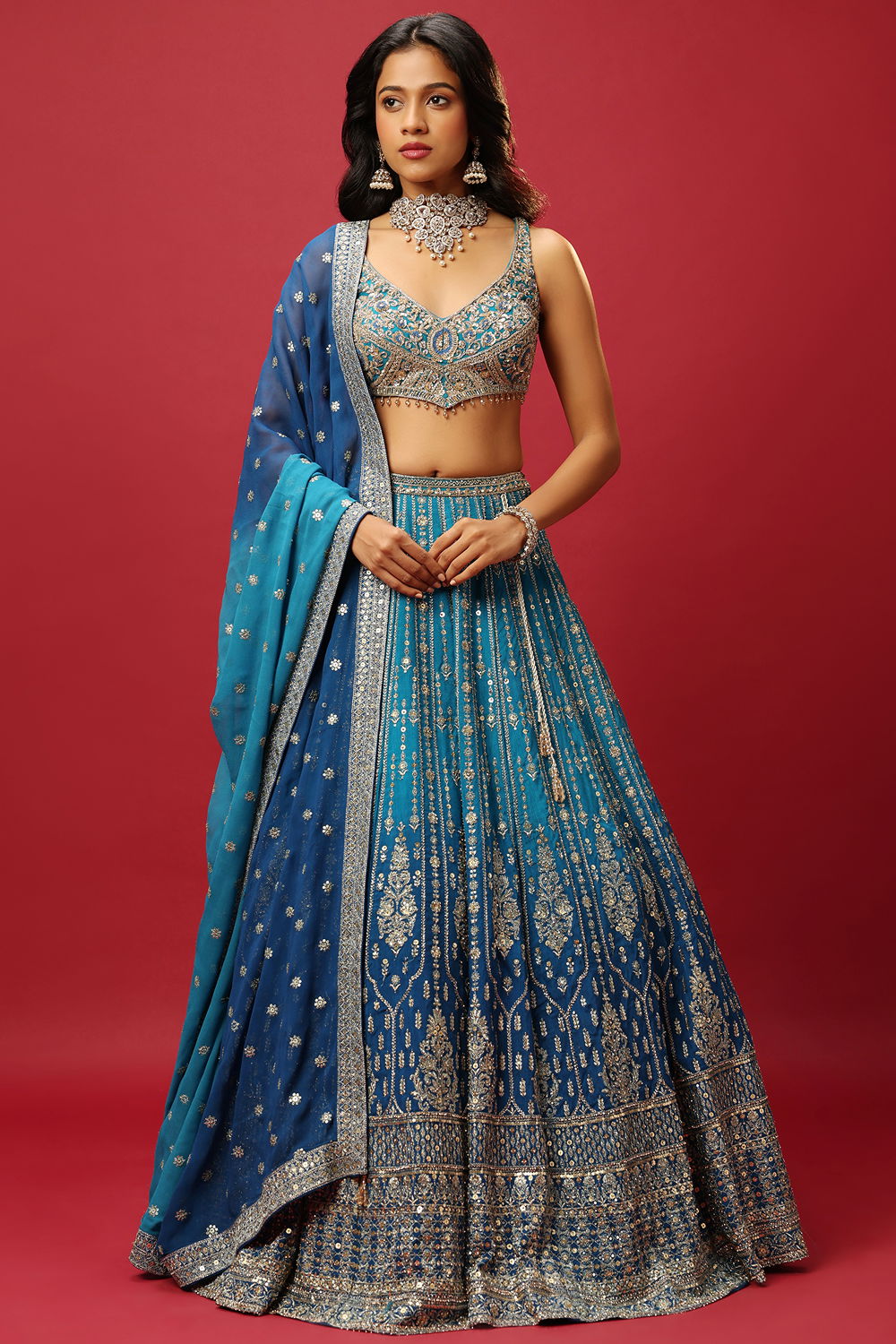
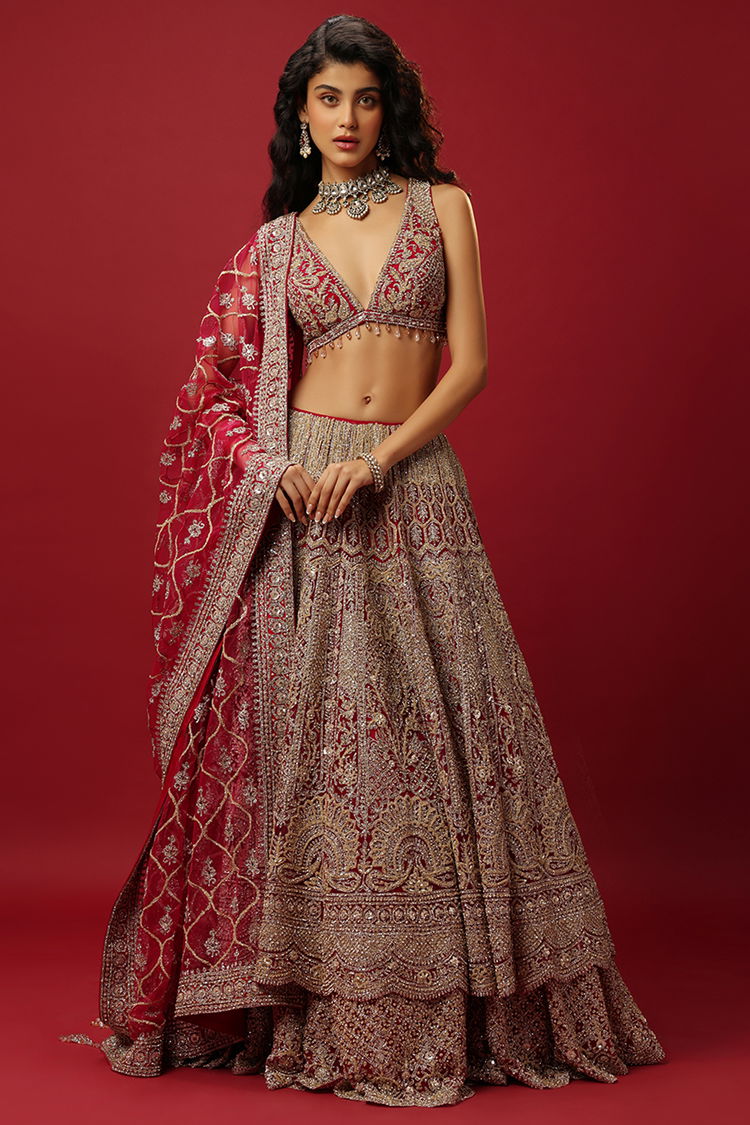
| Lehnga: |
A kind of skirt. Worn generally in combination with an odhani, which
is tucked into it at the waist. Possibly derived from Sanskrit lanka,
standing for the waist, and anga or limbs.
|
| Lungi: |
A garment-piece worn by men, as a long, straight skirt-cloth.
|
| Microfibre: |
Any
fiber (usually man-made) that is finer than silk. This combines the
benefits of the original fiber with a much softer hand and better
drape.
|
| Mandeel: |
A kind of decoratively worn turban.
|
| Mashru: |
A fabric woven of silk and cotton, the warp of one material and the
weft of the other. Literally, 'that which is in accordance with the
shara, Muslim holy law, which disapproves of an arel made of silk.
|
| Mirzai: |
A kind of jacket, often understood as a 'quilted coat'. it was generally
worn sleeveless over a shirt as outer garment; worn sometimes also
next to the skin, without anything underneath it.
|
| Moshla: |
A cap, worn usually by children, covering, apart from the back, the
back of the neck through a long, suspended flap.
|
| Mughlai
Paijama: |
A payjama (q. v.) of the 'Mughal' cut.
|
| Nadiri: |
A kind of jackets, worn as an outer garment. The Emperor Jehangir
described it in his Memoirs as "a coat they wear over a qaba. Its
length is from the waist down to below the thighs, and it has no sleeves.
It is fastened in fror4t with buttons."
|
| Naqsha: |
Pattern; scheme.
|
| Nastaliq: |
One of the many scripts in which Persian characters can be written.
|
| Natio: |
A kind of cap popular in Gujarat and Rajasthan. It consists generally
of a woven piece and headband, with a long flap, which hangs at the
back to cover the neck.
|
| Nimainimatana: |
A kind of tunic, a modified version of the kurta (q.v.), generally
made of fine material.
|
| Odhani: |
A veil-cloth for a woman, often worn tucked into the side of the waist
and drawn upward over the back and the head, the free end being draped
over the shoulder. Literally, 'a wrap'.
|
| Oxford: |
A
type of fabric usually made of cotton. It is a medium weight fabric
usually used in shirts. It has a soft luster.
|
| Paan-Shaped: |
Of the shape of a betel-leaf.
|
| Pagri: |
Turban.
|
| Paijama: |
Trouser-like garment, worn on the lower part of the body alike by
men and women. Literally, 'leg-clothing'. The payjama was worn in
many cuts and shapes, much variation being seen in respect of girth,
length, tightness, material, etc.
|
| Pairhaniphiran: |
Loose cloak-like shirt reaching down to the feet. Very popular as
an article of wear in Kashmir where it was made mostly of woolen cloth.
|
| Patka: |
A girdle or kamarband, worn usually over payjama (q.v.), and often
very sumptuous and decorative.
|
| Peshwaz: |
Long gown-like dress, consisting essentially of a choli (q.v.) worn
rather high to which a front-opening skirt is attached. The garment
was worn at an early point by men, too, but is essentially to be regarded
as women's apparel. Worn with much refinement and elegance 'on occasions
of household festivals'. Literally, "front-opening".
|
| Petia: |
An apron-like piece of cloth attached to the lower end of a choli
(q.v.) or kanjari (q.v.) and hanging down so as to partially cover
the stomach.
|
| Phulkari: |
Literally, "flowered work". Term used for a type of embroidery practiced
by women in the Punjab for head-veils and other garment-pieces. The
embroidery is worked in floss-silk upon coarse cotton cloth, in darning
stitch over counted threads, being worked from the back of the fabric.
|
| Pique: |
A
double knit construction with raised cords running vertically. Most
often used in medium to heavy weight cotton. Gives a textured surface.
|
| Polyester: |
A
man-made fiber. It resists wrinkling because it is resilient. It is
machine washable and dryable making it inexpensive to care for. It
does not readily absorb moisture so can feel clammy and uncomfortable
in warm weather. Because it does not retain moisture well it tends
to retain static.
|
| Polynosic: |
A
blend of polyester and rayon. Characteristics are crease-resistance,
shape retention, and minimum care. It is also known for its luxurious,
elegant hand.
|
| Poplin: |
This
is a fine quality fabric produced by using very fine warp yarns with
slightly thicker filling yarns.
|
| Press
mark: |
Undesirable shinning lines on the right side of the garment due to
incorrect ironing.
|
| Pucker: |
To draw up into folds or wrinkles.
|
| Pure
Virgin Wool: |
Describes
a fabric made from 100% wool that has never been spun, woven, or used
before.
|
| Qaba: |
A full-sleeved garment for outer wear, worn by men, closely related
to thejama . William Thevenot who saw this garment frequently at the
Mughal court spoke of the "caba of the Indians" being "wider than
that of the Persians, and 1 cannot tell how to express the manner
of it more intelligibly, than by saying it is a kind of gown with
a long jerkin fastened to it.
|
| Qamis: |
A shirt. Cf. French, chemise.
|
| Rayon: |
A
fiber created by the mixing of plant cellulose and chemicals. It is
thought of as a man-made fiber. It has the advantage of breathability
and absorbency. It has good draping qualities and ability to be dyed
in brilliant colours. It has superior strength.
|
| Sadri: |
A sleeveless jacket worn over a shirt or kurta, alike by men and women.
The name of this popular garment derives possibly from aura, 'the
upper part of the human breast'.
|
| Salwatishalwar: |
A payjama like garment for the lower part of the body, baggy and wide
at the top, and not so tight around the legs and ankles. Worn mostly
by women, but also by men in some parts of India, especially in the
northwest.
|
| Sandwash: |
A
finish to achieve sueded effect and soft hand.
|
| Seam
Line |
Is the line which indicates where the seam should be stitched - or
it is plainly the stitching line of any garment.
|
| Serge: |
A
fabric often made of wool. Looks like gabardine but the diagonal ribs
(the twill) are more pronounced and shows on both sides.
|
| Sharkskin: |
A
smooth finished, clear faced, twill weave fabric made in two tones;
used in worsted for suits and coats.
|
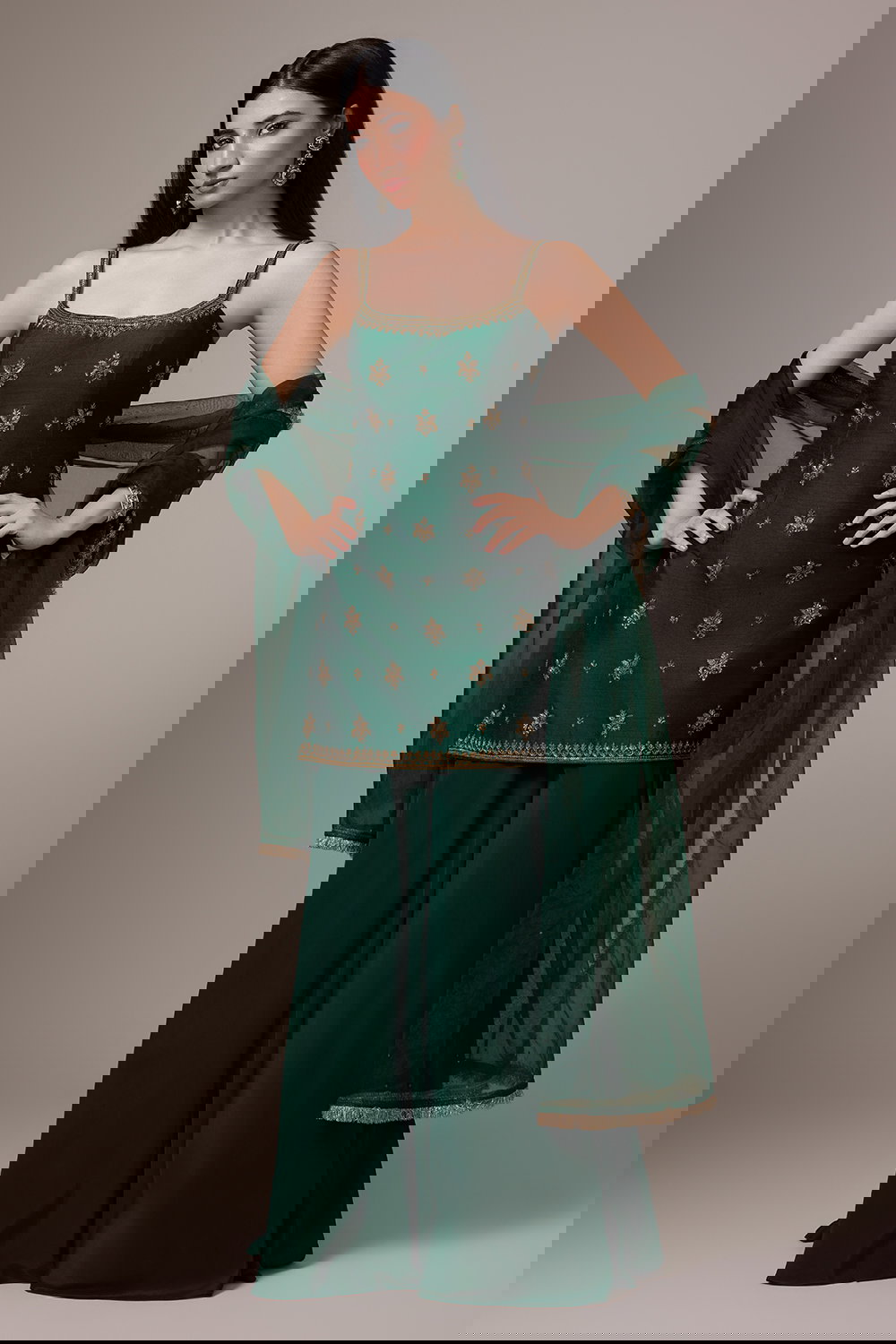
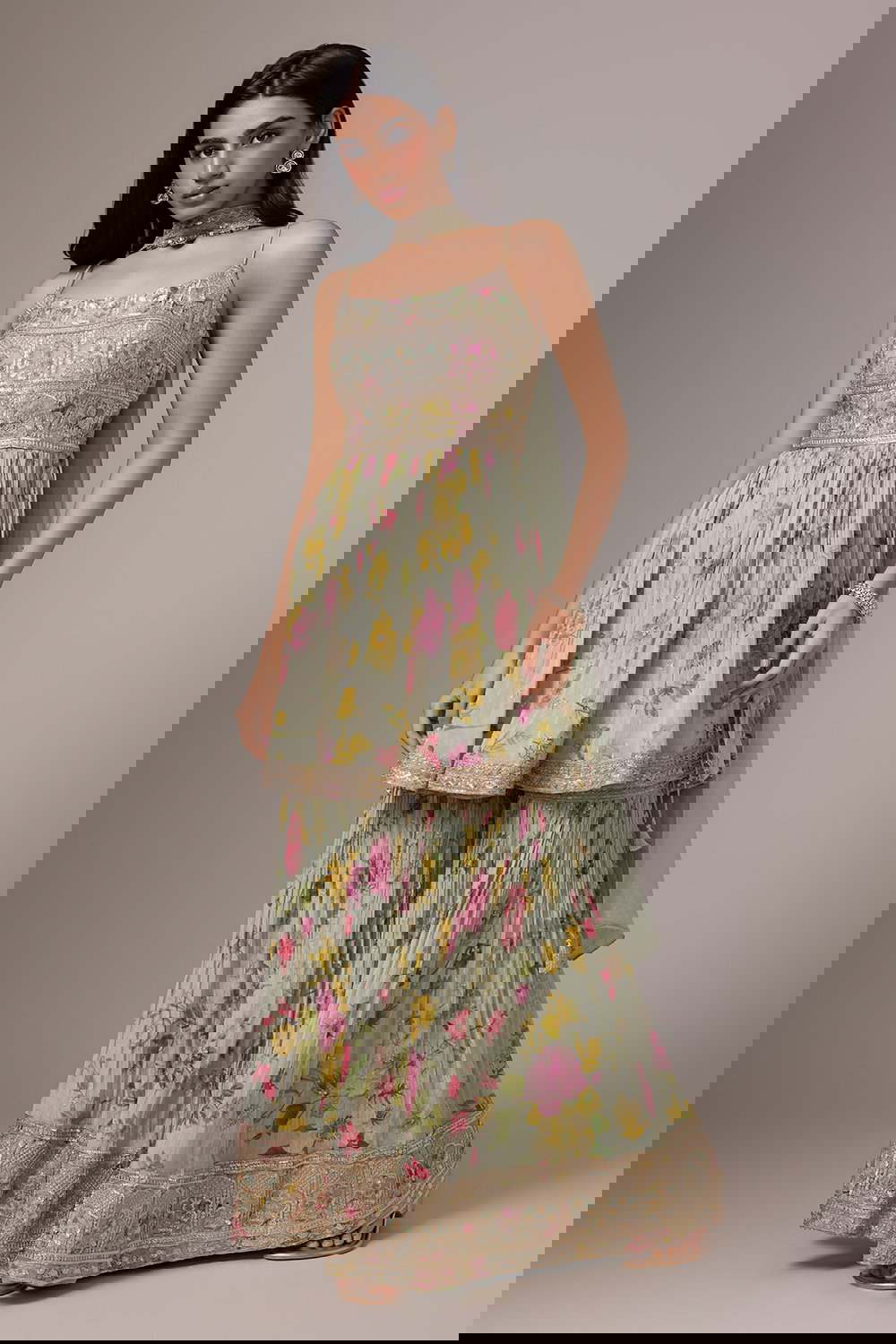
| Sharara: |
|
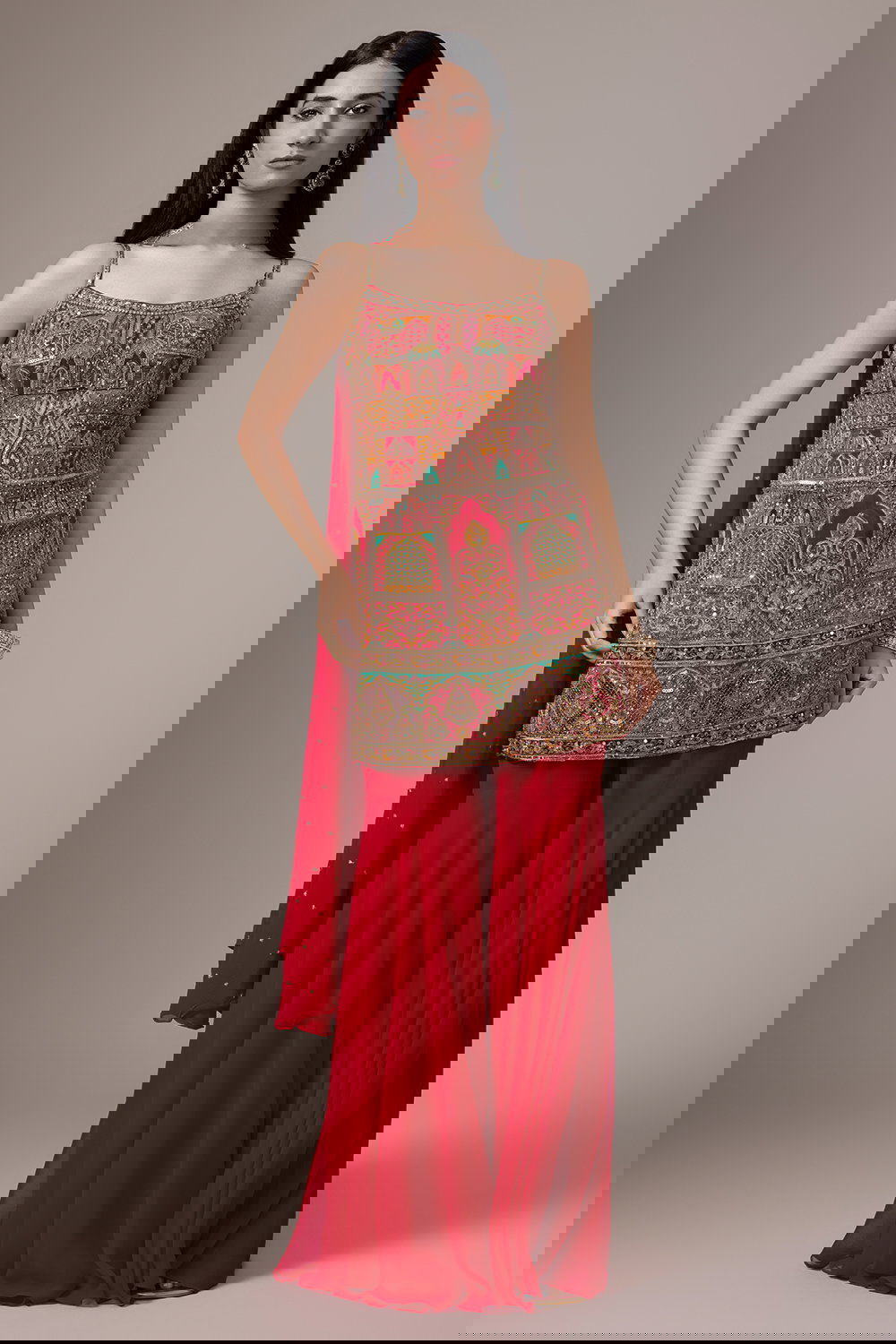
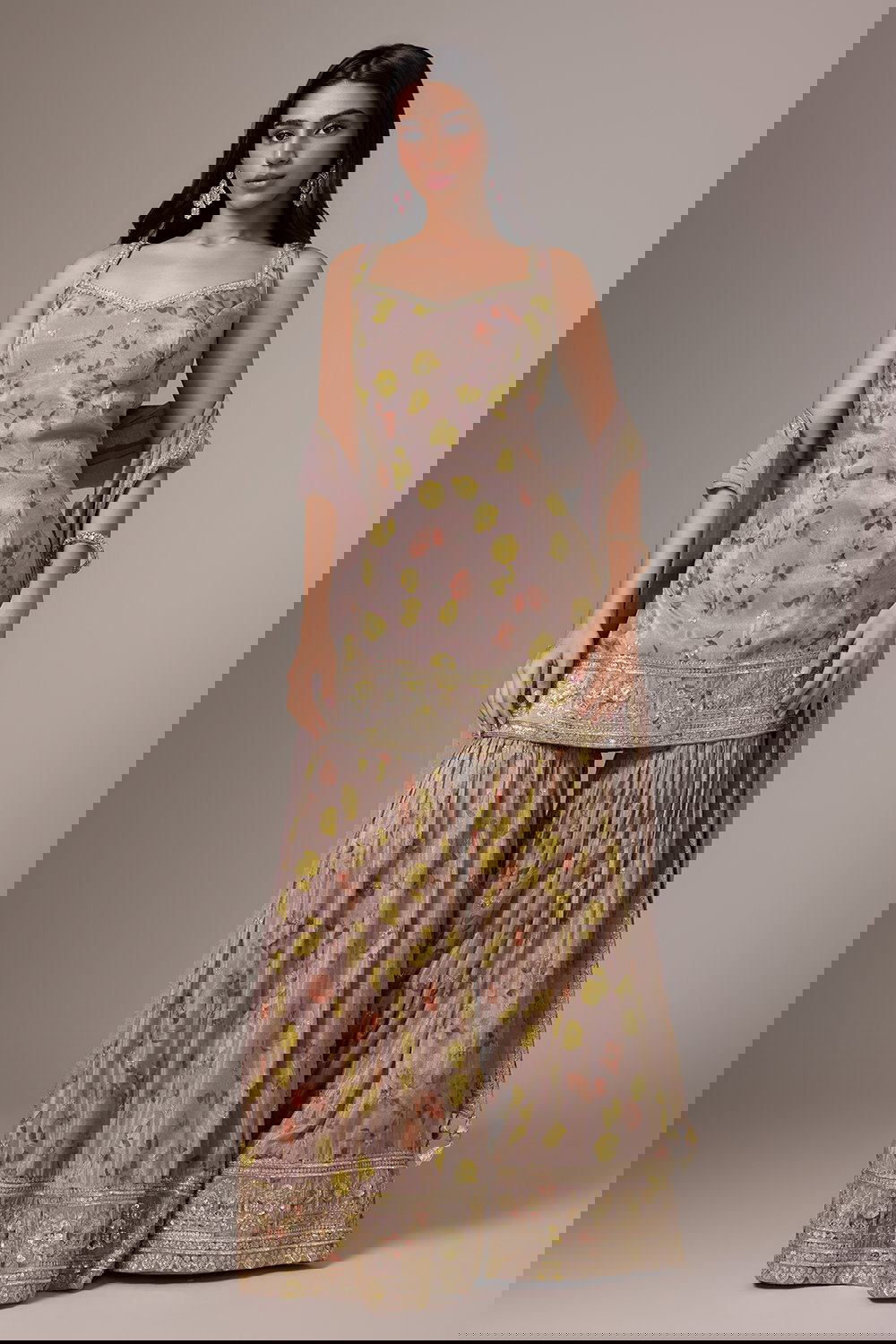
A kind of loose, trailing payjama (q. v.) worn by women.

|
| Sherwani: |
a coat like garment, worn by men close to the body, of knee-length,
and opening in front with button-fastenings. Related to the achkan
(q.v.); especially popular at the Hyderabad court and in Aligarh.
|
| Sidha
Paijama: |
Payjama (q.v.) with a straight cut.
|
| Silhouette: |
Dark-shaded profile portrait outline of any garment.
|
| Suralisurwal: |
A breeches-like garment for the lower part of the body, tight around
the legs. Worn mostly in Nepal and contiguous areas.
|
| Suithana:
|
Payjama
like garment, worn mostly by women; wide at top and comfortably roomy
around the legs and ankles. Possibly from Sanskrit svasthana, mentioned
in the Harshacharita.
|
| Super100: |
A
term used to describe a worsted cloth composed of yarns that have
been twisted 100 times. The cloth is finer, with wonderful drape and
sheen.
|
| Surface
Decoration: |
Ornamenting the surface of a fabric or garment (e.g. Embroidery etc.)
|
| Tahband: |
A kind of girdle or belt.
|
| Takauchiya: |
A kind payjama (q.v.). Abu'I-Fazl describes it in the Ain-i-Akbati
as "a coat without lining, of the Indian form. Formerly it had slits
in the skirt, and was tied on the left side; His Majesty has ordered
it to be made with a round skirt and to be tied on the right side."
|
| Tanis: |
Tie-cords or strings used to fasten or tighten a garment when worn.
|
| Teentah
Topi: |
A topi (q.v.) consisting of three different pieces, stitched together.
|
| Taper: |
To decrease width gradually and bring it to an end point.
|
| The
Look: |
To portray a certain image. (The contemporary look i.e. the look of
today. The look of the yester years)
|
| Thread
Count: |
Is the number of warp and weft yarns in one square-inch of a fabric
(warp yarn x weft yarn per sq. inch)
|
| Tiki:
|
A
round piece; generally tacked on to a garment.
|
| Topi: |
Cap.
|
| Trend: |
Fashion is not static, they are constantly moving, their movement
has a definite direction. The direction in which fashion moves is
called fashion Trend.
|
| Trim: |
To cut off the ragged edges below the seam line to prevent the garment
from being bulky and to give the seam a neat finish.
|
| Tukma: |
Small, button-like boss used in conjunction with a ghundi (q.v.) or
loop, for fastening.
|
| Tweed: |
|
Usually
made of wool, this fabric has a rough appearance. It is often made
with different shades of the same colour. Often used in suits and
jackets.

|
| Vajani: |
A kind of payjama (q. v.), worn in Kutch and Saurashtra, often richly
embroidered.
|
| Viscose: |
Also
known as rayon; is a man-made fiber produced from chemical solutions.
It has a base of cotton or wood pulp. It is absorbent and lightweight
with a fair elasticity. It can be spun to resemble cotton, linen,
wool, or silk. It does tend to shrink so dry cleaning is highly recommended.
|
| Warm
Colours: |
Colors like Red, Orange, Yellow are classified as warm colors, they
are advancing in nature, because as seen by the eyes these colors
move closer thereby reducing the size of an object. Warm colors are
cheerful.
|
| Warp: |
Yarns
that run lengthwise.
|
| Weft: |
Yarns
that run widthwise.
|
| Wool: |
A
natural animal fiber. The 'crimp' of wool gives it the resilience
that allows it to resist and recover quickly from wrinkling and crushing.
The crimp also forms air space in the wool giving it excellent insulation
against heat or cold making wool an excellent year round fabric. If
your wool garment states that it can be washed you must wash it in
cold water; do not pull or wring the garment when wet (it must be
lifted and gently squeezed); roll your garment in a towel to draw
out moisture then lay out in its original shape to dry.
|
| Woolens: |
This
term also refers to a 'spinning process. The wool fibers are not uniform.
Most fabrics made in this method are relatively loose and you can
see the short end fibers rising from the surface.
|
| 100%
Wool: |
Refers
to an all-wool fabric which may contain different grades of wool.
|
| Worsted
Wool: |
This
term refers to a 'spinning' process. The wool fibers are combed and
only the longer fibers are used. The strands are combined and doubled
over themselves with a twist. Worsted wools are characteristically
smooth, have an even texture, with a relatively high twist.
|
| Yjshtinuam: |
|
(topi) Boat shaped cap, worn close to the head. KULAH

|
| Zardozi
Work: |
Work in which gold or silver metal threads are sewn on a fabric like
satin or velvet with metallic threads to give the appearance of true
embroidery.
|
| Zari: |
Metallic thread twisted over cotton or silk for brocading. Also referred
to, in popular parlance, asjad
|
| Zirah: |
A kind of coat of mail.
|