| Parsi Marriage
Ceremony
In
Parsi community, there is a belief that God revealed
to Zarathushtra, the prophet, that not only is marriage
a righteous act, but it is also a commitment, which
makes even the earth rejoice.
Wedding
Attire
The Parsi groom wears a traditional
white overcoat "dugli", white cotton pants and a hat
called "pughdi" or "fetah" especially designed for the
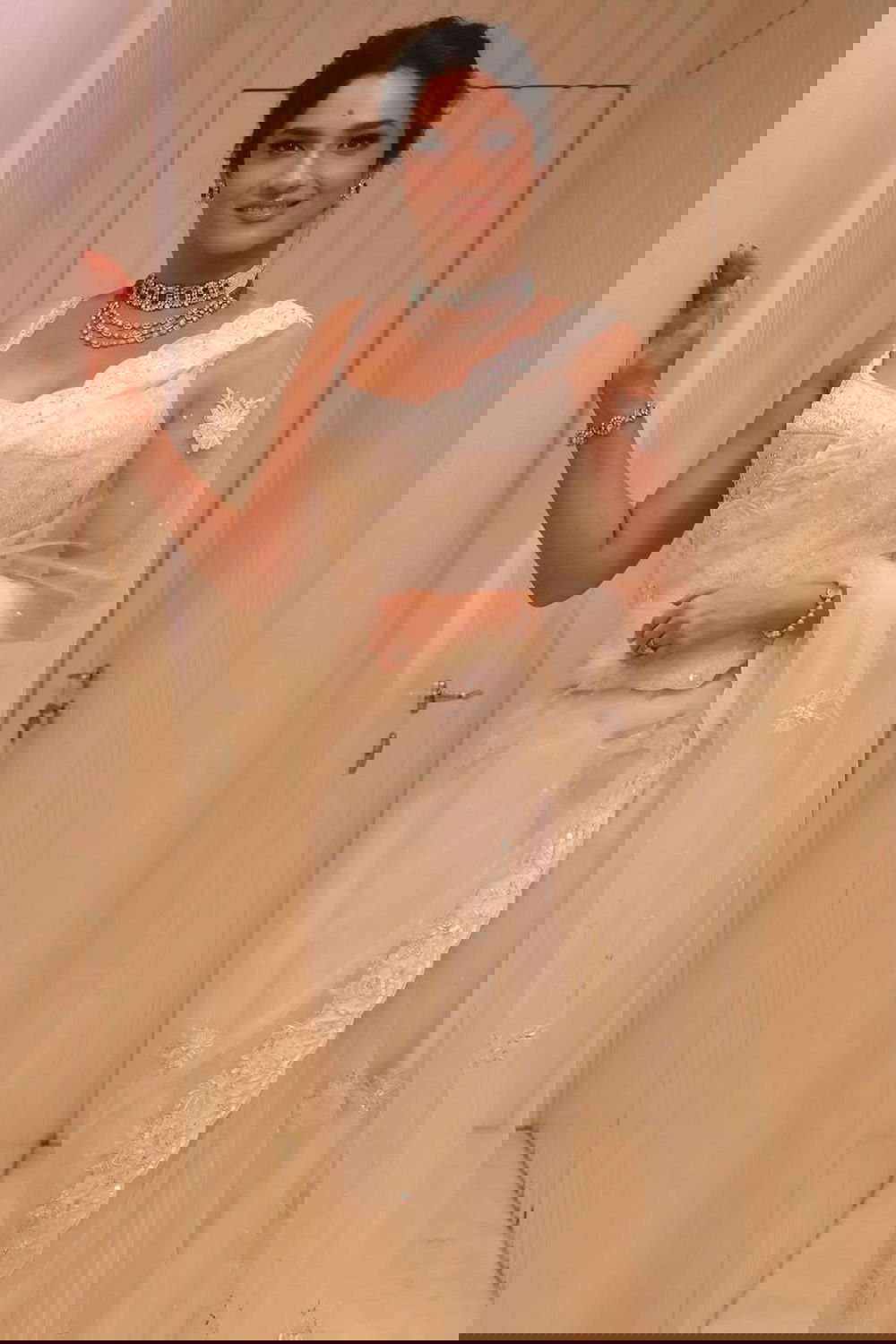
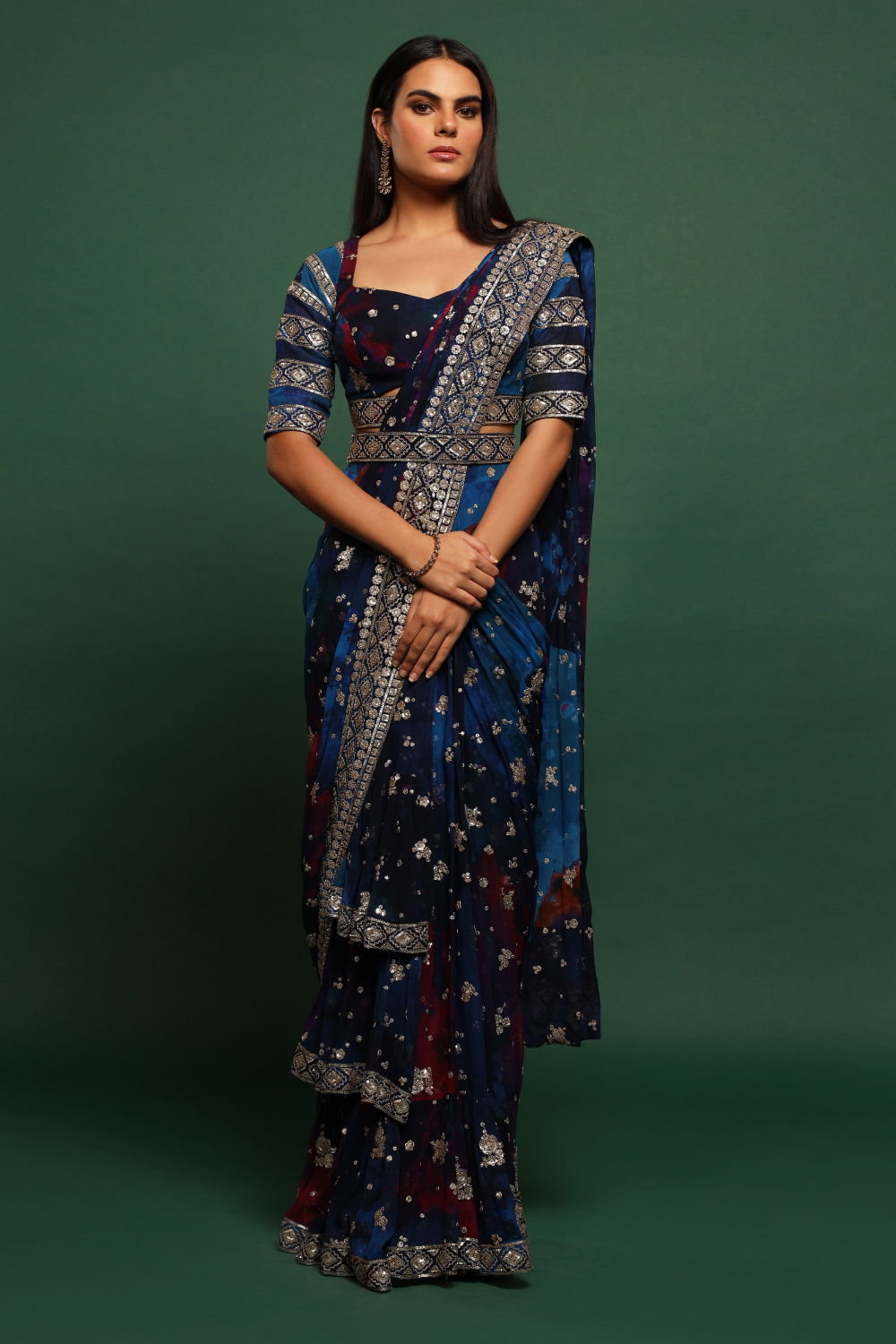
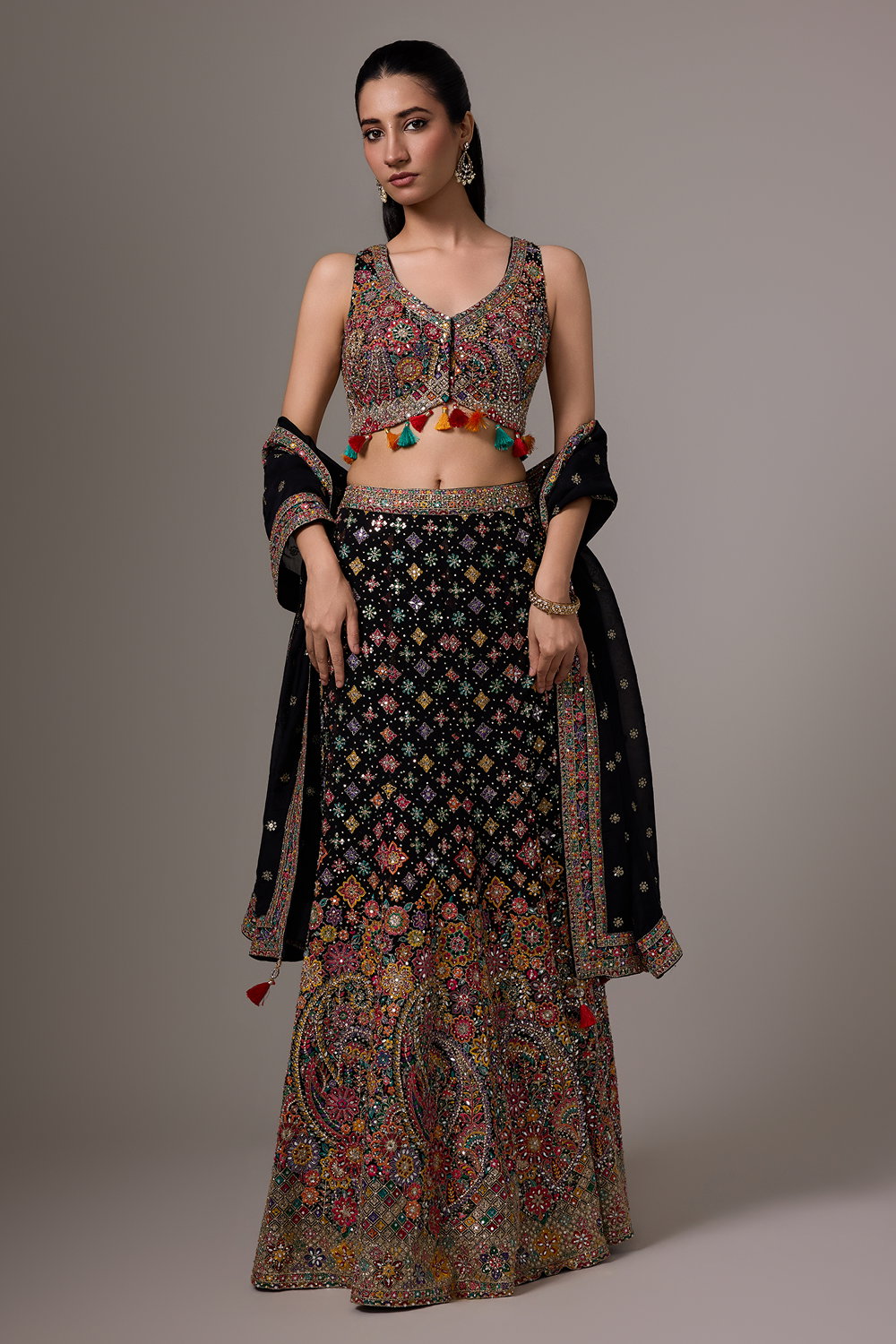
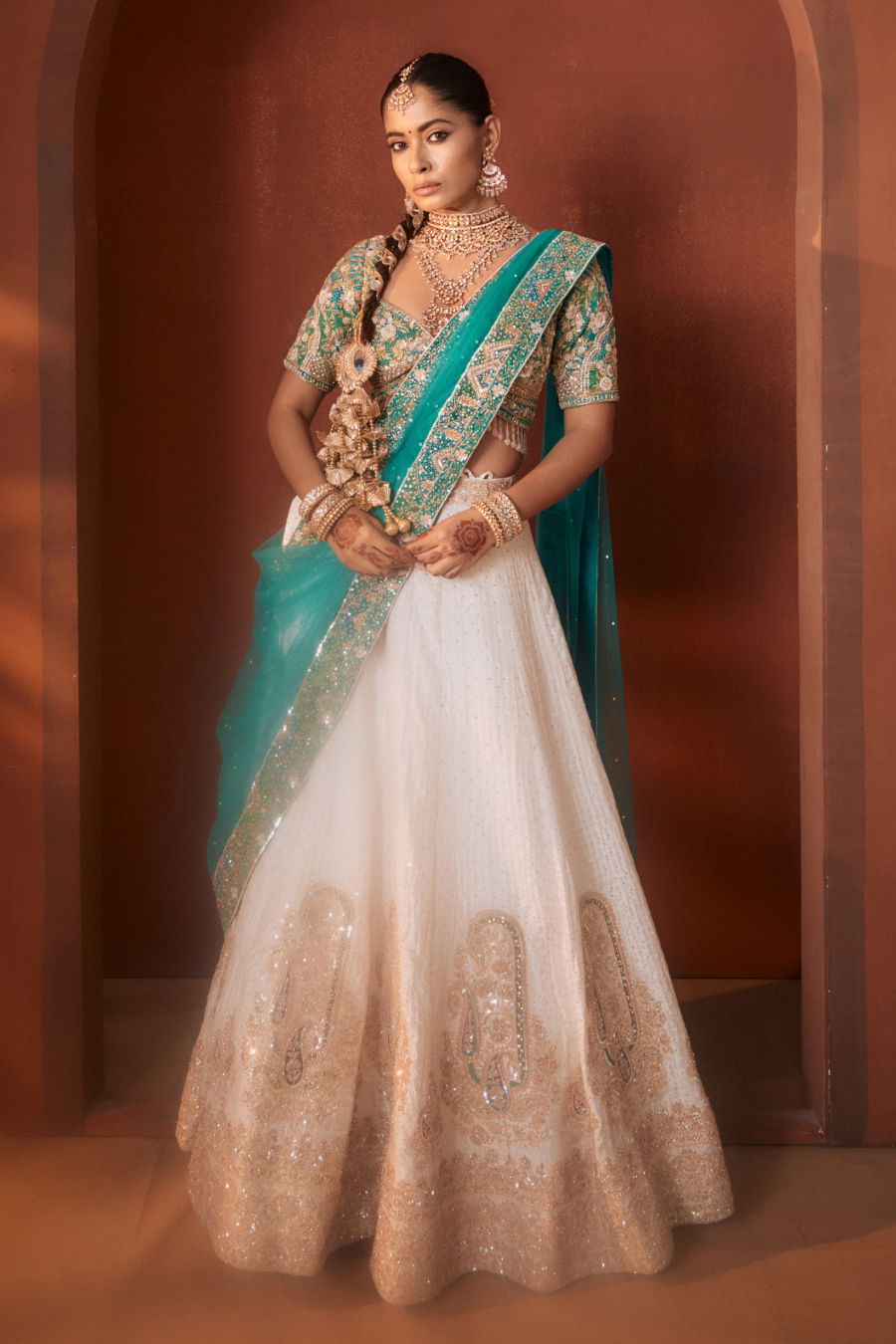
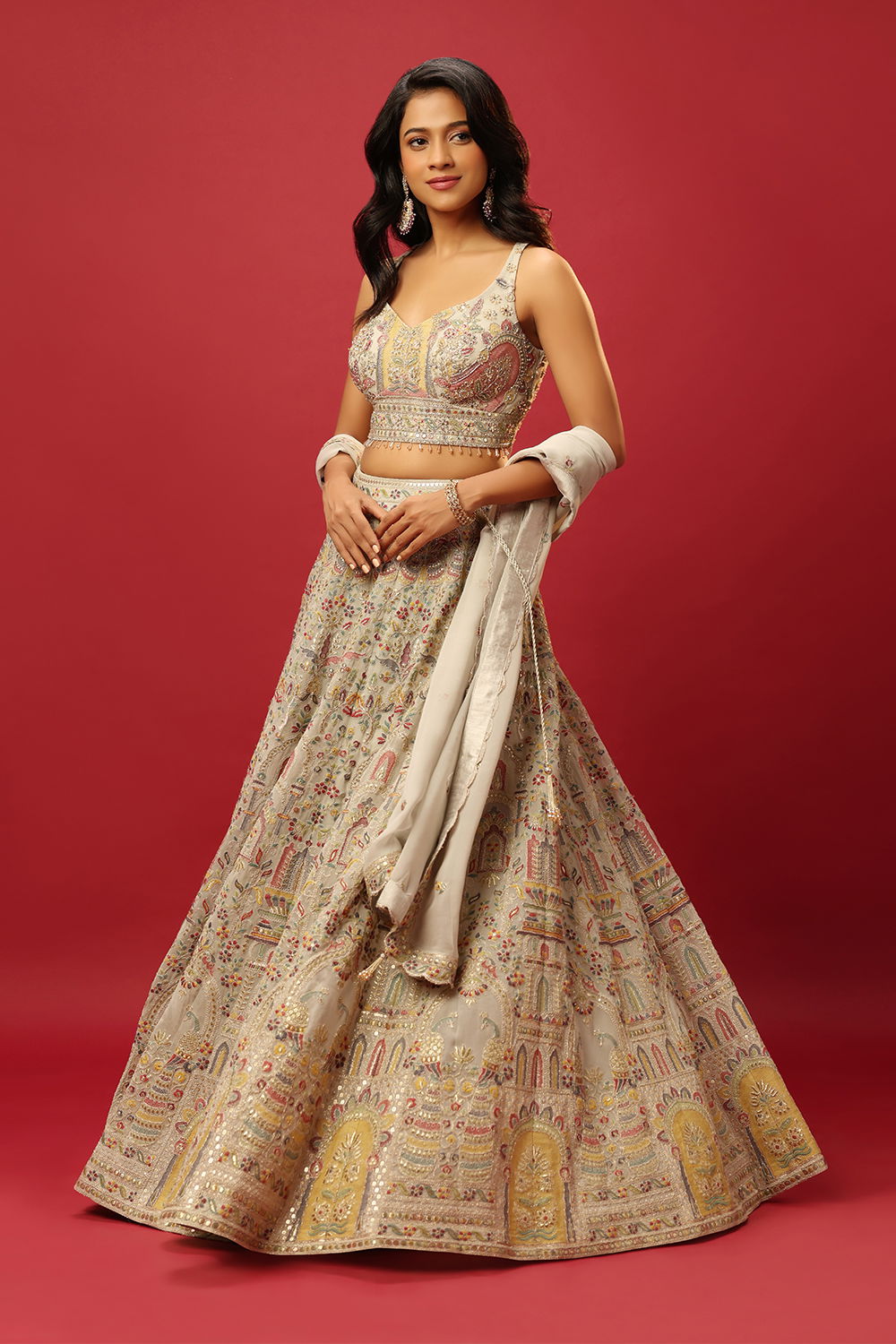
occasion. The bride is usually dressed in a white sari
embroidered with silver or gold. Her head is partially
covered. White is regarded as a symbol of purity in
Zoroastrianism. The groom's parents generally gift the
jewellery worn by the bride.
Pre
Marriage Ceremony
The
engagement
ceremony
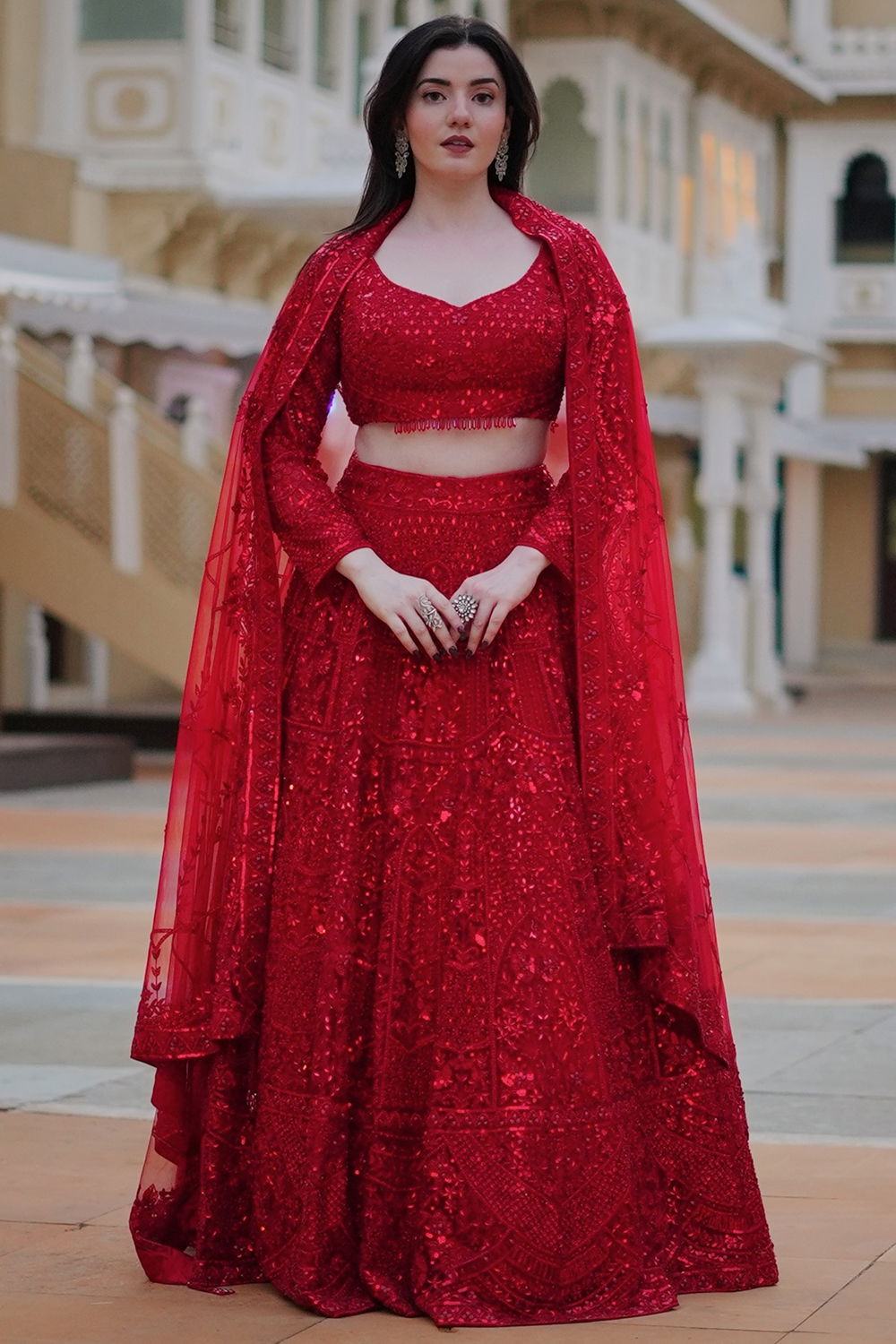
begins by the groom's side gifting a red sari (Adravadu),
jewellery and accessories to the bride.The bride's family
goes to the groom's house with gifts such as clothes,
etc. Inside the groom's home, both the bride and the
groom are made to stand on a wooden plank with a "rangoli"
design. The bride's mother puts a "tilak" on the groom's
forehead, garlands him and offers a coconut to him.
Then rings are exchanged.
Mandav
Saro
"Mandav Saro" is a Parsi ritual, which is performed four days
prior to the marriage ceremony. A flowerpot with a mango
plant, planted in it is kept in the house. The flowerpot
is placed above a rangoli design. Then a square with
a cross in center is drawn on the wall with "haldi"(turmeric)
and "kumkum paste. A plate is decorated with coconut,
curd, sugar, betelnut, kharak, a little packet (pudi)
of small green and red motis and coins. All these ingredients
along with milk, water and a 1.50 paise coin is put
into the flowerpot after removing the mango plant. A
coconut is circled seven times around the pot and then
smashed against the wall or ground. Everyone prays that
the marriage should take place peacefully.
Naha
On the eve of the marriage the bride and groom take
a religious bath or "Naha" who bathe with consecrated
water drawn from the well in a Fire Temple - "Nirang"
or consecrated Bulls urine,which has to be sipped, and
a pomegranate leaf which has to be chewed and spat out.
The Parsi priest stands outside the door of the bathroom and
instructs the candidate. The "Nirang" is to purify the
body while the pomegranate leaf is to imbibe wisdom,
the fruit being a symbol for wisdom. After the holy
bath the bridal couple dress for the occasion until
its time to go on the wedding platform.
The Achu Michu Ritual
This ritual is performed to purify the mind and body
of the bridal couple. Female members of the respective
families carry two silver platters each containing the
following items. The first tray (Achu Michu) contains
the following items: egg (symbolizing life giving force),
coconut (symbolizing inner and outer worlds), betel
leaf and areca nut (symbolizing suppleness and strength),
unshelled almond (symbolizing virtue and honesty), dried
date (symbolizing resilience), sugar crystal or sugar
biscuit (symbolizing sweetness), dry rice (symbolizing
abundance), rose petals (symbolizing happiness), a glass
of water (symbolizing purity, sanctity and perfection)
The second tray contains the following items: silver
cone (symbolizing the mountain of sweetness from which
good spirits are believed to descend), coconut (symbolizing
the inner and outer worlds), grains of rice or wheat
(symbolizing abundance), vermilion (symbolizing the
receptacle of holiness), sugar crystals (symbolizing
sweetness), green leaves (symbolizing nourishment),
pomegranate (symbolizing immorality), pistachio nuts
(symbolizing firmness), silver and gold coins (symbolizing
wealth), garland of flowers (symbolizing joy).
The bride's mother then performs the ceremony. The bride's
mother takes an egg in her right hand from the "Achu
Michu" tray, rotates it seven times in a clockwise manner
over the groom's head and breaks it on a stone placed
to the right of the groom's feet. Then the bridegroom's
mother takes the betel leaf, areca nut, dried date,
and almond and sugar crystal in her right hand and rotates
it seven times in a clockwise manner over the groom's
head. Then the coconut is rotated over the groom's head
and broken on the stone placed to the right of the groom's
feet. Afterwards, a few grains of rice and rose petals
are taken out of the tray, while water is sprinkled
on the remaining rice and rose petals and the tray is
once again rotated over the groom's head. The mixture
is cast down on both sides of the groom's feet. A handful
of dry rice is showered over the groom as a token of
invoking blessings. The groom is garlanded and given
a fresh coconut to hold. A vertical "tilak" is applied
to his forehead in vermilion. The groom then steps onto
the stage with his right foot and awaits the arrival
of his bride. The bride also goes through the same rituals
as undergone earlier by the groom. Upon the completion
of all the preliminary rituals, the bride steps onto
the stage and is seated opposite the groom.
Marriage
Ceremony
Once the bridal couple is
seated opposite each other on the stage a white cloth
is held between them so that they cannot see each other.
The bride's family makes a bundle of two threads entwined.
This is offered to the priest, who holds both the right
hands of the couple beneath the cloth and makes seven
rounds of thread on their hands. Family members who
are married hold this thread from the right and seven
rounds are taken on the stage while the priest chants
prayers. The couples then throw some rice on one another
and then the cloth is removed. The couple then sits
facing east and then the priest asks in Persian three
times "Do you wish to marry this man/woman" and the
couple have to say "Pasande Kardum". After completion
of the blessing rings are exchanged and the priest declares
that the couple are officially married and the groom
kisses the bride.
Post
Marriage Ceremony
The first task after the marriage ceremony is to legalise
the marriage. A representative from the office of the
Registrar of Marriages is invited as an honoured guest
to stay for the marriage feast. The young couple signs
the documents of marriage registration and the official
seal is then stamped on the paper. After this the couple
head straight for the Fire Temple to offer prayer and
take blessings of the God. And then the couple attends
the reception party. After the party the bride and the
bridegroom leave for home separately guarding a "diya"
in a small silver container. The bridegroom reaches
home first and carefully places the "diya" on the sidetable
in the bedroom. The bride is then accompanied by her
aunt or other female relatives and she also guards the
flame and on reaching home to her impatiently waiting
husband places the lamp next to his in the bedroom.
And this culminates the marriage.
|