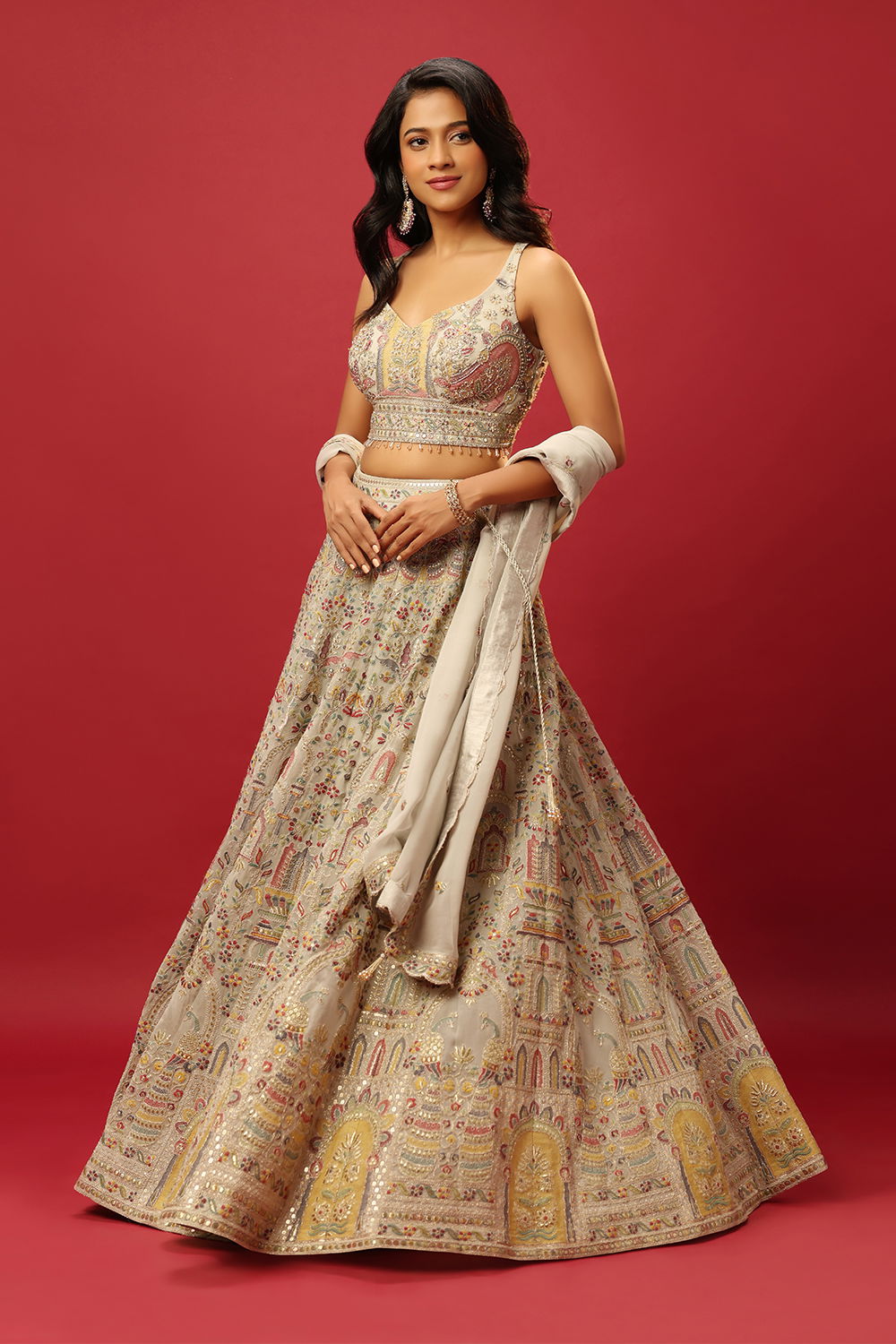
| Muslim Marriage Ceremony
Muslim
marriage according to Muslim laws is a contract. The
celebration of a Muslim marriage is called "Nikah''.
Its validity depends upon the consent of both parties,
called "Ijab" and "Qabul". The declaration and acceptance
should be in the presence of two male witnesses and
a "mehr" is usually decided, which should not be less
than 10 dirhams. The Muslim law appoints no specific
religious ceremony, nor is any religious rites necessary
for the contraction of a valid marriage. The religious
ceremony is left entirely to the discretion of the Qazi
or the person who performs the wedding. Some only recite
the "Fatihah" and the "Durud". The usual practice is
for the groom to recite the lines after the Qazi ending
with "Qabul, Qabul, Qabul".
The
most common order of performing the service is that
the Qazi, the bridegroom and the bride's attorney, with
the witnesses assemble in some convenient place. Arrangements
are made as to the amount of dower or mehr. The bridegroom
then repeats various lines after the Qazi ending with
"qabul, qabul, qabul".
After the "nikaah" the groom is taken to the "zenana"
(ladies' section). At the threshold, he gives money
and gifts to the sister of the bride. The groom receives
the blessings of the elder women and offers them his
salaam or salutations. Dinner is served separately to
the ladies and the gentlemen. For the first time, after
dinner both the couple are seated together and a "dupatta"
is used to cover their heads while the "maulvi" makes
them recite prayers.
The
groom stays overnight in a separate room at the girl's
house with a younger brother. In the morning, the boy's
family comes to accompany the bridal couple to their
home. During the "rukhsat", the father of the bride
gives her hand to her husband and asks him to protect
her forever.
|