Abu Jani and Sandeep Khosla I Aki
Narula I Arshiya Fakih I
Anuradha Vakil I Anamika
Khanna I Anita Dongre I Anjana
Bhargav I Anshu Arora Sen
I Aparna Jagdhari I Arjun
Khanna I Ashima & Leena Singh
I Ashish Soni I Azeem
Khan I Deepika Govind I
Hemant Trivedi I Jattin
Kochhar I JJ Valaya I Kiran
Uttam Ghosh I Krishna Mehta
I Lalit & Sunita Jalan I Lina
Tipnis I Manish Malhotra
I Manoviraj Khosla I Meera
and Muzaffar Ali I Mona & Pali
I Monisha Bajaj I Monisha
Jaising I Niki Mahajan I Payal
Jain I Poonam Bhagat I Priyadarshini
Rao I Puja Nayyar I Ranna
Gill I Rina Dhaka I Ritu Beri
I Ritu Kumar I Rocky
S I Rohit Bal I Rohit
Gandhi and Rahul Khanna I Shahab
Durazi I Shantanu & Nikhil
I Sangeeta Chopra I Savio
Jon I Tarun Tahiliani I Vandana
Roy I Vijay & Shobna Arora
 |
As a child Rina Dhaka was always a dreamer, and not it is
that very quality that is an asset to her work. A visual person,
for her images are more important that words.
After college, Rina did a training project with Intercraft,
and with designer Evan Grandhal. She also set up a 'Salwar
Kameez' boutique for one of her acquaintances. Around this
time 'Mutiny' and 'Ensemble' were just coming up as fashion
houses and she made a line of designs for them. Her clothes
were well received, and she entered the fashion fray.
Rina Dhaka has been a part and parcel of the Indian fashion
scene for the past fifteen years. Early in her career, one
of her designs for the Miss India events caught the eye of
Rohit Khosla, the only fashion designer back then known for
his innovativeness. She was encouraged by his appreciation
and has striven to keep up the spirit of innovation. She is
best known for her theme collections - sheer trousers, crochet,
stretch jersey, woollens and spider web motifs. Her forte
remains western wear and she prides on the fact that her pieces
can be worn as separates. . "I personally feel fashion for
women is about giving options. It is about severity and seduction,"
says Dhaka on the charge that clothes reveal too much.
Designing, for her, is basically a lot of fun. She loves to
give shape to her inner feelings, and she believes in being
true to her creativity. She has also opened a studio in Hauz
Khas Village for Lycra.
Success is what counts and Rina Dhaka seems to have it all!
Appreciation for her work has extended Indian shores and international
fashion magazines 'Vogue' and 'Elle' have featured her work.
Her recent show in Singapore, which was attended by their
President, was an astounding success. She says, "My strength
lies in designing knits. I love doing it for Western wear.
Now I've also started doing Indian garments in knit and other
fabrics. Indian wear basics support my western wear creations;
a purely western line is otherwise, difficult to sustain."
Indeed, with Indian women beginning to work in the outside
world and becoming more independent, there's a market for
both western and Indian clothing, party wear and office attire.
As Dhaka points out, "We need both clothing. I'm not going
to go to an Indian occasion wearing my pants; I'm not an angrezi
mem. We have beautiful Indian clothing, antique Indian shawls
and old sarees and now we have us, Indian designers, who will
try hopefully to keep the culture intact and make a strong
fashion statement."
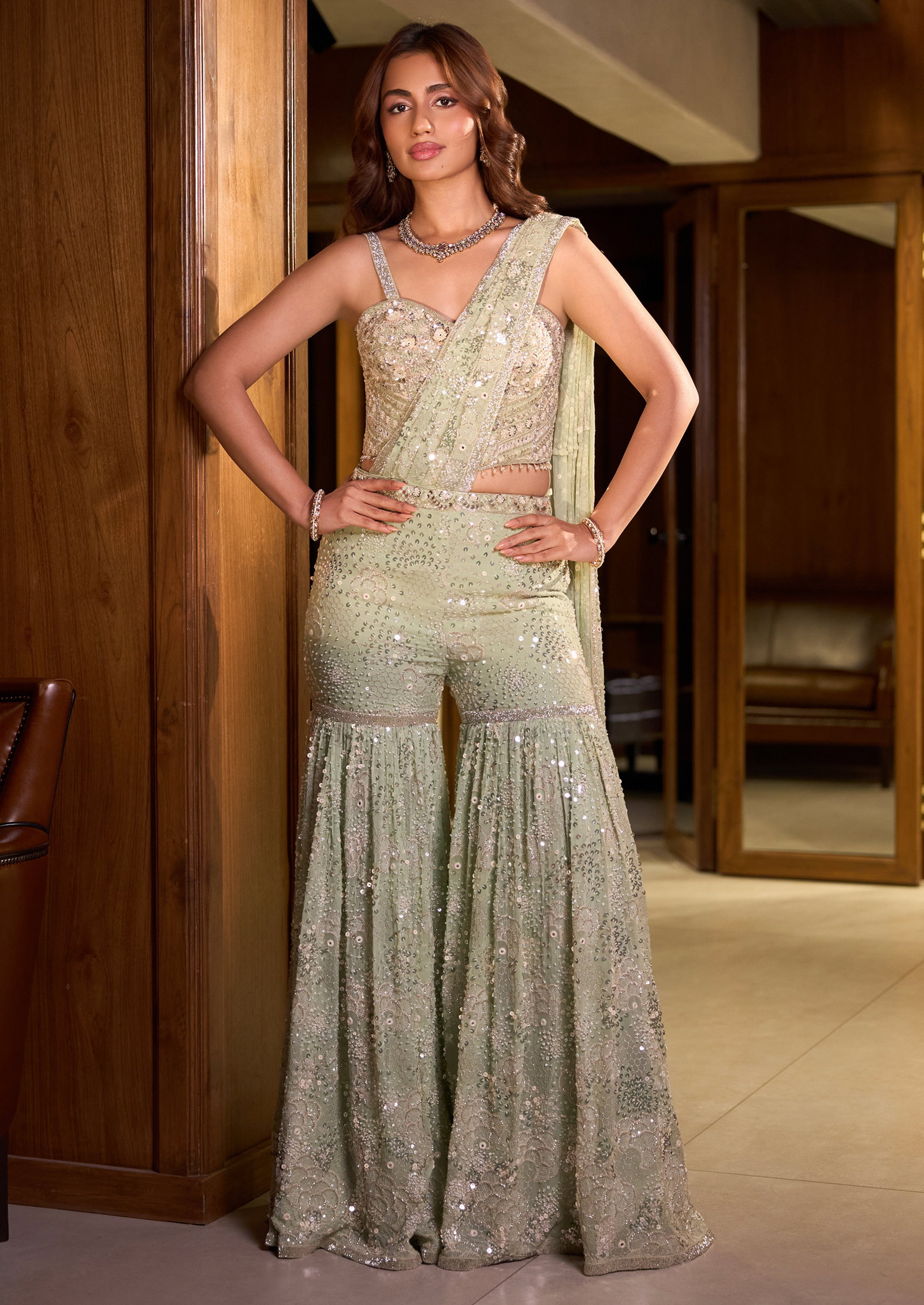
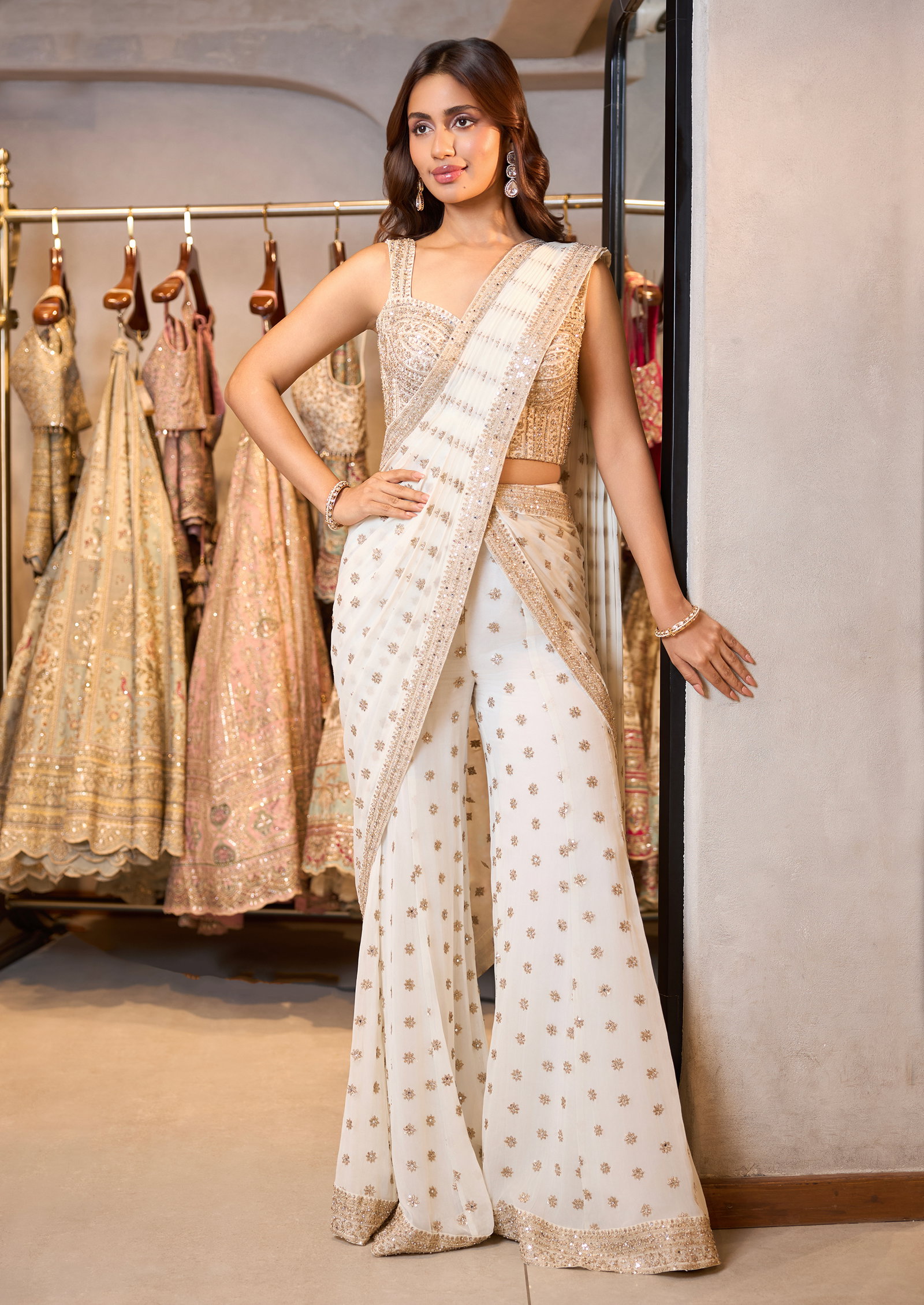
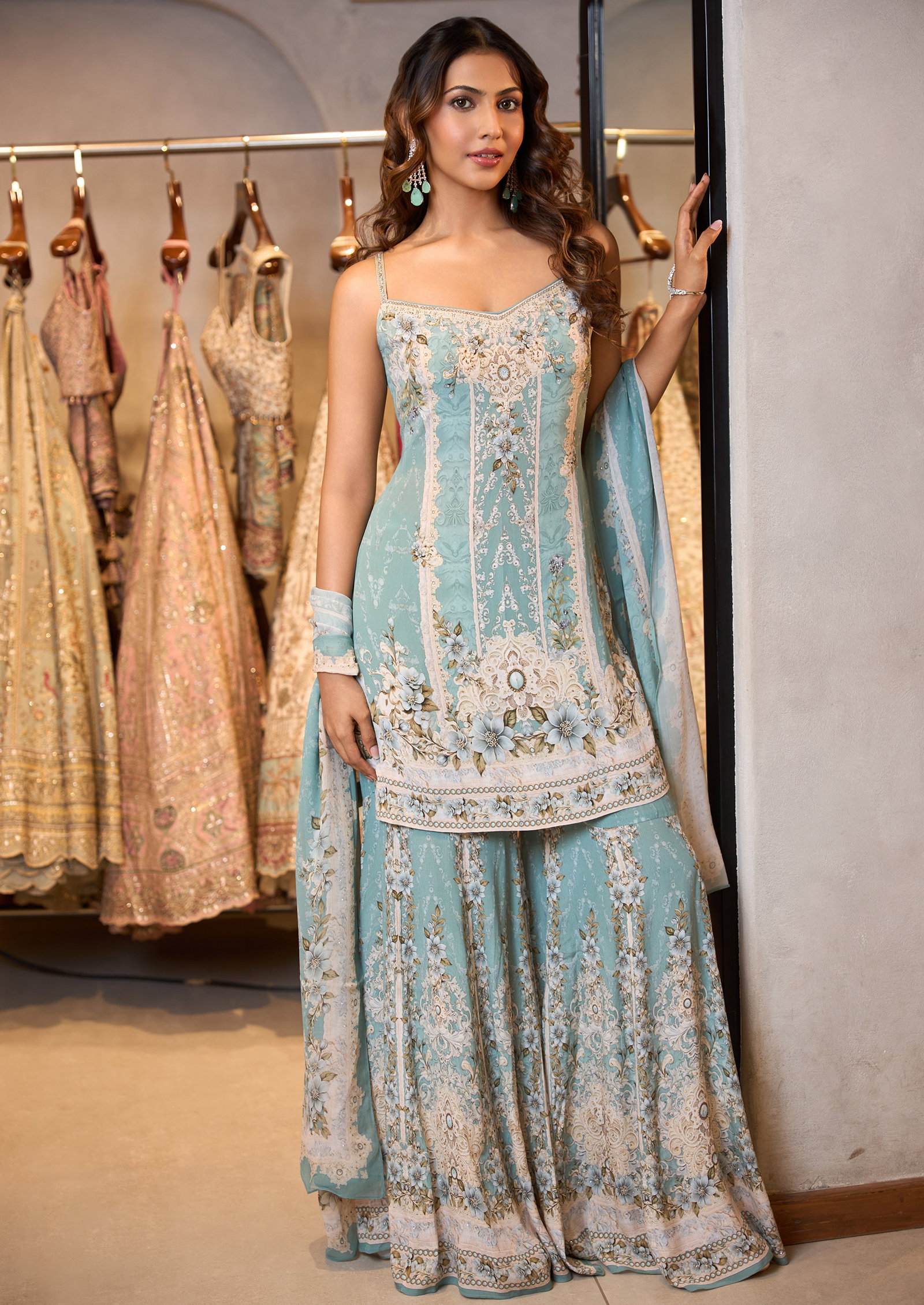
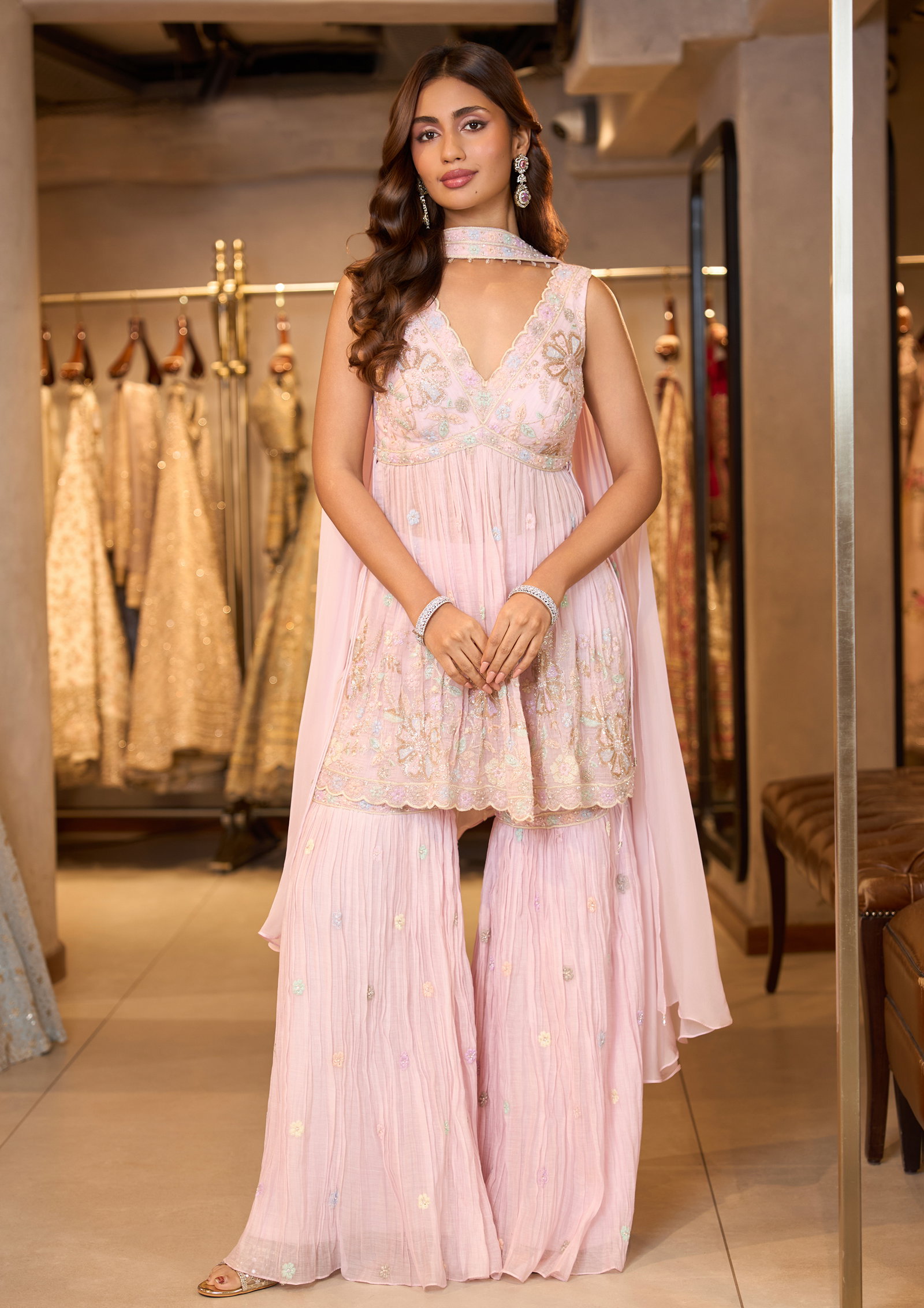
Rina Dhaka emphasizes silhouettes and is willing to take risks.
In one collection she mixed fur and boots with her Indian
outfits and always gives five or six looks in each collection.
She says she is impatient with the shapeless jackets and lenghas,
which are worn at all weddings. "I'm bringing back a lot of
the fitted clothes, the churidhars which were done earlier,
in the sixties. Nothing comes back exactly the same; it's
just a reference point. I'm bringing it into my Indian clothing
too. You know, the jilmil sitare look, like Mumtaz had. Bollywood
can be very glamorous, it was so trendy then. Now of course
it's so confused."
|
|