|
Monisha
Jaisingh
Monisha
Jaising creates a collection that’s alive, femininely
seductive, and full of verve, incorporating sexy halter
dresses, low-waisted knee length pleated skirts, tunic
dresses, t-shirts, tanks and spaghetti tops, kurtas
and pants. Using a sporty detailing in form of three-colour
striped rib knit trims at the neckline, armhole, waist
lines, and the length of the trouser seams, on the delicately
embroidered garments, she created an entirely new look
that was beautiful and elegant but had a distinctly
young, fun look. The embroideries used are equally interesting-
cheeky in their use of traditional floral patterns in
black in conjunction with sassy sequined tattoo motifs
of roses and barbed wires on the white, salmon, soap
and red coloured mul-muls. There were other knits as
well, in heather grey and white, which were embellished
with zardozi embroidery, and teamed with the dresses
and kurtas. Another line had butterscotch coloured silks
printed with delicate floral patterns, which were combined
with black-white checks, and rib detailing. The formal
eveningwear had kurtas in gold dust coloured sheers
with gold and silver sequined embroideries in circular
patterns, teamed with silver printed floral pants in
beige.
Nahid Merchant/ Vidhi Singhania
For
Nahid Merchant, designing is an amalgamation of line,
form, colour and texture. She is known for her fusion
lines, which are free flowing and innovatively styled.
Also known for her embroidered hi-fashion creations,
which take inspiration from the glorious past of Indian
history, she now retails from reputed stores around
the country. Her collection is inspired by the mystical
oriental art of 'Origami'. Rich blend of traditional
styles had zardozi embroidery, ruching, and pleating,
to the pallas, borders and pleated areas. Her play with
different textures, fabrics and layering gave the ensembles
depth and interest.
Vidhi
Singhani’s collection made use of hand-woven traditional
Indian fabrics like the kota maisuria, benarasi brocades,
tissues and silks. The ensembles ranged from slim pants
and kurtis, to dhoti shalwars, and blouses, and crinkled
skirts with cholis; and also included the Indian classics
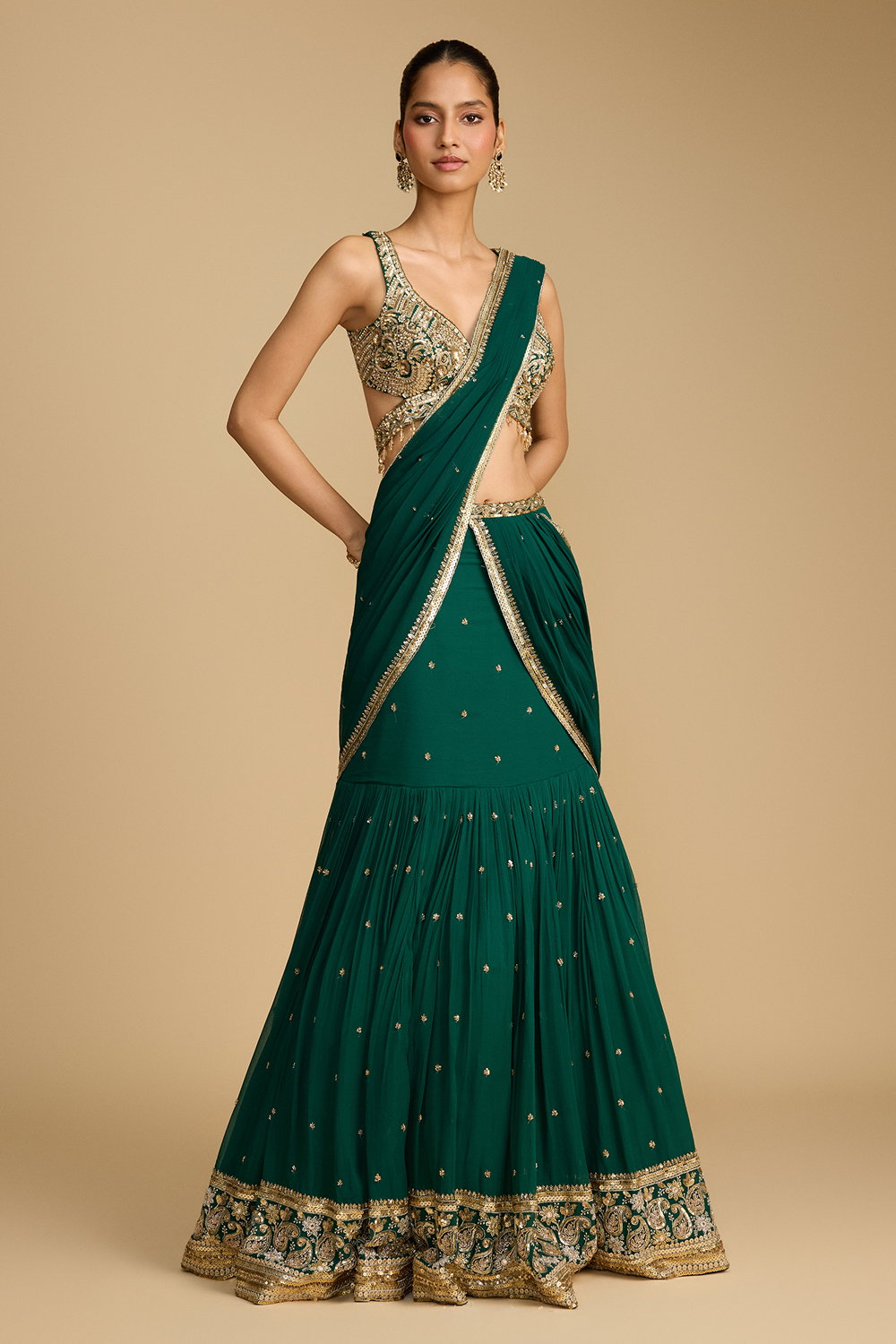
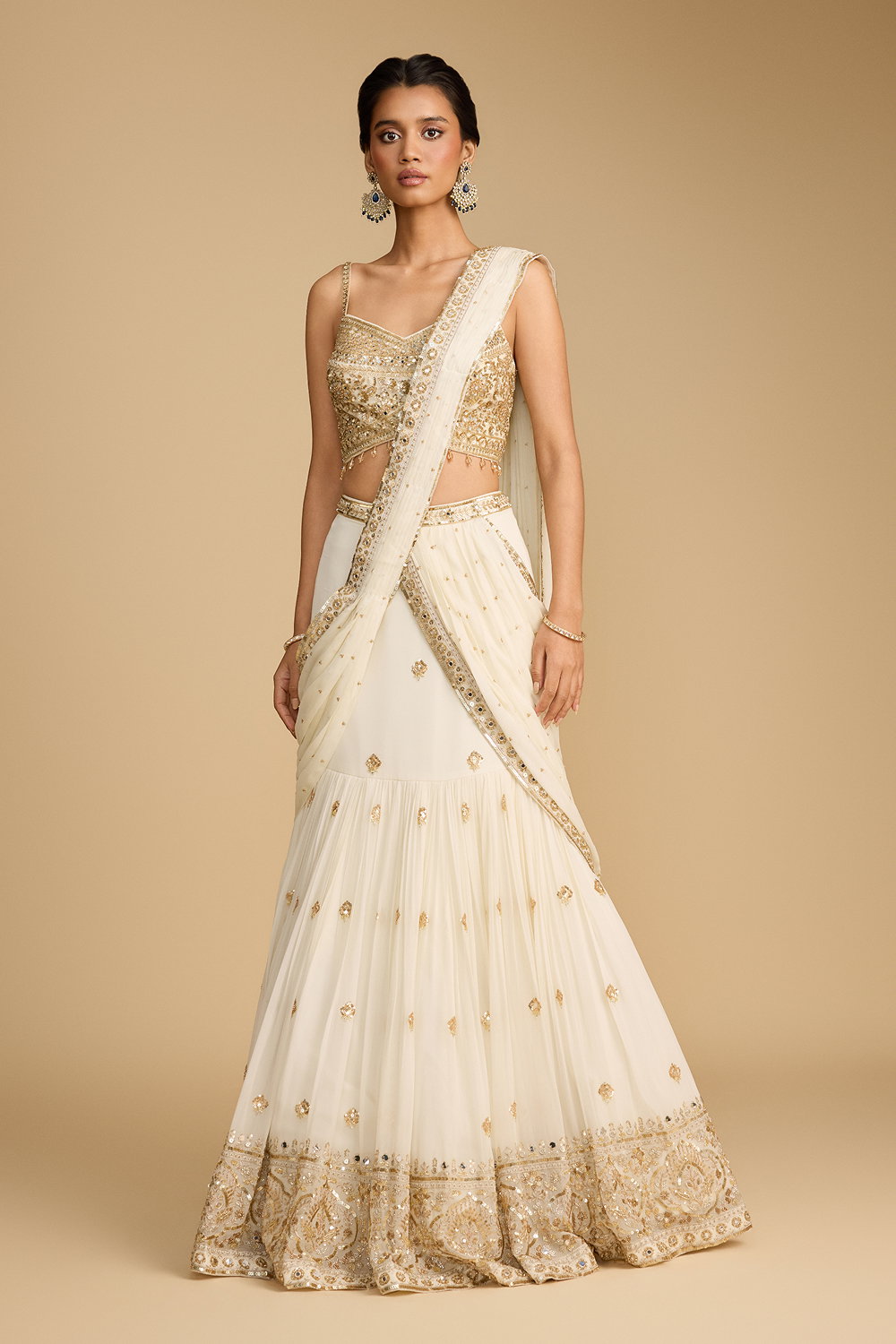
– exquisite lehengas and elegant sarees for special
occasions. The colour palette was kept festive and joyous,
with colours of rose, indigo, green, maroon, black,
indigo, and purple, all enhanced by the subtle gold
yarns that had been woven into the fabrics.
Tarun Tahiliani
Tarun
Tahiliani has the ability to make the men and women
look like Gods and Goddesses of love and passion. And
that’s exactly what his 2004 collection was all
about. The women looked sexy and stunning in Chinese
cheongsam and jeweled blouses, and dresses with endless
side slits; unusual bottom wear in form of Japanese
inspired pants, Turkish pants, skirts, pajamas and pants;
dressy tee-shirts in sexy shapes with engineered petra
durra and Hyderabadi jewel prints on necklines; midnight
tryst black georgettes embroidered in black chikankari
and embellished with star spangled baby crystals; and
elegant festive sarees with vibrant floral prints and
sequin work. The colour palette included rich colours
like oranges, pinks, blacks, reds, turquoises amongst
others. The men's wear was masculine and exquisitely
well tailored, with incredible linen and cotton suits,
quilted jackets and pants that caressed the body.
Anant
by Shobhna & Vijay Arora / Kavita Bhartia
Anant
by Shobhna and Vijay Arora was the amalgamation of different
cultures and traditions. Chikankari from India, the
Parsi gara embroidery, Chinese/ Buddhist motifs and
brocades, Moorish architectural patterns all amalgamate
in this collection in complete summer harmony. Pleasant
feminine colours of mint, ivory, butterscotch, pink
sugar, leaf green, aubergine, red and black
form the base for these surface ornamentation techniques.
Motifs like cranes, quails, and storks from the gara;
endless knots, dragons and eternity motifs from Buddhist
traditions; and florals and geometrics from chikankari
are decorated with bugle beads, sequins, kasab, dabka,
and crystals. Kurtis with slender churidars, skirts,
hot-pants, blouses, and classic saris were crafted to
perfection using fabrics like crepes, georgettes, chiffons
etc to create evening and day wear.
Kavita
Bhartia presented a very festive collection of numerous
fabrics like chiffons, georgettes, silks, and knits;
the silhouette kept simple with lean and narrow lines.
Long straight skirts with thigh high slits predominated,
and were given interesting treatments like layering,
patchwork, horizontal paneling, and appliqué.
Each skirt used a medley of different fabrics like jacquards,
silks, streaked sheers, brocades and prints, and had
embellishments in form of embroideries, crystal -work,
sequin work and ruffles, all exquisitely well balanced.
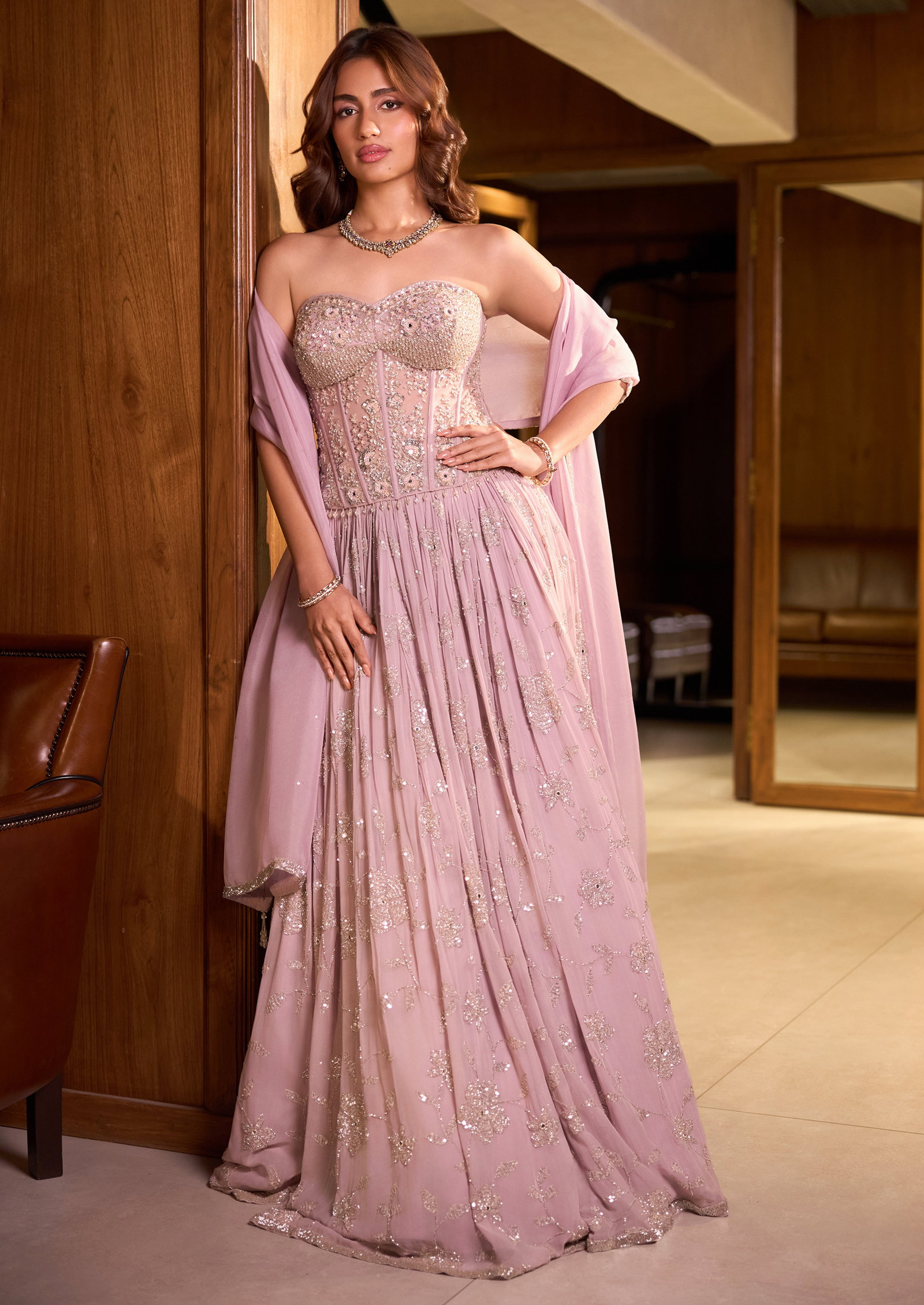
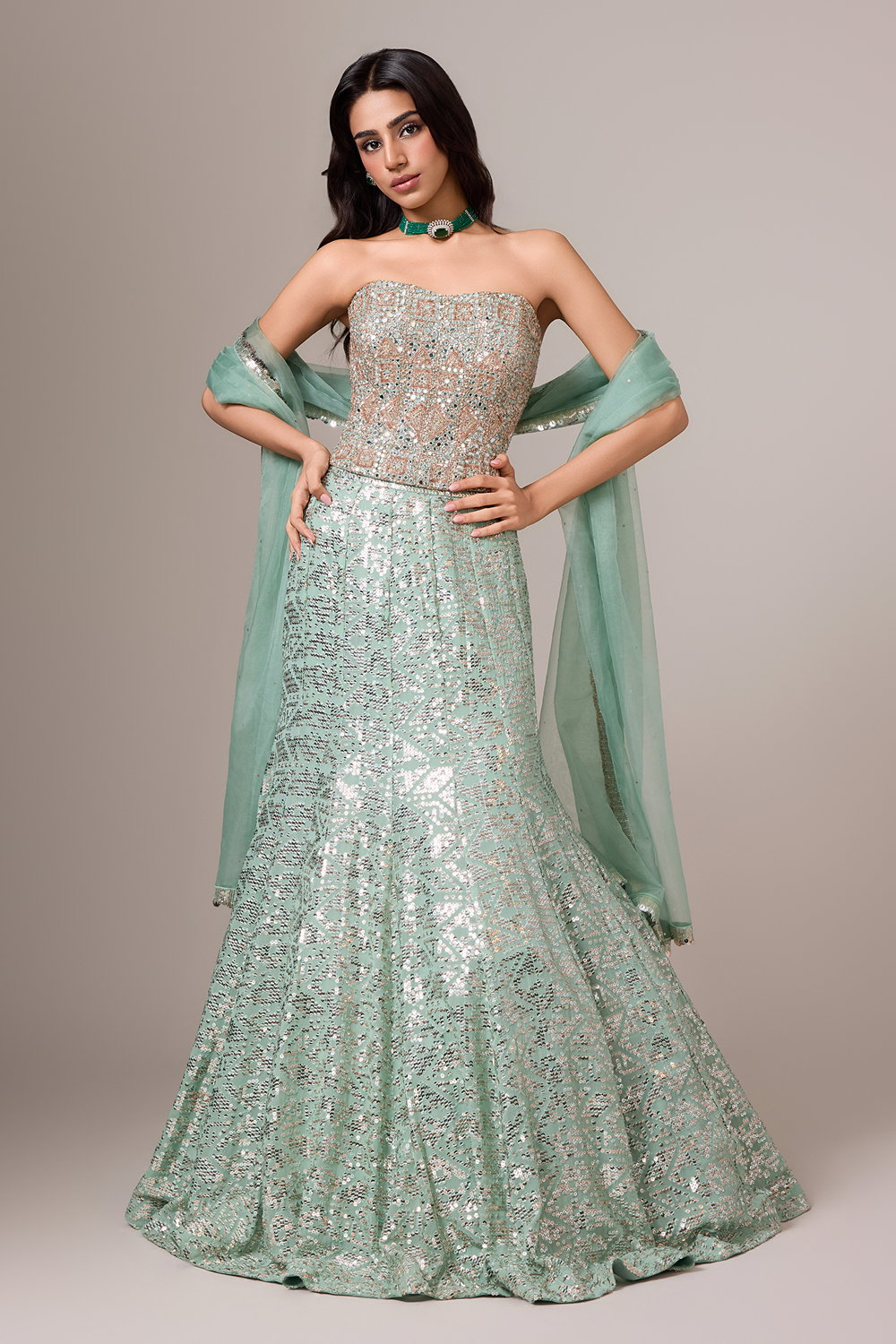
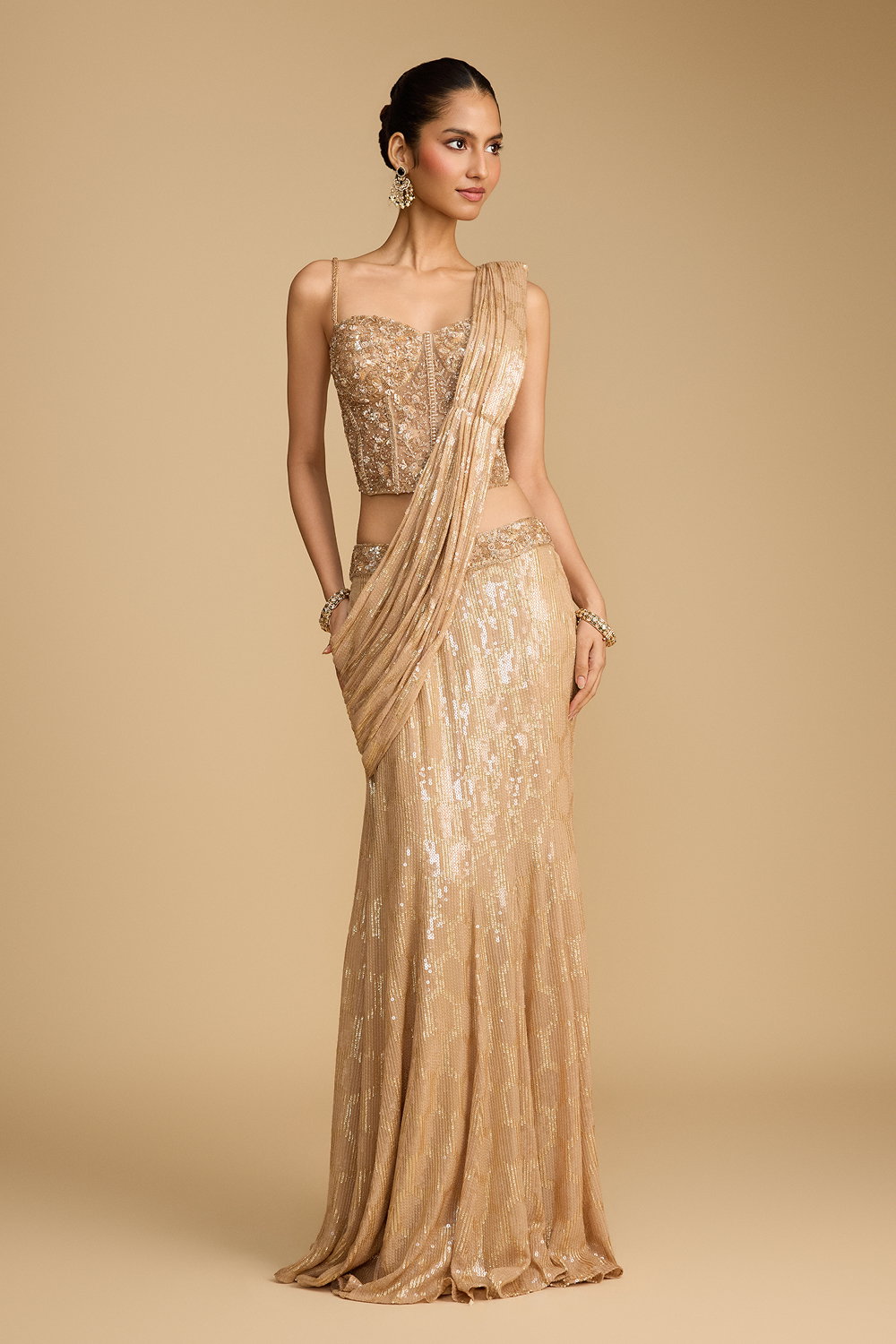
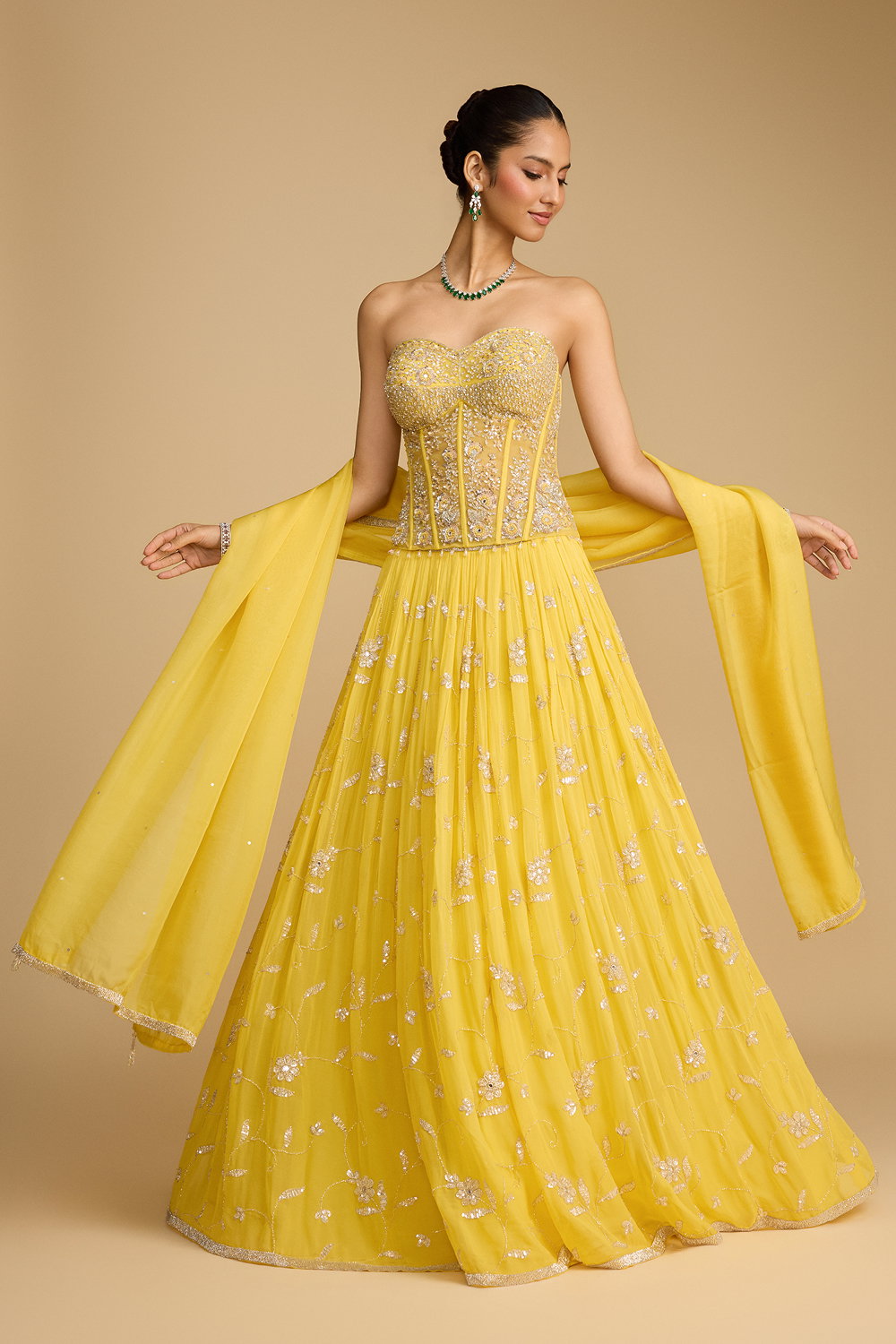
They were teamed with a variety of tops such as tanks,
corsets, bustiers, cheongsams, halter necks, and off-shoulder
blouses that were very effective with the skirts. The
colour palette included colours such as turquoise, rose,
magenta, leaf green, orange, maroon, purple, set against
streaked and leheria blacks and browns.
Suneet
Verma
Suneet
Varma’s Le Spice was young, hip and trendy. Prêt
was made fabulously funky and sporty in its use of colours,
fabrics, silhouettes and detailing. The predominant
colour in the palette was cool white, with bursts of
summer colours like citrus lemons, sunny yellows, tomato
reds, candy pinks, orange and sky blues. Cottons, chiffons
and knits were used to create capris, knee length skirts,
pants, shorts, tunics and shifts, slinky dresses, corsets,
tee shirts and blouses. Detailing came in form of miniature
pleats, knit trims, thread embroidery in spontaneous
floral-cluster patterns, and wacky afro prints and appliqués
of embellished with sequins. Funky matching embroidered
belts, and unusual footwear accessorized the collection.
|
|