| Acrylic:
|
|
A
man-made fiber produced from a form of plastic. It does
not retain moisture well. It has very good resiliency
so does not wrinkle easily. Acrylic garments tend to
PILL (small, tight, balling of material). To help prevent
pilling wash your garment inside out by itself. Then
brush the fabric with a soft brush as it dries.
|
| Aba: |
A
loose cloak, possibly of Arabian origin. Related to the
jama in men's wear, and to the abbo (q.v.) in women's.
|
| Abho: |
A
loose shirt-like garment, worn by women mostly in Gujarat
and Rajasthan. The garment was generally worn with short,
wide sleeves, open at the neck, loose-fitting on the upper
part and really flared in its skirt. Often decorated with
embroidery and mirror-glass work.
|
| Accessories: |
Additional
ornamentation to accompany the garment in order to create
a certain Look/Image. (Shoes, Jewelries etc.)
|
| Achkan:
|
A
men's long-sleeved coat-like garment, worn close to the
body, reaching down to the knees or even lower, and buttoned
in front-middle.
|
| Alter: |
To
change the pattern so that it corresponds to body measurements.
|
| Angarakfia: |
A
long, full-sleeved outerwear for men; literally 'that
which protects or covers the limbs'. Closely related to
the jama (q.v.), but possibly of native, Indian origin.
Generally open at the chest and tied in front, with an
inner flap or parda covering the chest. Full-skirted and
of varying lengths.
|
| Angiaiangika:
|
Short,
tight-fitting bodice worn by women in India from very
early times. Literally, 'covering for the body'.
|
| Asharfi
Buti: |
A
popular textile design consisting of small floral discs
or circles, sometimes with small patterns within the circle.
|
| Atansaw: |
A
wide, commodious chogha (q.v.)like garment for wrapping
around the body.
|
| Bedford
Cord: |
A
ribbed weave. It is a closely woven, sturdy fabric with
a raised cord effect in wool, cotton, silk, acrylic, or
polyester. A heavy, warpfaced, corded fabric in which
the cords run in warp direction.
|
| Badla: |
Flat
metallic wire, often silver-gilt, used in brocading and
embroidery.
|
| Baghal
Bandi: |
A
kind of tunic or jacket, worn shorts and fastened under
the armpits.
|
| Balabar: |
An
outer garment, worn by men, related in shape to the coat-like
ashcan.
|
| Bandhani: |
A
process of patterning cloth by tie-dyeing in which the
design is reserved on the undyed cloth by tying small
spots very tightly with thread to protect them from the
dye. Especially popular in Rajasthan and Gujarat.
|
| Bare
Pychon ka Paijama: |
A
payjama (q. v) with wide, flared legs.
|
| Bias: |
Any
direction in the fabric which does not exactly flow in
the direction of the weft yarn (vertical yarns) or warp
yarns (horizontal yarns) of a fabric. A true bias makes
an angle of 45 degree across the length and width of a
fabric, fabric cut on a bias has maximum stretch.
|
| Buta: |
Literally,
"a plant". A floral motif, derived generally from Persian
sources, much used in Indian textile design, and traditionally
rendered as a flowering plant with a curling bud at the
top. The motif is also sometimes reduced to a floral pattern
designed within the form of the plant.
|
| Buti: |
A
diminutive of buta (q.v.), very commonly used in Indian
textile design.
|
| Centre
Front: |
It
is the portion of the pattern or the garment which is
suppose to come in the exact front.
|
| Chand-Tara: |
Literally,
"moon and star", a pattern often-used in Indian textile.
|
| Chaubandi
Chola: |
A
short tunic or shirt fastened with tie-cords worn by children.
|
| Chaugoshia
(topi): |
A
four-cornered cap.
|
| Chauri:
|
A
flywhisk made generally from a yak's tail. Important as
a symbol of royalty or divinity.
|
| Chikan
Kari: |
Embroidery
in white cotton thread upon fine white cotton fabric,
like, muslin. Several techniques in chikan-kar are known;
Lucknow was a famous center of fine workmanship.
|
| Chogaichoga: |
A
loose, sleeved coat-like garment worn over an inner garment
like the angarakha (q.v.), generally sumptuous and appropriate
for ceremonial occasions. Of Turkish origin, the chogha
was also known as a chugha, chuha orjuha; in Russia as
shuba or sbubka.
|
| Choli:
|
A
short, bodice-like breast garment of wide popularity among
women in India, from early times. Related to the classic
cholaka mentioned in Sanskrit literature. The garment
is worn in many styles; thus, with back covering or without,
fastened with strings or extended cloth-pieces, with shaped
breast-pieces or flat, etc.
|
| Cholu: |
A
loose, shirt-like garment.
|
| Churidar: |
With
bangle-like gathers or wrinkles, as in a churidar payan.
|
| Contemporary:
|
|
Currently
in vogue.

|
| Cool
Colours: |
Blue,
Violet and Green are cool / light colors. They are reducing
in nature, as seen by the eye they move away from the
object thereby increasing it's size. Cool colors have
a calm and restful effect.
|
| Dhila: |
Loose
or baggy. Thus, a dhila payjama, wide and roomy all over.
|
| Dhoti: |
The
traditional Indian dress for the lower part of the body,
consisting of a piece of unstitched cloth draped over
the hips and legs. Worn in various ways in different parts
of the country, alike by men and women.
|
| Doru: |
Long
rope with which the thick woolen coat worn by the Gaddis
is secured around the waist.
|
| Draping: |
Draping
means to hang or to adorn the body form with loose fabric,
and to obtain a body fitted garment by using adequate
sewing techniques.
|
| Dupaluidupallari: |
Top
Small, close-fitting cap made generally of muslin, and
consisting of two identical pieces cut slightly rounded
and curved towards the top.
|
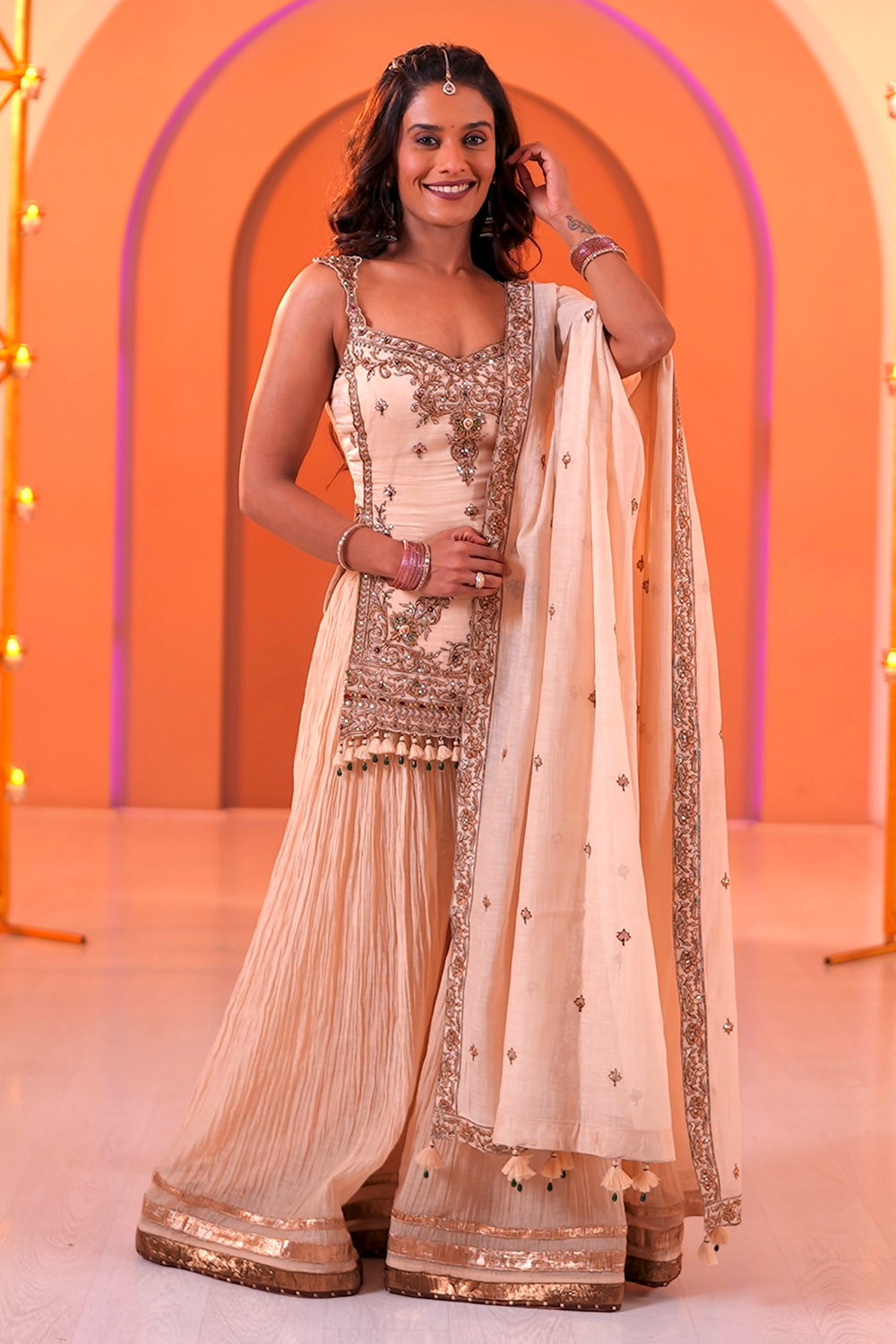
| Dupatta: |
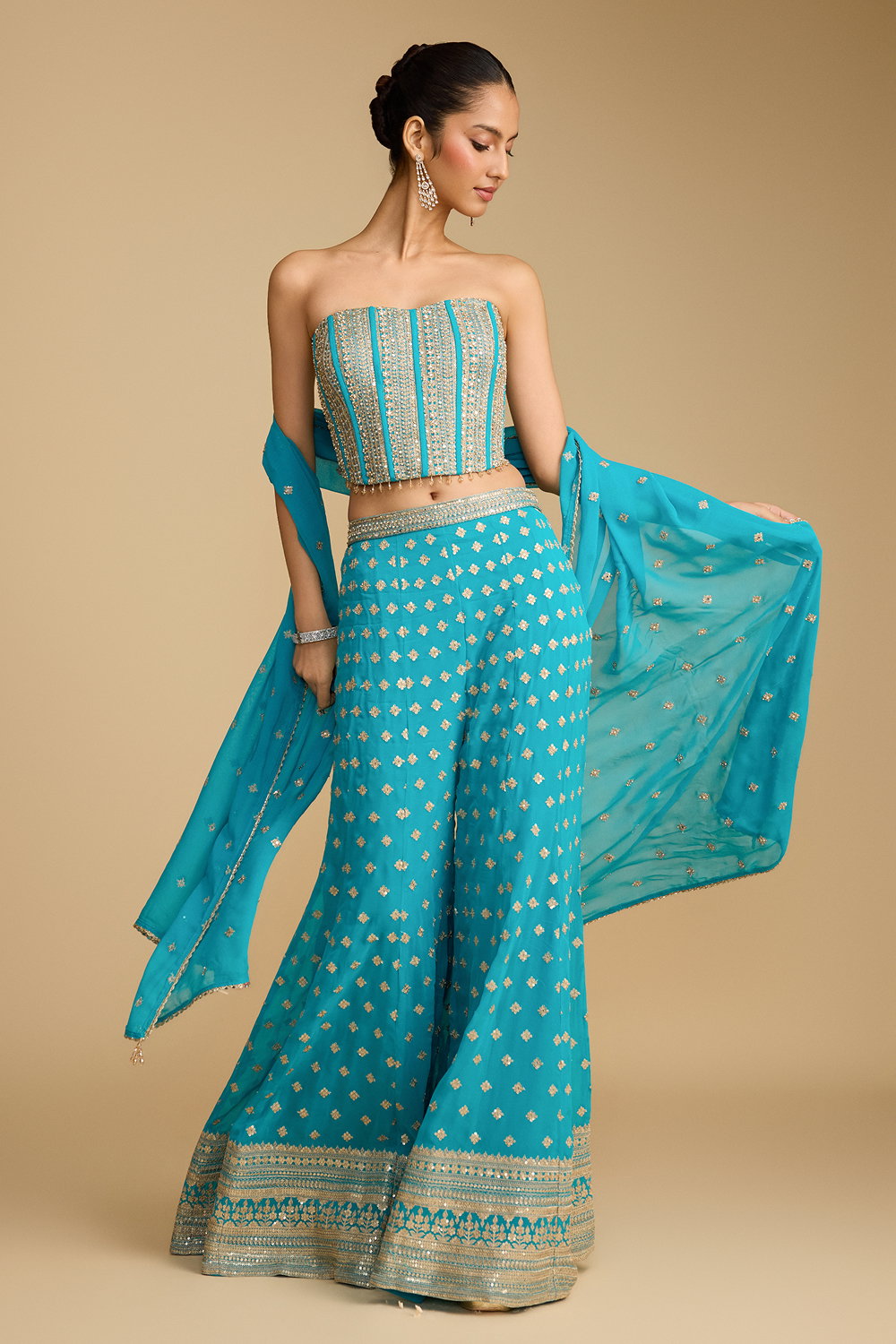
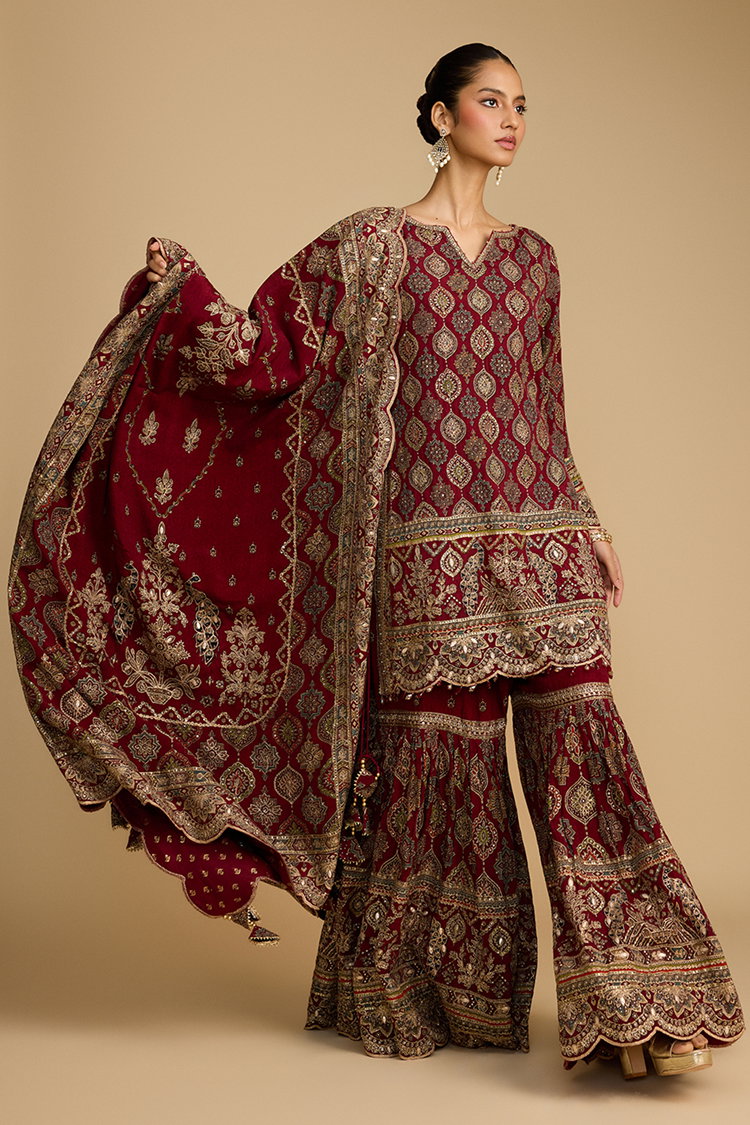
Veil-cloth
worn by women, draped loosely around the upper part of
the body.
|
| Flannel: |
Soft-filled
cotton twill brushed on one side.
|
| Fad: |
Short lived fashion are called fad's; They seldom have
any lasting Impact on future fashion. They are briefly
and suddenly seen everywhere and just as suddenly they
vanish.
|
| Fargul: |
A kind of jacket.
|
| Farji: |
A
kind of jacket. Defined by the dictionaries as simply
'a kind of garment', the faiji was possibly a long over-garment
without sleeves, or with very short sleeves, open in front
and worn like a coat over pyjama (q.v.) or angarakha (q.v.).
|
| Farshi
Paijama: |
Wide-legged payjama (q. v) that trails on the ground,
sometimes completely covering the feet; worn often with
a kurta (q.v.) or angarakha (q.v.).
|
| Fashion
Forecast: |
To predict of foretell future fashion tread for a specific
period of time.
|
| Fatuhi: |
A 'jacket without sleeves'. Generally understood as a
vest lightly padded with cotton wool, and quilted.
|
| Faz-Vi: |
A 'jacket without sleeves'. Possibly the same kind of
garment as fatuhi (q.v.).
|
| Finish: |
Perfection with which the garment / fabric is completed.
|
| Forte
of a garment: |
Means the strong point of the garment.
|
| Frey: |
Threads which come out from the fabric during handling.
|
| Gabardine: |
A
type of fabric, which can be made from either wool or
cotton. It is a durable tight twill weave. Fine round
ribs run diagonally across the front but are not visible
on the back. Often used in suits.
|
| Gamla
Buti: |
A popular motif in textile design in India, consisting
of flowers of different kinds growing in a flowerpot,
neatly arranged.
|
| Ghagho: |
A woman's dress, closely related to the abbo (q.v.). The
skirt part of the abagho was often more flared than that
of an abbo, the ample gathers at either side of the waist
lending it peculiar gracefulness when the wearer moved.
|
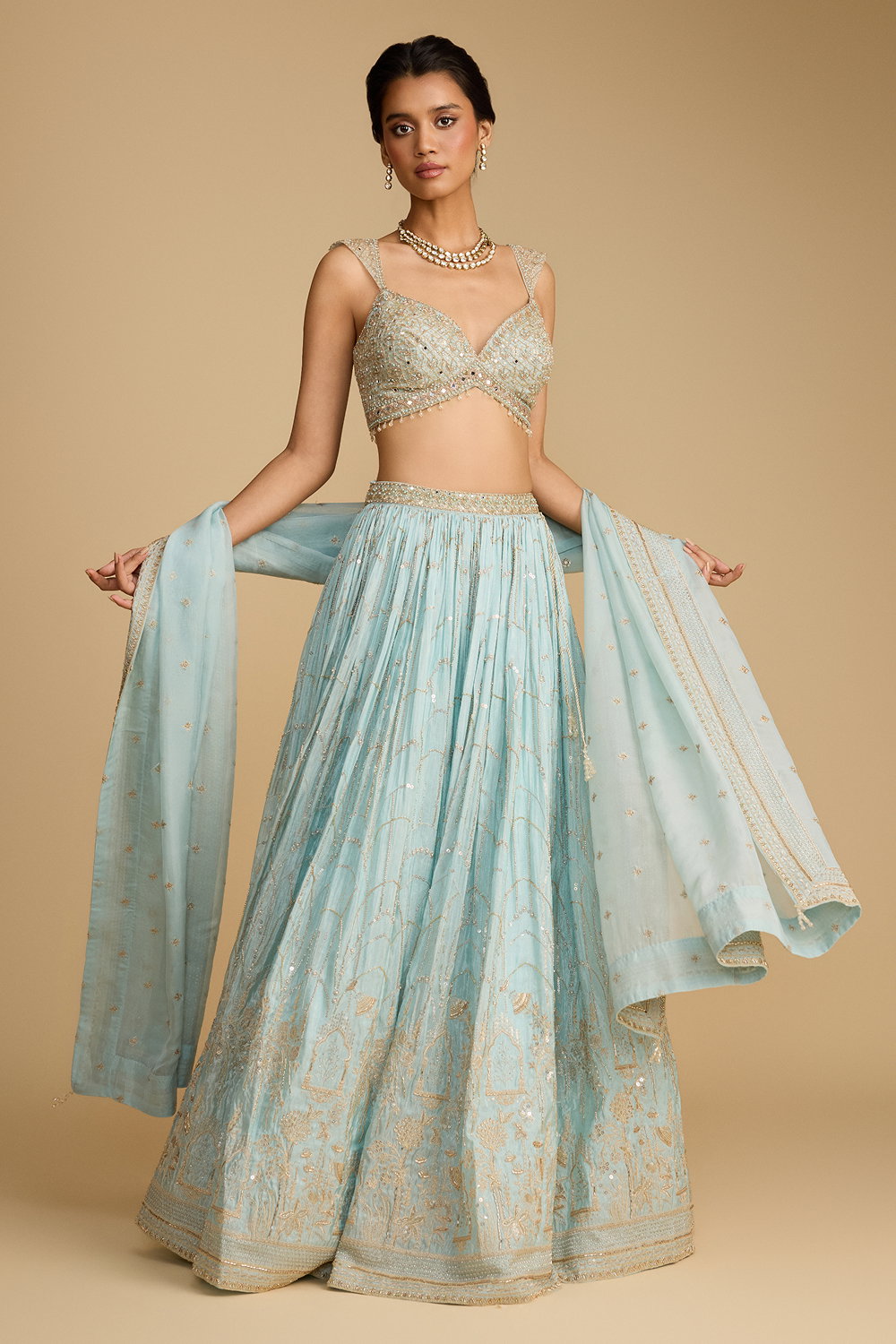
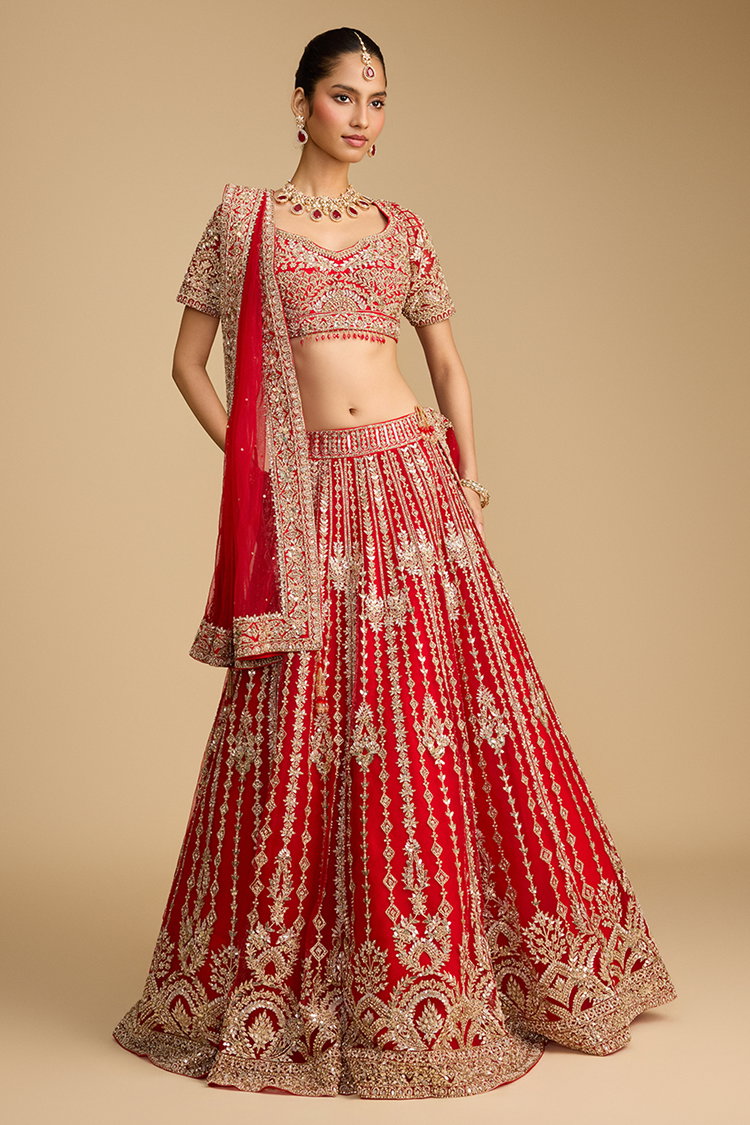
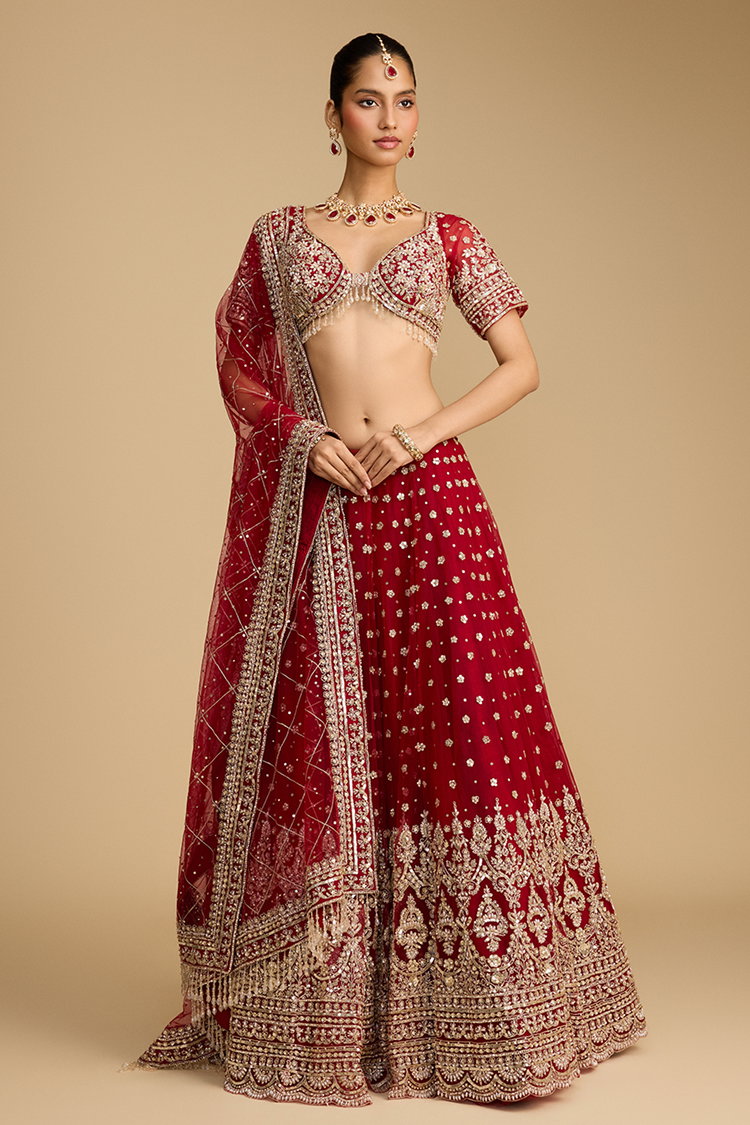
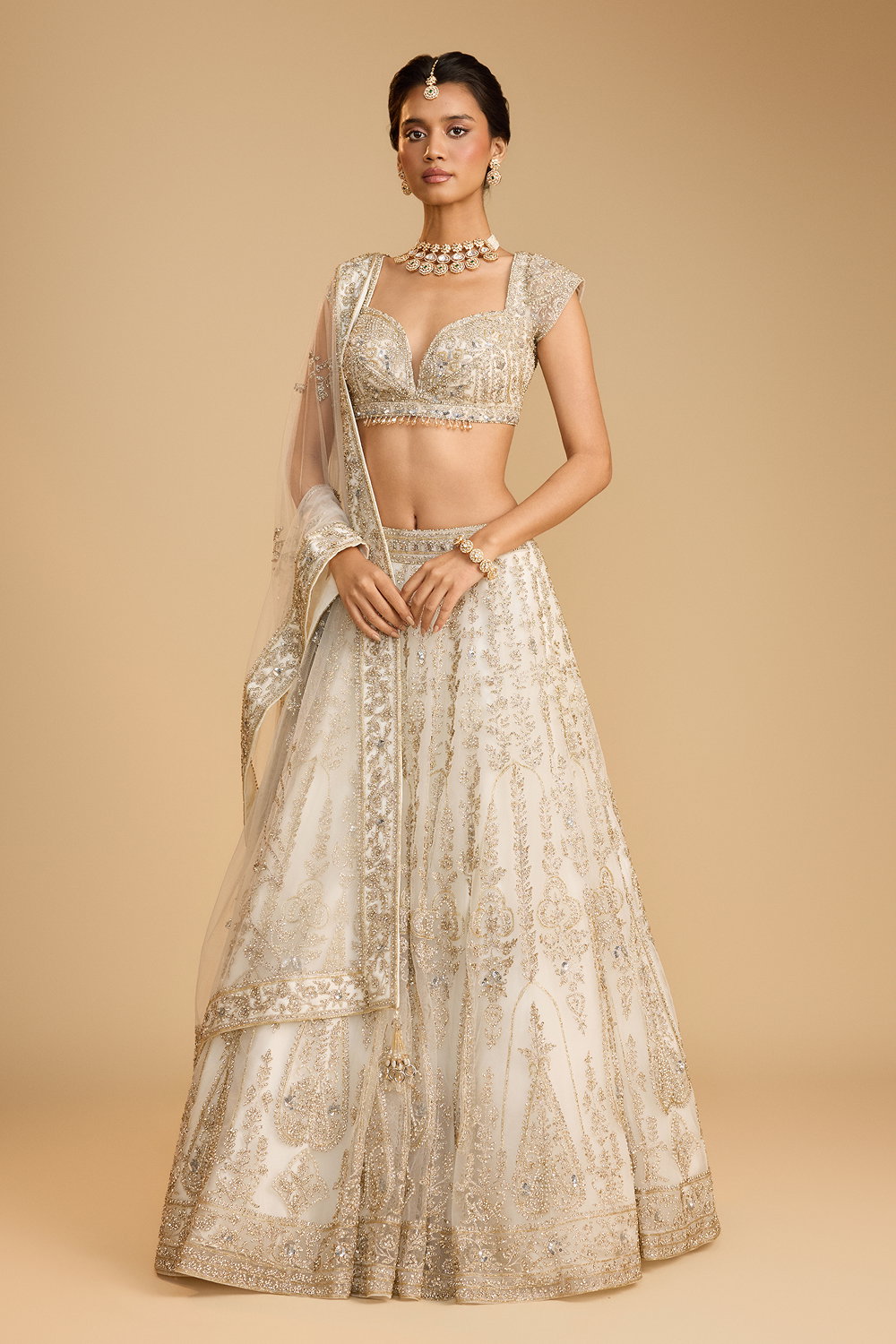
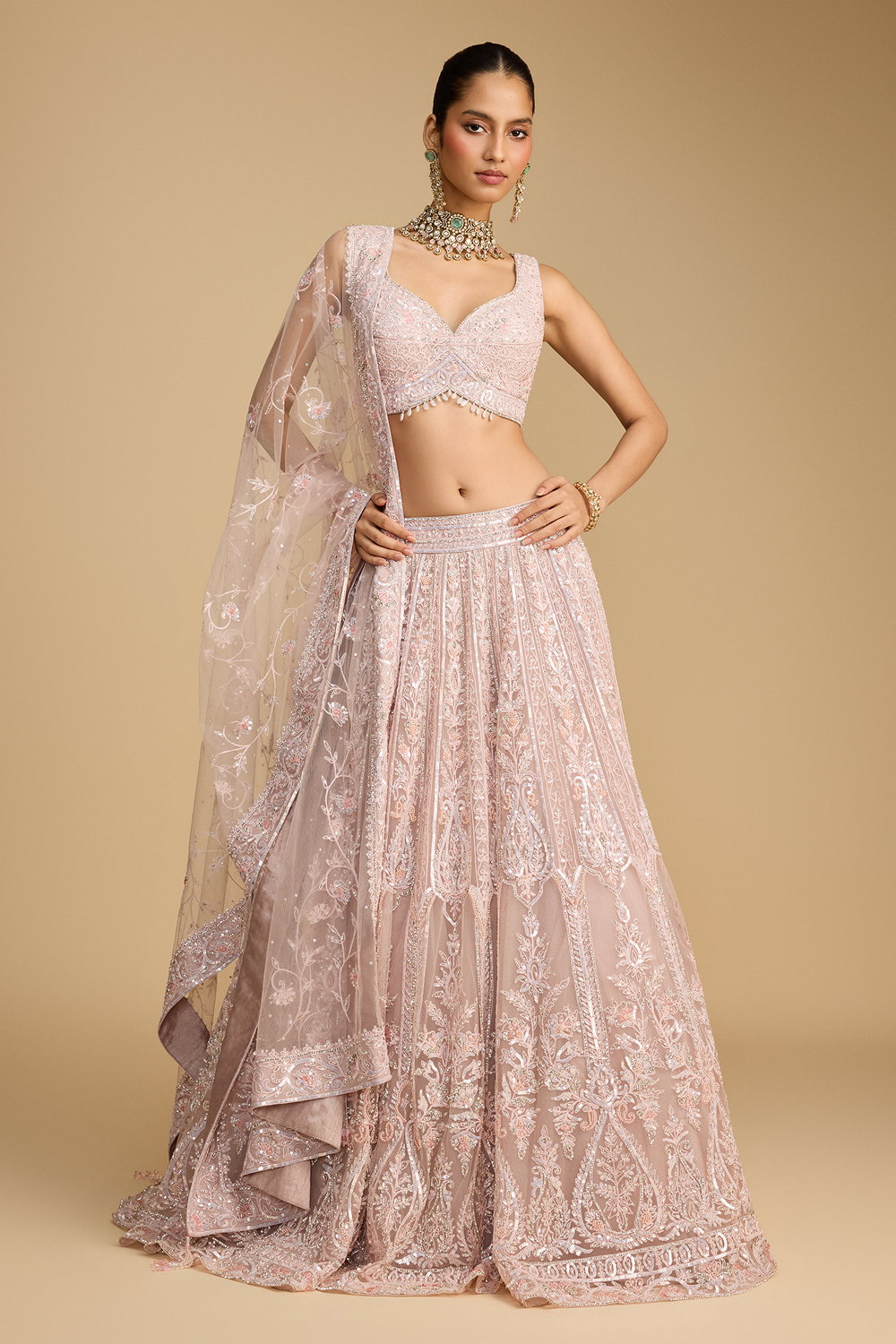
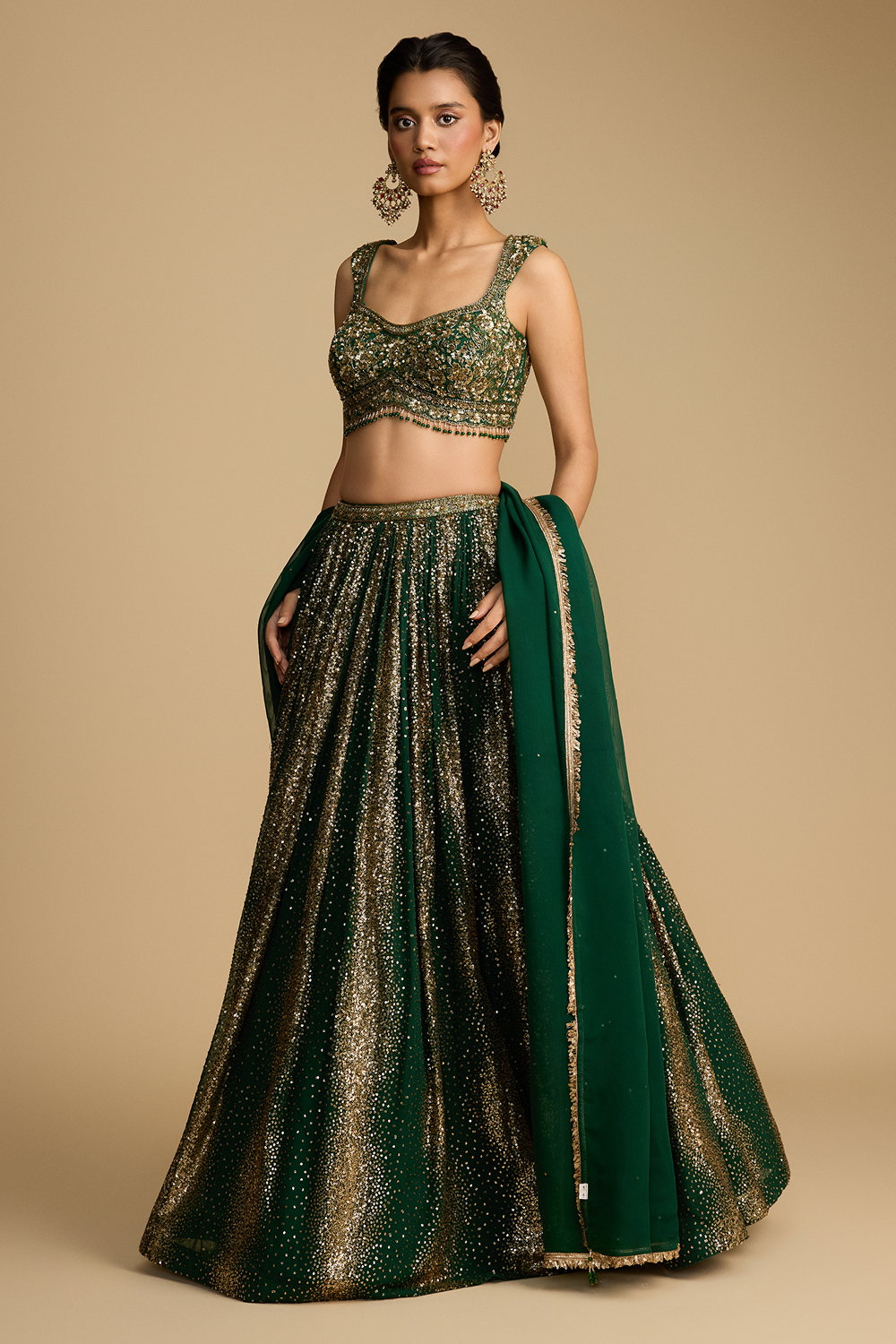
| Ghaghra: |
Skirt, usually with a great deal of flare. The simple
ghaghras have only one vertical seam, which turns the
cloth or ghaghra-pata into a tube, fastened with a drawstring
passing through a long, narrow slot at the waist. Flared
ghaghras are made up of, several triangular gored pieces
stitched together.
|
| Gherdar: |
Flared with an ample skirt, as in a gherdarjama.
|
|