|
Indian Classical
Dance
MOHINIATTAM
Mohiniyattam,
the female semi-classical dance form of Kerala is said
to be older than Kathakali. Literally, the dance of
the enchantress, Mohiniyattam was mainly performed in
the temple precincts of Kerala. It is also the heir
to Devadasi dance heritage like Bharata Natyam, Kuchipudi
and Odissi. The word 'Mohini' means a maiden who exerts
desire or steals the heart of the onlooker. There is
a well known story of Lord Vishnu taking on the guise
of a 'Mohini' to enthrall people, both in connection
with the churning of the milk ocean and with the episode
of slaying of Bhasmasura. Thus it is thought that Vaishnava
devotees gave the name of Mohiniyattam to this dance
form.
The first reference to Mohiniyattam is found in 'Vyavaharamala'
composed by Mazhamangalam Narayanan Namboodiri, assigned
to the 16th century AD. In the 19th century, Swati Thirunal,
the king of erstwhile Travancore, did much to encourage
and stabilise this art form. The post Swati period however
witnessed the downfall of this art form. It somehow
degenerated into eroticism to satisfy the Epicurean
life of some provincial Satraps and landlords. It was
Poet Vallathol who again revived it and gave it a status
in modern times through Kerala Kalamandalam, which he
founded in 1930. Kalamandalam Kalyaniamma, the first
dance teacher of Kalamandalam was instrumental in resuscitating
this ancient art form. Along with her, Krishna Panicker,
Madhavi Amma and Chinnammu Amma, the last links of a
disappearing tradition, nurtured aspirants in the discipline
at Kalamandalam.
The theme of Mohiniyattam is love and devotion to god.
Vishnu or Krishna is more often the hero. The spectators
could feel his invisible presence when the heroine or
her maid details dreams and ambitions through the circular
movements, delicate footsteps and subtle expressions.
The dancer in the slow and medium tempos is able to
find adequate space for improvisations and suggestive
bhavas. In format, this is similar to Bharatanatyam.
The movements are graceful like Odissi and the costumes
sober and attractive. It is essentially a solo dance,
but in present times it is performed in groups also.
The repertoire of Mohiniyattam follows closely that
of Bharatanatyam. Beginning with Cholkettu, the dancer
performs Jathiswaram, Varnam, Padam and Thillana in
a concert. Varnam combines pure and expressional dance,
while Padam tests the histrionic talent of a dancer
and Thillana exposes her technical artistry.
The basic dance steps are the Adavus which are of four
kinds: Taganam, Jaganam, Dhaganam and Sammisram. These
names are derived from the nomenclature called vaittari.
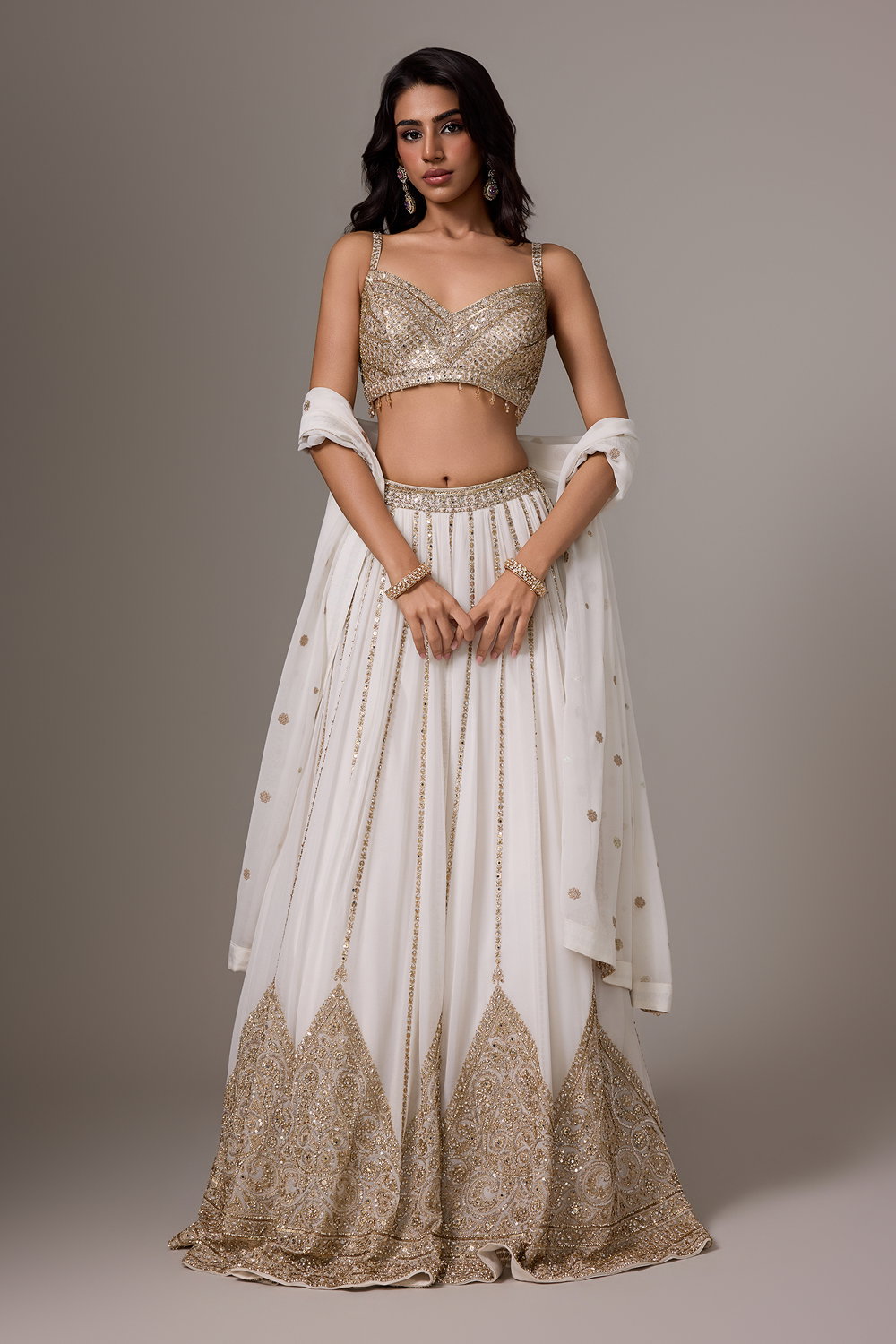
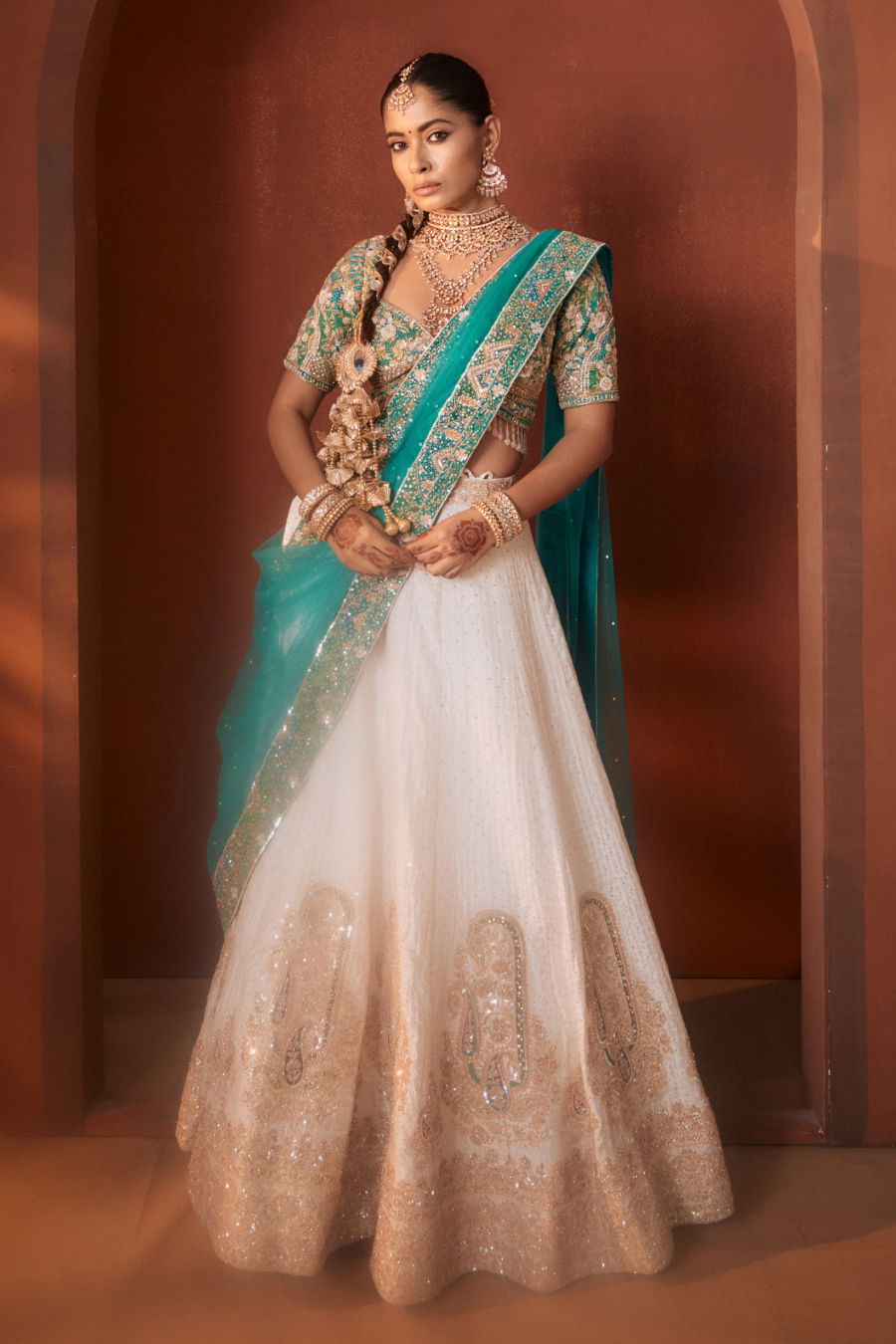
Mohiniyattam maintains a realistic makeup and simple
dressing. The dancer is attired in the beautiful white
and gold bordered Kasavu saree of Kerala.
Mohiniyattam like many other forms follows the Hastha
Lakshanadeepika, as a text book for Mudras, or hand
gestures. The style of vocal music for Mohiniyattam
as is generally seen, is classical Carnatic. The lyrics
composed by Maharaja Swati Tirunal and Irayimman Thampi
are in Manipravala (a mixture of Sanskrit and Malayalam).
Till recently, Thoppi Maddalam and Veena provided the
background music of Mohiniyattam. These have been replaced
in recent years by Mridangam and Violin.
|